

















































 Slovakia
Private English lessons in Slovakia
Turn the English you learned at school into English you speak
One tutor and one learner, online on a video call. You speak from the first lesson, a coordinator follows your progress on the CEFR scale of A1 to C2, and lessons fit your maturita, your studies abroad or your work.
Your week, Europe/Bratislava time
Tue07:00
Thu20:00
Sat11:00
A country that already reads English and wants to speak it freely
If you grew up in Slovakia, English has probably been part of your life for years. A Special Eurobarometer 540 summary found that about 30% of residents can hold a conversation in English, which makes it the second most widely spoken language in the country after Slovak at 93%, and ahead of Czech at 23%. In an international English proficiency index published in 2023, Slovakia placed 18th among 113 countries where English is not the main language, a ranking drawn from 2.2 million participants.
The same index carried a quieter detail worth noticing. The national result had climbed over 12 years, then slipped compared with 2022 and 2021. When the index provider's country manager described the Slovak level, the example given was that Slovaks can read newspapers in English. If that describes you, you may follow an article, an email or a series with subtitles comfortably, and the harder step is answering out loud, at speed, while someone waits for your reply.
That step is what one to one lessons with Britemy are built for. You and your tutor talk from the very first lesson, and accuracy gets polished as you go, so the English you already carry turns into English you can use in a meeting, a seminar, a job interview or a relaxed conversation with a colleague from abroad.
Who learns English in Slovakia, from students to grandparents
English in Slovakia has a clear age story. The Special Eurobarometer 540 summary reports conversational English for 60% of people aged 15 to 34, for 30% of those aged 35 to 54 and for 6% of those aged 55 and over. The 2023 proficiency index pointed the same way: people aged 21 to 25 were the strongest English speakers in the country, and the only age group that improved on the previous year.
If you are thinking about a private tutor, you may recognize yourself in one of a few situations. You might be a secondary student who wants a calm, confident result in the school-leaving exam, or a university student or recent graduate getting ready to study abroad. You might have learned some English at school, used it rarely, and now need much more of it at work. Or you might be over 55 and starting close to the beginning, so you can travel with ease, talk with family abroad or follow the English that fills the internet.
Each of these groups needs a different first lesson. A one to one format lets your tutor start exactly where you are, whether that means sharpening English you already use every day or building your very first conversation about your family, your town and your plans.
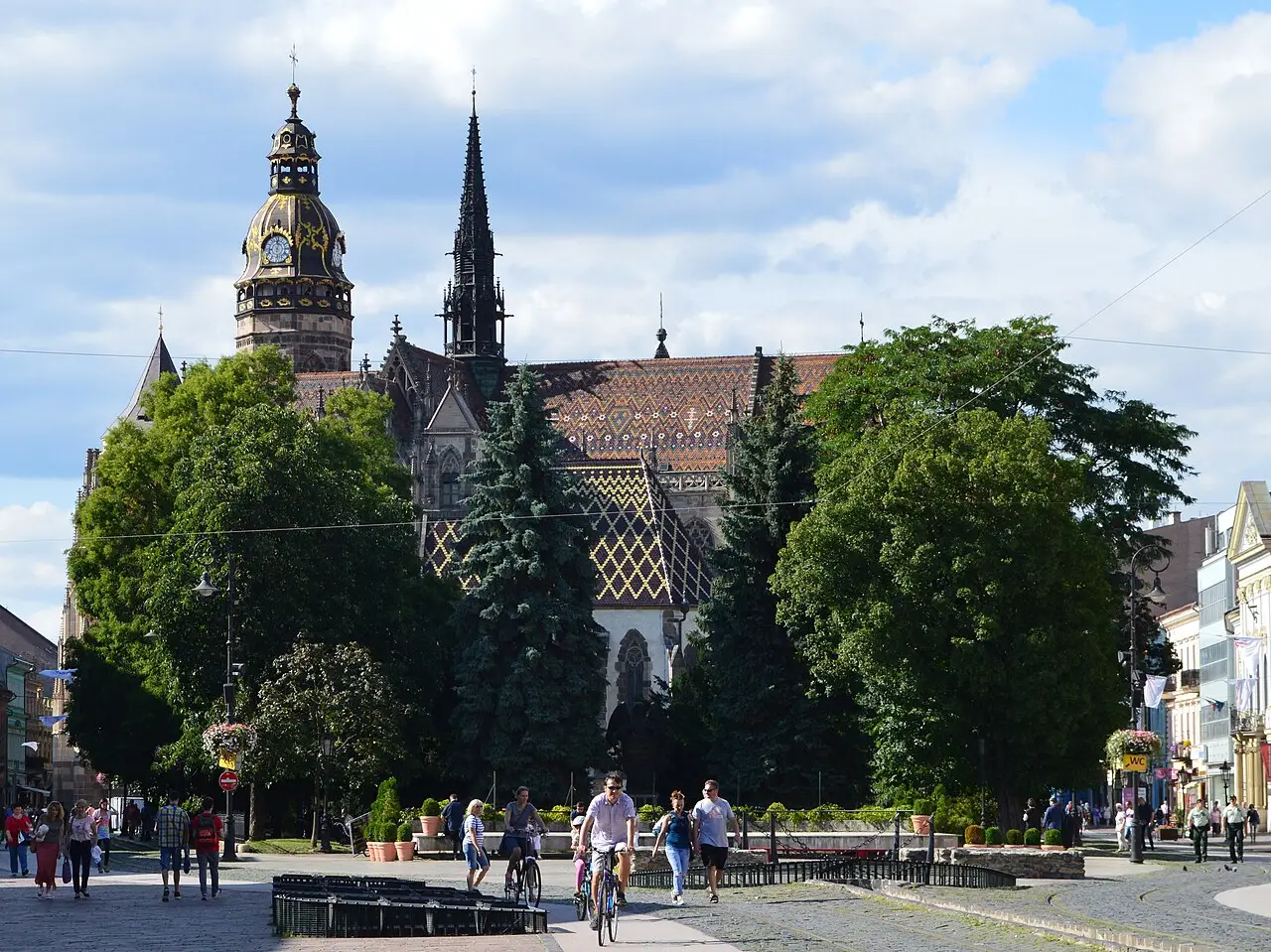
English in Slovak schools, from third grade to the maturita
Education in Slovakia is compulsory for ten years, and primary school starts in the year a child turns six and lasts nine years. A 2019 United States government guide notes that English has been mandatory in Slovak schools from grade three onward. In the second stage of primary school, English usually sits alongside a choice of German, French, Russian or Spanish, and gymnázium schools teach at least two foreign languages.
Slovak students study more foreign languages than the European average. A report published in 2016 found that about 80% of secondary students studied two foreign languages, against a European average of 59.9%, and up to 98% studied at least one. The framework plan of the 2023 State Educational Programme sets the first foreign language at 3 hours in cycle 1, 6 hours in cycle 2 and 12 hours in cycle 3.
At the end of secondary school comes the maturita, the school-leaving exam that is a prerequisite for higher education. It includes Slovak language and literature together with a foreign language, and in 2018 English held a dominant position among the foreign languages taken. Lessons with a private tutor add something a shared classroom has to divide among many students: time for you alone to speak, at your own pace and around your own questions.
The maturita, IELTS and the other English exams people sit
The English maturita sits at the end of secondary school for most school leavers. In 2018, 36,376 of the 43,605 secondary school leavers taking external exams, or 83.4%, sat English. Each student sat four subjects that year, with Slovak and one foreign language mandatory and two optional. Levels on the exam follow the CEFR, the Common European Framework of Reference for Languages, a six-step scale that runs from A1 for a first-time beginner to C2 for near-complete mastery. Students choose the B1 or B2 level, and C1 is available for bilingual schools. In 2018, 1,579 students sat English at C1, the level required for bilingual grammar schools.
The external part covers Listening, Use of English and Reading and is rated centrally. It lasts 100 minutes with 60 tasks at B1 and 120 minutes with 80 tasks at B2, and results arrive in percentage points about 3 weeks later. A separate internal writing part takes 60 minutes. A tutor can work through each part with you, building reading speed, grammar control and the paragraph structure the exam expects, while keeping you talking so the English stays alive long after exam day.
If you plan to study abroad, IELTS is one of the tests you may meet. One listing shows five IELTS test centers in Slovakia, in Bratislava, Košice, Trnava, Trenčín and Žilina, with results online 13 days after the test date. Britemy also prepares learners for TOEFL, TOEIC, Cambridge exams, the Duolingo English Test and PTE Academic. Preparation runs in two phases with the same tutor: first a foundation in listening, reading, writing and speaking, then score strategy with format drills, timed mock tests and practice in pacing each section.
- Maturita in English (B1, B2, C1)
- IELTS
Children and teenagers who want extra speaking time
Children in Slovakia meet English at school from grade three, according to a 2019 guide, and in the second stage of primary school English typically sits alongside a choice of German, French, Russian or Spanish. For a child, private lessons work best when they feel like a conversation with a friendly adult: talking about a favorite game, describing a picture, telling a short story. The tutor keeps the pace light and the speaking time high, and polishes grammar along the way.
Teenagers usually arrive with a goal. Some are aiming for the B2 maturita, some for C1 at a bilingual grammar school, and some want an international exam score for a university application. A tutor can line lessons up with the topics school is covering, then add extra speaking practice on top.
Summer is a useful window. The school summer break runs from the beginning of July to the start of September, and a couple of lessons a week over the holidays keep English warm until the new school year. When classes start again, lessons can continue at a gentler pace around homework and clubs. When a parent or guardian books lessons for a younger learner, the coordinator's progress reports on the CEFR scale keep them informed about how the learner is moving.
Studying abroad: Czechia, the Netherlands and further afield
Studying abroad is a common path for Slovak university students. A report published in June 2023 found that about one in five Slovak university students studies outside the country, roughly 32,000 people each year since 2017. About 70% of them choose Czechia, where almost 21,000 Slovaks attended university in 2022. Students from grammar schools and bilingual programs leave at higher rates than other school leavers.
The map beyond Czechia keeps shifting. Slovak student numbers in Austria have fallen by more than half since 2003, while numbers in the Netherlands rose from about 100 in 2006 to 1,100 in 2021. In the United Kingdom, Slovak students fell about 23% in one year, from 2,100 to 1,620. A 2019 United States government guide counted 349 Slovak students in the United States in the 2018/2019 academic year, and 3,970 successful Erasmus+ applicants in 2017, who went mostly to Czechia, Spain and Poland. The same guide notes that European destinations are often preferred for lower school fees, eligibility for EU scholarships and proximity.
In Slovakia itself, study programs taught in foreign languages, particularly English, typically require tuition fees, so strong academic English helps you get the most from every lecture you pay for. Whichever route you take, the English you need is academic: following a lecture, writing an essay with a clear argument, speaking up in a seminar. A tutor can build those habits with you before you leave, and add IELTS or another test when an application asks for a score.
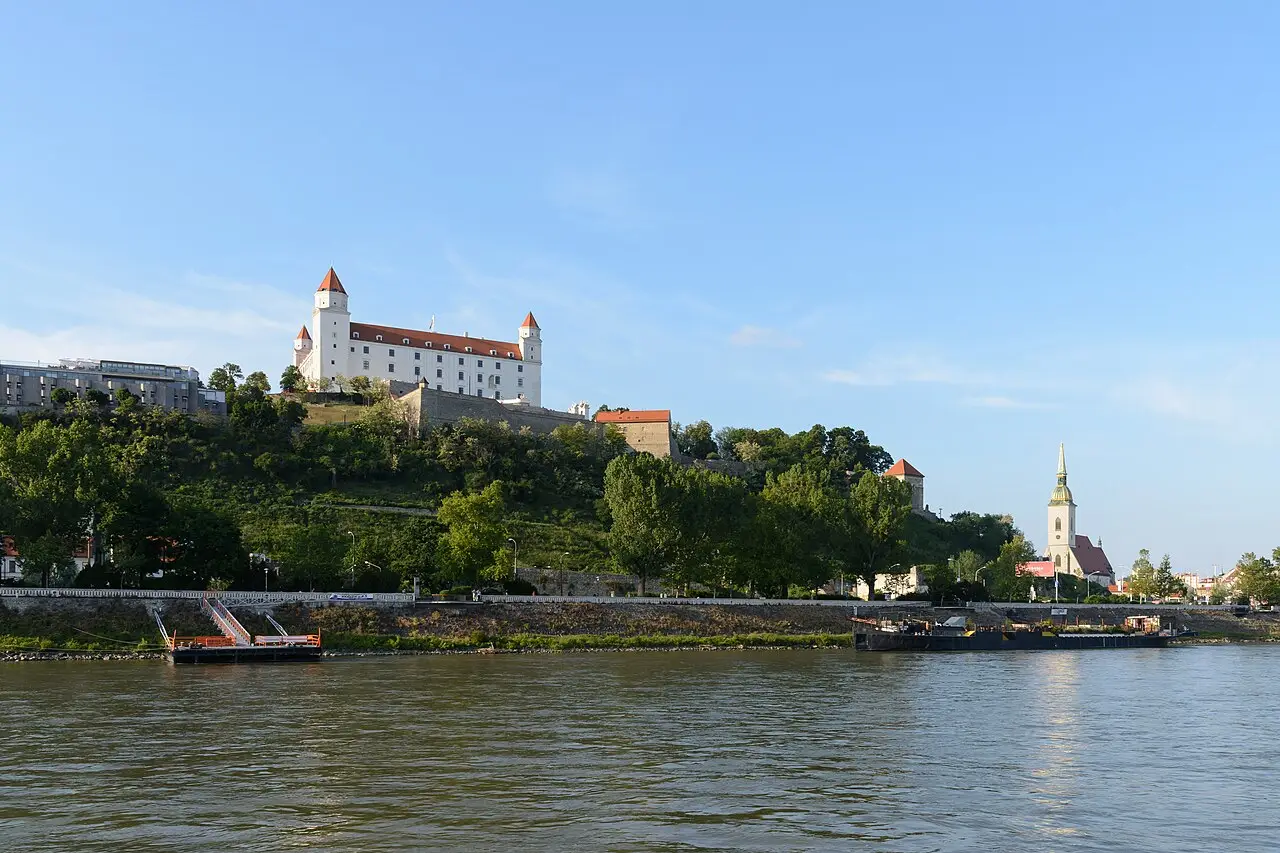
English at work, where a basic level is now the starting line
A 2019 United States government guide put it plainly: in the Slovak labor market, English is no longer seen as an advantage. Most foreign employers expect at least basic English, and many pay for corporate English or other language courses. Basic English has become an expectation, and the next step is being able to lead a call, explain a problem and negotiate in English with ease.
Shared service and business process outsourcing centers are another part of that picture. The national investment agency's overview, dated January 2026, says these centers now cover finance, HR, IT, data analytics, process automation and AI-driven solutions, with a highly educated and multilingual workforce. If your role sits in one of these fields, your lessons can focus on clear emails, crisp status updates and confident answers in meetings.
One to one lessons let you bring your actual work to the table. You can rehearse next week's presentation, rewrite a difficult email together or practice the questions you expect in an interview. If your employer already funds a language course, private lessons can run alongside it and focus on the moments that feel hardest for you.
Cars, services and visitors: the industries that run on English
Automotive production accounts for 44% of industrial output in Slovakia, with 1.08 million cars produced in 2023. If your work touches this industry, lessons can cover the English of technical documents, quality reports, audits and video calls.
Tourism adds another layer. In 2024, almost 1.2 million tourists visited Bratislava, up 3.2% from 2023, and 67% of them came from abroad. If you work in hotels, restaurants, guiding or transport, lessons can help you handle a visitor's question or complaint calmly in English. Shared service centers, meanwhile, now cover finance, HR, IT and data analytics, which opens yet another set of situations to practice.
Your tutor can shape lessons around your field: the vocabulary of a production line, the phrases of a front desk, the structure of a report for a manager in another country. Lessons use situations you actually meet, so what you practice on Tuesday is useful by Wednesday.
Starting English as an adult, at any age
If you never learned English at school, or learned it so long ago that little remains, you are in good company. The Special Eurobarometer 540 summary reports conversational English for 6% of people aged 55 and over and for 30% of those aged 35 to 54. So if you are over 35 and cannot yet hold a conversation in English, you share that starting point with most people your age.
Starting with a private tutor takes the pressure away. You set the pace, and nobody else is in the room to compare yourself with. Your first lessons focus on the English you want soonest: introducing yourself, asking for directions on a trip, reading a message from a relative abroad, or understanding the menus and signs you meet on holiday. You speak from the first lesson, with short phrases at first, and your tutor corrects you gently as you go.
Early lessons can feel rewarding, because every lesson adds phrases you can use the same day. Your coordinator tracks your level on the CEFR scale, so you can watch yourself move from A1 toward A2 and beyond, at a pace that suits your life.
West or vest: the sounds Slovak speakers work on
Every first language leaves fingerprints on the way people speak English. For Slovak speakers, one of the clearest is the pair [w] and [v]. A 2018 study of 40 students at a Slovak university found that learners often struggled with these two consonants, sometimes swapping one for the other, and mispronounced them to almost the same degree. So west can come out as vest, and vest as west.
The fix is physical and very learnable. For [w], your lips round and push forward while your teeth stay away from them. For [v], your top teeth rest lightly on your lower lip and the sound buzzes. Your tutor points these out in the words you use most, inside your own sentences, and gives you short drills with pairs such as wine and vine, west and vest, while and vile, until the difference feels natural in your mouth.
Slovak is the official language, and the Hungarian minority made up 8.2% of the population in the 2021 census. If Hungarian is your home language, your tutor will listen for the habits it brings to your English as well. One to one practice means the drills are built around your own patterns.
From reading well to speaking out loud
Plenty of learners can read an English article comfortably and still hesitate when it is their turn to speak. That gap closes with practice that feels safe. In your Britemy lessons you speak from the very first session, and accuracy is polished along the way. Your tutor gives you room to finish your thought, then helps you say it more naturally.
Over time the lessons stretch you. Describing your weekend becomes explaining a decision, then defending an opinion, then handling a question you did not see coming. Mistakes are part of the work, and your tutor notes the ones that repeat so you can fix them for good. The aim is steady, easy speech that lets you think in English while you talk.
- You speak from the first lesson
- Corrections focus on the mistakes you repeat
- Topics come from your work, studies and daily life
One tutor who gets to know your English
With Britemy you work with one tutor, one to one. Tutors are experienced and skilled in their field, and your tutor is chosen with your goal and your level in mind. A teenager preparing for the maturita, an engineer who writes reports in English and a retiree starting from the beginning each bring a different goal to their own one to one lessons.
Because it is the same tutor lesson after lesson, they learn your habits quickly: the sound you swap, the tense you avoid, the topic that makes you light up. If the fit does not feel right, you can change tutor at any time, and changing is free. Before you buy anything, a free consultation lets you talk through your goals, which helps the first match land well.
A coordinator who follows every lesson
Behind your lessons sits a coordinator. They follow every lesson, read your tutor's notes and send you progress reports on the CEFR scale from A1 to C2. You always know what you have covered, what is getting stronger and what comes next.
Because the coordinator reads the notes after every lesson, the reports connect one lesson to the next: what you practiced, what is improving and what to work on. If you ever feel a different tutor would suit you better, changing is free at any time. When a parent or guardian books lessons for a child, the reports give them a clear view of progress without sitting in on the lessons.
Progress report, CEFR scale
- SpeakingB2
- ListeningB1
- ReadingB2
- WritingB1
Sent by your coordinator after reading your tutor's notes.
Reading your progress on the CEFR scale
The CEFR divides language ability into six levels. A1 and A2 cover basic everyday English: introducing yourself, shopping, short messages. B1 and B2 are independent English: you can handle travel, follow most conversations and, at B2, discuss abstract topics and work in English with some effort. C1 and C2 are advanced, with fluent and flexible English for study and professional life.
These are the same labels the maturita uses, with its B1, B2 and C1 levels, so the reports from your coordinator speak a language you already recognize from school. Progress between levels is gradual and depends on how often you practice and where you start. Your reports show it step by step, so you can see each skill moving and decide together with your tutor where to push next.
Lessons that fit Slovak days and seasons
Slovakia runs on Central European Time, UTC+1 in standard time and UTC+2 in summer daylight time. Because lessons run online, the main thing to plan around is your own week: work, classes, family and travel.
The year has its own rhythm too. The school summer break runs from the beginning of July to the start of September, a good time for students to add lessons. The academic year in higher education runs from September 1 to August 31, so university students can plan lessons around exam periods and the start of each semester. If something comes up, you can reschedule a lesson at no charge when you give at least 24 hours' notice, so a meeting or family plan you know about in advance does not cost you a session.
Lessons on Europe/Bratislava time (UTC+01:00, summer UTC+02:00)
- Tue07:0060 min
- Thu20:0060 min
- Sat11:0060 min
Moving a lesson costs nothing with at least 24 hours' notice.
Online lessons that reach the whole country
Britemy lessons run online on a video call, and Slovakia is well set up for it. In January 2025 the country had 5.05 million internet users, a penetration of 91.8% of a population of 5.49 million, and 6.20 million cellular mobile connections, about 113% of the population. In the Statistics Office's 2025 survey, about 94% of people aged 16 to 74 had used the internet in the previous 12 months, close to the EU average of 94.5%.
That means a learner in a small town and a learner in the center of the capital can have the same tutor and the same lesson. All you need is a stable connection, headphones and a quiet corner. Your tutor can work with texts, exam tasks or your own documents during the call, and your coordinator keeps the thread from one lesson to the next.
Lessons at home, where a tutor is near you
Some learners, especially younger children, focus best face to face. Britemy can arrange lessons at home wherever a vetted tutor is available near you. Ask about it during your consultation, and you will hear honestly what is possible where you live.
Wherever home lessons are an option, you keep the same structure as online: one tutor, one learner, a coordinator who follows every lesson and progress reports on the CEFR scale.
From Bratislava to Košice, Prešov and Žilina
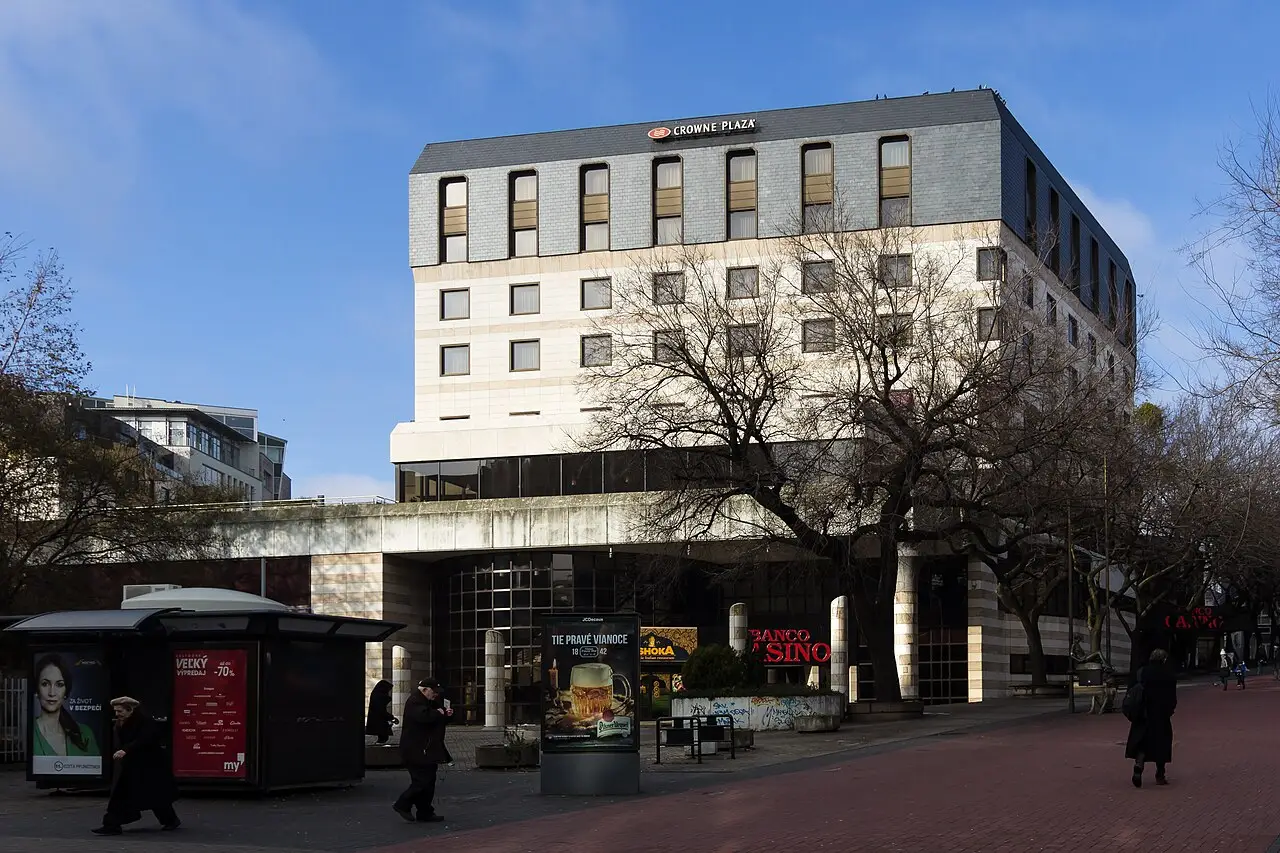
Bratislava, the capital and largest city, had 480,902 residents on 31 December 2025. It is a hub for shared service centers, and in 2024 it welcomed almost 1.2 million tourists, 67% of them from abroad.
Košice, with 222,286 residents on the same date, is where the 2023 proficiency index found the strongest English in the country, within an eastern Slovakia that led all regions. At the end of 2024, 65.1% of Košice residents were aged 15 to 64, 14.3% were children up to 14 and 20.2% were 65 and over. Prešov, also in the east, had 81,223 residents, and Žilina had 79,873.
Wherever you live, from these cities to the smallest village, your lessons run online with the same tutor and coordinator. That makes it easy to keep learning if you move for university or work, or split your week between two towns.
- Bratislava
- Košice
- Prešov
What your first month with Britemy looks like
It starts with a free consultation. You talk about your goals, your current English and the times that suit you, and the team proposes a tutor. Packages start at four sessions, and the full package is paid ahead of your first lesson.
In your first lessons your tutor listens closely to how you speak, finds the gaps that matter most to your goal and agrees a focus with you. You speak from day one. Your coordinator reads the notes after every lesson and sends you progress reports on the CEFR scale, so the plan stays clear for both of you.
A package is active for 30 days from the first lesson, plus a 15-day grace period, and you can pause it once for up to 30 days, which helps around holidays, exam weeks or business trips. You can reschedule a single lesson at no charge when you give at least 24 hours' notice, and changing tutor is free at any time.
Lessons, payment and your rights in Slovakia
- Price
- Prices are shown in EUR before you pay. Packages start at four sessions. From EUR 13 a session. See every price
- Payment
- Pay by card from almost anywhere, including Visa, Mastercard, Amex, Apple Pay and Google Pay.
- Where
- Learn online from anywhere, or at home wherever a vetted tutor is available near you.
- Cancelling
- You can cancel within 14 days of buying your package and get your money back. If you asked us to start lessons inside that period, we keep the value of the lessons you have already had. Read the policy.
- Free
- The consultation, and changing tutor at any time.
Questions from Slovakia
English is already compulsory at school in Slovakia. Why would I need private lessons?
School builds a solid base. A 2019 United States government guide notes that English has been mandatory from grade three, and a report published in 2016 found that about 80% of secondary students studied two foreign languages. What a full class rarely offers is time for you alone to speak. Private lessons give you that time, focused on your own goal, whether it is the maturita, a job or a trip.
Can a tutor help me get ready for the English maturita?
Yes. Your tutor can work through each part of the exam with you: Listening, Use of English and Reading in the external part, and the 60-minute internal writing part. Lessons build reading speed, grammar control and clear paragraph structure, and you keep speaking throughout so your English grows beyond the exam itself.
Should I choose B1 or B2 for the maturita?
Students choose the B1 or B2 level, and C1 is available for bilingual schools. The right choice depends on your current level, the university courses you are aiming for and how much time you have before the exam. Your tutor and coordinator can help you weigh it once they have heard you speak and seen your writing in the first lessons.
Where can I take IELTS in Slovakia, and can Britemy prepare me?
One listing shows five IELTS test centers in Slovakia, in Bratislava, Košice, Trnava, Trenčín and Žilina, with results online 13 days after the test date. Britemy prepares you in two phases with the same tutor: a foundation in the four skills, then score strategy with format drills, timed mock tests and section timing.
I plan to study in the Netherlands or the United Kingdom. How should I prepare?
Slovak student numbers in the Netherlands rose from about 100 in 2006 to 1,100 in 2021, and a June 2023 report says Slovak students in the United Kingdom fell from 2,100 to 1,620 in one year. Start early with academic English, lectures, essays and seminar discussion, then move into test preparation when your applications ask for a score. Your tutor plans both phases with you.
My employer expects English. Can lessons focus on my actual job?
Yes. A 2019 United States government guide says most foreign employers in Slovakia expect at least basic English. Your lessons can use your own emails, reports and presentations, and you can rehearse meetings, calls and interviews with your tutor. If your company already pays for a language course, private lessons can run alongside it.
I am over 55 and almost a complete beginner. Is it too late to start?
It is a fine time to start. The Special Eurobarometer 540 summary reports conversational English for 6% of people aged 55 and over, so most people your age share your starting point. With one tutor at your own pace, you speak short phrases from the first lesson and build from there, with your coordinator showing your progress on the CEFR scale.
What time are lessons, and do I need special equipment for online lessons?
Slovakia uses Central European Time, UTC+1 in standard time and UTC+2 in summer daylight time, so plan your lessons in that time zone. Lessons run on a video call, so a stable internet connection, headphones and a quiet place are enough. Most people in Slovakia are already online, with internet penetration at 91.8% in January 2025.
Can I pause my lessons during the summer holidays or exam season?
Yes. You can pause a package once, for up to 30 days, which suits the school summer break from early July to early September or a busy exam period. A package is active for 30 days from the first lesson plus a 15-day grace period, and you can reschedule a single lesson at no charge when you give at least 24 hours' notice.