






































 Slovenia
English lessons in Slovenia
Turn the English you already know into English you use with ease
In Slovenia the first foreign language starts in Grade 1, and it is usually English. With Britemy you learn with one tutor who gets you speaking from the first lesson, online or at home wherever a vetted tutor is available near you.
Your week, Europe/Ljubljana time
Tue18:00
Fri07:30
Sat09:00
A country that collects languages
Slovenia is a country of many languages. In 2022, 96.0% of adults aged 25 to 64 knew at least one foreign language, and 56.3% knew three or more, the highest share of any EU country. In the same year, only 4% said they knew no foreign language at all. Slovene, the official language, had about 2.5 million first-language speakers according to a 2010 figure and is one of the 24 official and working languages of the EU, while Hungarian and Italian are recognized regional languages.
English holds a special place in that mix. Survey figures based on a European Commission Eurobarometer put the share of residents who speak English at a good or very good level at 45% across all ages, just ahead of Croatian at 44%, with German at 16% and Italian at 8%. So when you decide to work on your English, you are building on a strong national habit, and on years of lessons you probably already had at school.
What often lifts a good level into an easy, confident one is regular conversation with someone who listens closely, notices exactly where you hesitate and helps you move past it. That is what a one to one tutor is for. The rest of this page walks through who learns English in Slovenia, what school and the General Matura ask of you, where English opens doors at work and abroad, and how Britemy lessons fit into a week on Central European Time.
Who is learning English in Slovenia today
The picture changes sharply with age. In the same Eurobarometer-based data, 77% of residents aged 15 to 34 speak English at a good or very good level, compared with 55% of those aged 35 to 54 and 17% of those aged 55 and over. That gap tells you something useful: whatever your age, you are surrounded by people whose English sits at a different stage from yours, and there is no single standard you are supposed to have reached by now.
Adults keep learning as well. In 2015, 28,827 adults in Slovenia took part in language courses, and 36% of them took English courses. Behind numbers like these sit very different people and very different reasons, and a private tutor can shape every lesson around yours. Lessons with Britemy can suit learners like these:
- Teenagers whose school English is solid on paper and who want it to feel natural out loud
- Students aiming at an English-taught degree who need a test score and the confidence to follow lectures
- Professionals in services, tourism, logistics and export who use English with clients and partners
- Adults who are coming back to English after many years, or starting it for the first time
Starting later is a perfectly good time to start
If you are 55 or over, you belong to the age group where only 17% speak English at a good or very good level, so feeling like a beginner puts you in very large company. You also bring real strengths: patience, a clear idea of why you want the language, and often experience with another language already. In 2022 only 4% of adults aged 25 to 64 in Slovenia said they knew no foreign language at all, so if you fall in that age range you have very likely learned another language before and know how it feels to grow into one.
With a private tutor you begin with the English you actually need. That might be greeting relatives who live abroad, ordering in a restaurant on holiday, understanding a doctor's instructions, or following a film without reaching for the subtitles. A one to one lesson can move as slowly as you need, return to a point as often as you like, and build on the words from the lesson before.
There is nobody else in the room to compare yourself with, so mistakes stay between you and a tutor whose job is to help you through them. For many adult beginners this is a real comfort: you can ask the question you were too shy to ask in a classroom, and you get an answer made for you.
How Slovene shapes your English, and how to use that
Every first language leaves fingerprints on the second one, and knowing yours makes practice faster. Slovene has an eight-vowel system, or nine according to one phonologist. English uses a larger set of vowel sounds than that, so pairs like ship and sheep, full and fool, or bed and bad are worth practicing side by side. In your lessons you can work on the pairs that matter for you and say them inside real sentences until the difference feels automatic.
Rhythm is the second area. One of the two accentual norms of Slovene uses pitch accent, while English carries much of its meaning through stress: strong syllables, weak ones, and the word you lean on in a sentence. Saying I didn't take it with the weight on a different word changes the message each time. Practicing that rhythm makes you sound relaxed and helps listeners follow you without effort.
Word order is the third. Slovene is basically subject, verb, object, yet its word order is flexible and often changes for emphasis or style. English is much stricter, so emphasis moves into stress or into patterns such as It was Maja who called. Slovene also has a dual number for pairs of things, and once you see that English only needs singular and plural, that part of the grammar feels pleasantly light. Each of these points works best as short, repeated speaking practice with your tutor.
You speak from the very first lesson
Britemy lessons put speaking first. From the opening minutes of your first session you are talking: about your work, your plans, the trip you are planning or the series you are watching. Accuracy is polished along the way, so your tutor notes the slips worth fixing and returns to them once your idea is out, which keeps the conversation flowing and keeps you willing to try.
This matters most for people who understand far more than they say. If you read English easily but freeze when a colleague calls, or if you can write a careful email yet go quiet in a meeting, the gap is usually practice under real conditions. A tutor gives you that practice every lesson, in a setting where nobody is grading you and every pause is treated as a chance to find the next word together.
Over the weeks you will notice the change in small moments: answering a question without rehearsing it in your head first, telling a short story with a joke in it, or asking someone to repeat themselves without feeling embarrassed.
Children and teenagers: building on what school starts
English arrives early in Slovenian classrooms. The first foreign language is a compulsory subject from Grade 1, and schools offer either English or German in that place, with English the usual choice. Pupils typically start primary school at 5 or 6 and finish at 14 or 15. In the 2023/24 school year, 100.0% of lower secondary pupils were learning English. Earlier figures point the same way: in 2014, 97% of elementary pupils who learned a foreign language were learning English, and English was the most common first foreign language in upper secondary schools, at 95%.
From Grades 7 to 9 pupils may add a second or third foreign language, as a compulsory or an elective subject. Yet the share of lower secondary pupils learning two or more foreign languages fell from 56.3% in 2014 to 20.8% in 2024, so for many children English is now the one foreign language they carry through school, and it pays to make it strong.
A private tutor adds what a shared classroom has less time for: one child, one adult, and plenty of speaking turns. For younger children lessons can use games, songs, picture stories and short conversations. Teenagers can work on discussion, presentations, essay structure and the listening skills school English leans on. Whoever arranges the lessons, a parent, a guardian or the teenager, the lessons can follow the learner's own interests and the topics coming up at school.
The General Matura and the international tests
For secondary students who sit the General Matura, English can play a central part. Candidates sit five subjects in total, and three are compulsory: their mother tongue, mathematics and one foreign language. That foreign language can be English, French, German, Italian, Russian or Spanish. Foreign language papers come in two tiers, foundation and higher, and each candidate can take no more than two subjects on the higher tier, so choosing English at the higher tier is a real decision.
The stakes are clear. Passing the General Matura is a general requirement for admission to undergraduate university courses in Slovenia, and for courses with restricted admission it is a minimum requirement. A tutor helps a student build the four skills every English exam relies on, speaking, listening, reading and writing, working with the topics and texts the student brings from school and giving plenty of practice in expressing ideas clearly under time pressure.
Later on, many learners need an international test. English-taught degree programs in Slovenia list IELTS and TOEFL iBT as accepted proof of English. Britemy prepares learners for IELTS, TOEFL, TOEIC, Cambridge exams, the Duolingo English Test and PTE Academic, and that preparation is explained in the next section.
- IELTS Academic
- TOEFL iBT
- General Matura English exam
English-taught degrees, at home and further away
If you are aiming at an English-taught program in Slovenia, the accepted tests listed are IELTS at 6.0 to 6.5 overall and TOEFL iBT at 79 to 90, and results usually need to be less than two years old. That last detail shapes your plan: it makes sense to take the test when your application is close, after a stretch of focused preparation. Programs taught in Slovene ask instead for the Certificate of Slovenian Language at B2 minimum.
That B2 comes from the CEFR, the Common European Framework of Reference for Languages, a six-level scale that runs from A1 for a beginner to C2 for near-complete mastery. Britemy reports your English progress on the same scale, so you always know where you stand against the level a program asks for.
Test preparation with Britemy runs in two phases with the same tutor. First comes a foundation in the four skills, so your reading, listening, writing and speaking are strong enough to carry a score. Then comes score strategy: drills on the official format, timed mock tests and practice in pacing each section. Exchanges are shifting too: according to the European Commission, fewer Slovenian participants left for Erasmus+ exchanges during 2023, while the number of participants traveling to Slovenia picked up.
Tourism, the port and the export trade
Tourism grew in 2024. Slovenia recorded 6.58 million tourist arrivals and 16.85 million overnight stays that year, up 6.3% and 4.5% on 2023. The largest foreign markets by overnight stays were Germany, Italy, Austria and Croatia, and stays by guests from the United States rose 18% while those from Poland rose 19%. With guests arriving from many countries, English can be the shared language between a hotel receptionist, a guide or a restaurant owner and the guest in front of them.
Trade is another place where English is useful. The government names Koper as one of three centers of international importance and describes its geostrategic role, thanks to its coastal location and port. Slovenia's exports are listed as manufactured goods, machinery and transport equipment, chemicals and food, and selling goods like these abroad involves specifications, contracts, shipping documents, calls and emails with partners in other countries.
Lessons can turn that reality into practice you can use on Monday morning:
- Checking in guests, recommending a route and handling a complaint calmly
- Explaining a shipping delay or a change in a delivery schedule
- Describing a machine, a material or a food product to a buyer
- Following a fast call with a supplier and summarizing it by email
English for the work you do every day
Services employed most working people in Slovenia according to 2017 estimates: the sector made up 65.9% of GDP and employed 63.3% of the labor force. Service work is people work: clients, colleagues, suppliers, partners on a video call from another country. When English is part of that, the skills that count are practical ones, such as opening a meeting, disagreeing politely, explaining a number on a slide, or writing an email that gets a clear answer.
Business lessons with Britemy are built on your own week. Bring the presentation you have to give, the email thread you are stuck on or the interview you are preparing for, and your tutor works through it with you, adjusting the register from friendly to formal and back again. You rehearse the hard moments, the question you dread or the negotiation that could go either way, until you have words ready for them.
For job seekers, the same approach prepares you for interviews in English: telling your career story clearly, answering competency questions with concrete examples, and asking good questions at the end.
From Ljubljana to Maribor and the coast
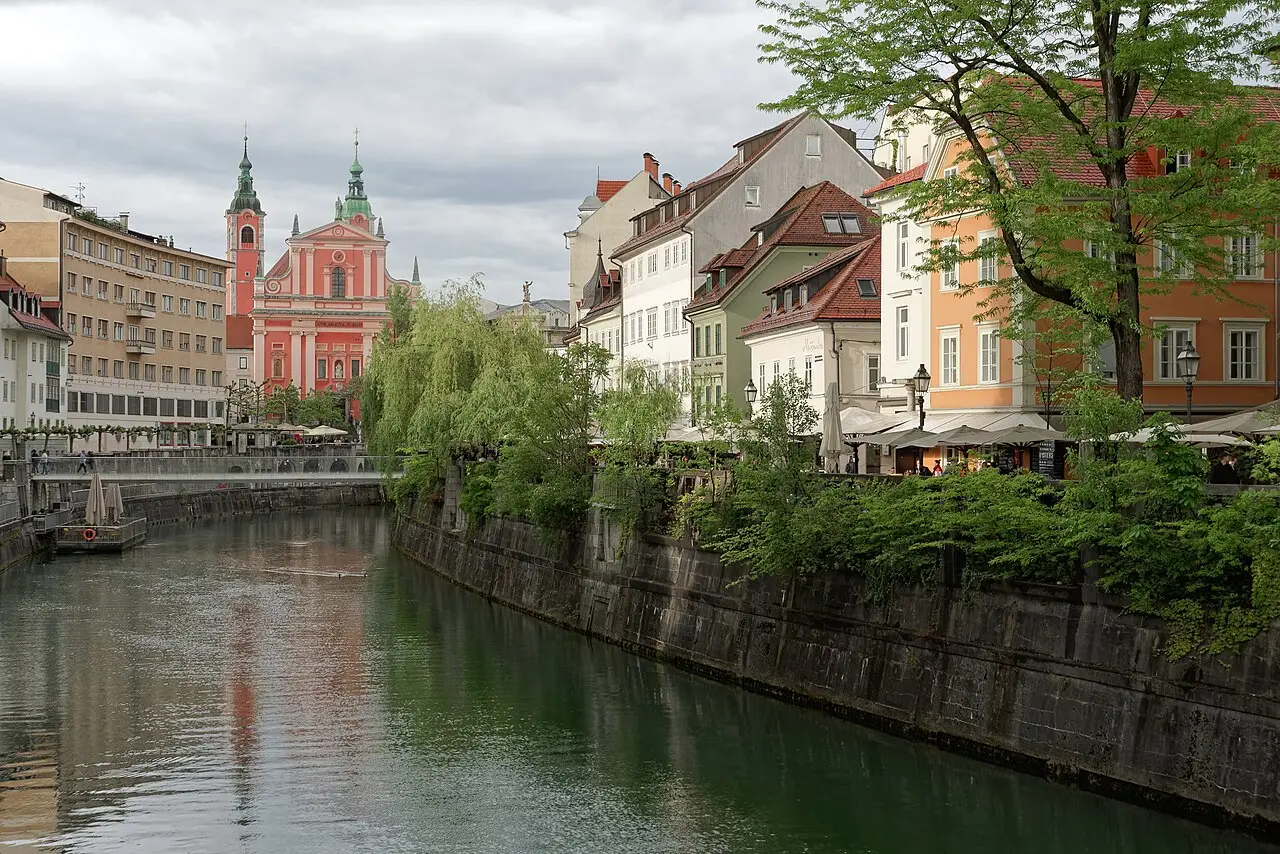
Slovenia's population estimate for 2026 is 2,138,751, and the government names Ljubljana and Maribor as its only urban centers with more than 100,000 inhabitants. Ljubljana, the capital, has 302,826 inhabitants in 2026 and is the country's cultural, educational, economic, political and administrative center, which makes it home to the biggest pool of learners in the country.
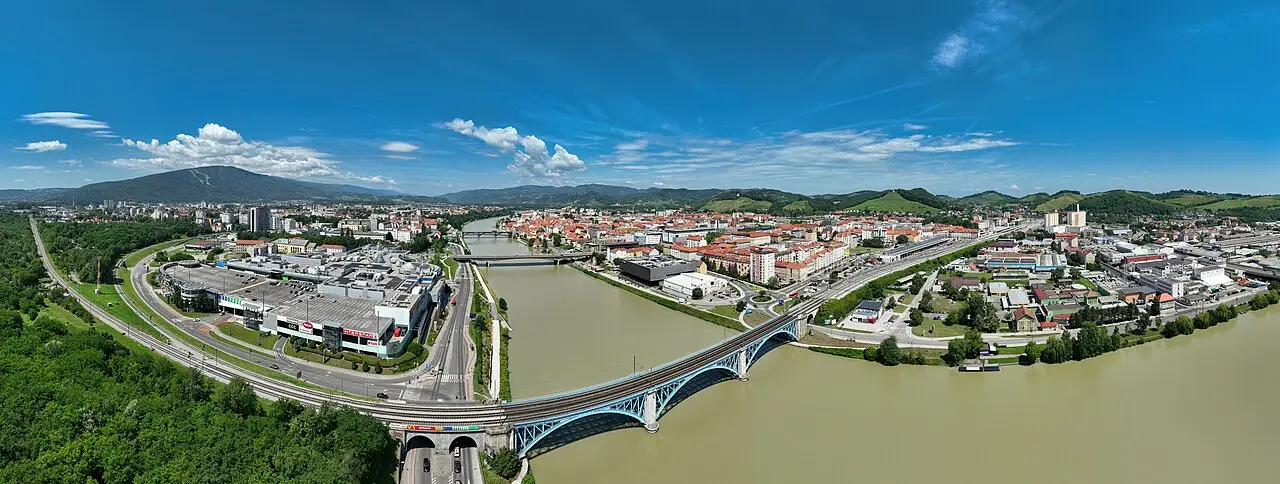
Maribor, the second-largest city with 97,522 inhabitants in 2025, is the economic, administrative, educational and cultural center of eastern Slovenia and hosts the University of Maribor, founded in 1975. On the coast, Koper joins the two as one of the three centers of international importance named by the government, with a major port that makes English useful for trade and logistics work.
Wherever you live, from the capital to a village in the hills, online lessons work in exactly the same way, with the same tutors and the same coordinator. Lessons at home depend on one thing only: whether a vetted tutor is available near you, which you can ask about during your consultation.
- Ljubljana
- Maribor
- Koper
Lessons that fit a Central European week
Slovenia runs on Central European Time, UTC+1, and moves to UTC+2 for summer daylight saving. Your lessons simply run in your own local time, and when the clocks change in spring and fall it is worth double-checking your regular lesson time so nothing slips.
People fit English into very different weeks. Think about when your week has a quiet hour, whether that is before work, at lunch, in the evening or on a weekend, and bring that to your free consultation. Packages start at four sessions and stay active for 30 days from the first lesson, plus a 15-day grace period, so a steady weekly rhythm fits them well, and steady lessons over several weeks tend to do more for your speaking than an occasional long one.
Lessons run on a video call, so they can go wherever you have a good connection, and Slovenia had 2.71 million cellular mobile connections in late 2025, equal to 128% of the population. If your week shifts, moving a lesson costs nothing with at least 24 hours' notice.
Lessons on Europe/Ljubljana time (UTC+01:00, summer UTC+02:00)
- Tue18:0060 min
- Fri07:3060 min
- Sat09:0060 min
Moving a lesson costs nothing with at least 24 hours' notice.
Online lessons that feel personal
Every Britemy lesson can run online on a video call, which means you can learn from your home, your office or a quiet corner anywhere you have a connection. At the end of 2025 Slovenia had 1.94 million internet users, a penetration rate of 91.5% of the population, so for most people the only things to arrange are a little time, a quiet spot and a pair of headphones.
Online lessons still feel close and personal. You see and hear your tutor, read an article or work on a paragraph together, and keep your own list of new words and phrases to return to between lessons. Because it is one tutor and one learner, the whole lesson belongs to you: your questions, your pace, your topics.
A video call is also good practice in itself, since a lot of work in English happens on exactly this kind of call.
Lessons at your home, where a tutor is near
Some learners prefer to sit at the same table as their tutor, especially younger children and people who are new to video calls. Britemy offers lessons at home wherever a vetted tutor is available near you, and you can ask about it during your free consultation. If no tutor is near, online lessons on a video call give you one tutor of your own and the same coordinator who follows every lesson. You choose the place where the lesson happens.
One tutor chosen for you
With Britemy you learn with one tutor, and your lessons are shaped around you: your level, your goals, your age and the way you like to learn. A teenager preparing for school exams, a sales manager rehearsing a pitch and a retired engineer learning for travel each want something different from their lessons, and Britemy tutors are experienced and skilled in their field.
You keep the same tutor from lesson to lesson, so they come to know how you think, which mistakes return and which topics get you talking. If it does not feel right, changing your tutor is free at any time.
A coordinator who follows every lesson
Behind every Britemy learner there is a coordinator. The coordinator follows each lesson and reads the tutor's notes, so someone besides your tutor is always aware of how your English is developing over time.
You also receive progress reports on the CEFR scale from A1 to C2, so you can see which skills are moving and which need more time. For a child or teenager, the reports give the learner and the people supporting them a shared picture of how the lessons are going.
Progress report, CEFR scale
- SpeakingA2
- ListeningA1
- ReadingA2
- WritingA1
Sent by your coordinator after reading your tutor's notes.
Knowing where you stand on the CEFR
The CEFR scale gives your progress a shape. A1 and A2 cover the basics: introducing yourself, handling simple everyday situations and talking about familiar topics. B1 and B2 are the independent levels, where you can manage travel, work conversations and discussions of ideas with growing ease. C1 and C2 describe fluent, flexible English that works for complex professional and academic tasks.
Your tutor's notes and the coordinator's reports place you on this scale and show what the next step looks like in practice, such as following a meeting without asking for repeats, or writing a report that reads naturally. Progress depends on how often you practice and where you begin, so the reports give you a clear, honest picture of how you are moving and what to aim for next.
Programs shaped around your goal
Whatever brings you to English, there is a program built for it, and your tutor adapts it to you from the first lesson. You can start with one focus and widen it later as your confidence grows.
- General English for adults, from first steps to advanced
- Conversation and pronunciation for speaking with ease
- English for children and teenagers alongside school
- Business English for meetings, presentations, emails and interviews
- Academic English for essays, research and university study
- Test preparation for IELTS, TOEFL, TOEIC, Cambridge, the Duolingo English Test and PTE Academic
What your first month looks like
It starts with a free consultation before you buy anything. You talk about your goals, your schedule and how you would like to learn, so your lessons start from what you need. Your first lesson goes straight into conversation, so your tutor hears your English as it really is and plans the following lessons from there.
Packages start at four sessions, paid in full before the first session. A package is active for 30 days from your first lesson, with a 15-day grace period after that, and you can pause once per package for up to 30 days if work or travel gets in the way. Moving a lesson costs nothing with at least 24 hours' notice.
By the end of the first month you will have a working rhythm with your tutor, a clear sense of your strengths and the areas to work on, and progress reports from your coordinator to show where you are heading next.
Lessons, payment and your rights in Slovenia
- Price
- Prices are shown in EUR before you pay. Packages start at four sessions. From EUR 13 a session. See every price
- Payment
- Pay by card from almost anywhere, including Visa, Mastercard, Amex, Apple Pay and Google Pay.
- Where
- Learn online from anywhere, or at home wherever a vetted tutor is available near you.
- Cancelling
- You can cancel within 14 days of buying your package and get your money back. If you asked us to start lessons inside that period, we keep the value of the lessons you have already had. Read the policy.
- Free
- The consultation, and changing tutor at any time.
Questions from Slovenia
I studied English at school for years. Why would I need a tutor now?
School gives pupils in Slovenia an early start, since the first foreign language begins in Grade 1 and is usually English. A private lesson adds one person listening closely to you alone, with long, relaxed conversation. A tutor helps turn the English you already understand into English you can produce quickly, in your own voice, in the situations that matter to you.
Can lessons help my teenager with the English part of the General Matura?
Yes. English is one of the six languages that can fill the compulsory foreign language slot of the General Matura, at the foundation or the higher tier. A tutor strengthens the four skills the exam relies on and works with the topics and texts your teenager brings from school, with plenty of speaking and writing practice along the way.
Which English test do I need for an English-taught degree in Slovenia?
The accepted tests listed for English-taught programs are IELTS at 6.0 to 6.5 overall and TOEFL iBT at 79 to 90, and results usually need to be less than two years old. Check the exact requirement of your chosen program, then plan your preparation so you sit the test close to your application.
How does test preparation work with Britemy?
It runs in two phases with the same tutor. First you build a foundation in reading, listening, writing and speaking. Then you move to score strategy, with drills on the official format, timed mock tests and practice in pacing each section. You move to the second phase once your foundation is ready to carry a score.
What times are lessons, and what happens when the clocks change?
Slovenia uses Central European Time at UTC+1 and moves to UTC+2 in summer, and your lessons run in your local time. Bring the hours that suit your week to your free consultation. When the clocks change in spring and fall, it is a good idea to double-check your regular lesson time.
Can a tutor come to my home instead of meeting online?
Britemy offers lessons at home wherever a vetted tutor is available near you, and you can ask about it during the free consultation. If no tutor is near, online lessons on a video call give you one tutor of your own and the same coordinator who follows every lesson.
I am over 55 and never really learned English. Is it too late?
Not at all. Among residents aged 55 and over, only 17% speak English at a good or very good level, so starting now puts you in large company. You begin with the English you actually need, a one to one lesson can go as slowly as you like, and every lesson builds on the words you learned the time before.
What if my tutor turns out to be the wrong match?
Changing your tutor is free at any time, so you can try a new tutor whenever the pace, the style or the topics do not suit you. Your coordinator follows every lesson and reads the tutor's notes, and your progress reports on the CEFR scale keep showing where you stand.
I work in tourism. Can my lessons focus on talking with guests?
Yes. Slovenia recorded 6.58 million tourist arrivals in 2024, with guests from many countries, so lessons can focus on exactly those moments: checking guests in, recommending places, explaining menus and handling a complaint calmly. Your tutor builds roleplays from your real work so the phrases are ready when a guest walks in.