

































































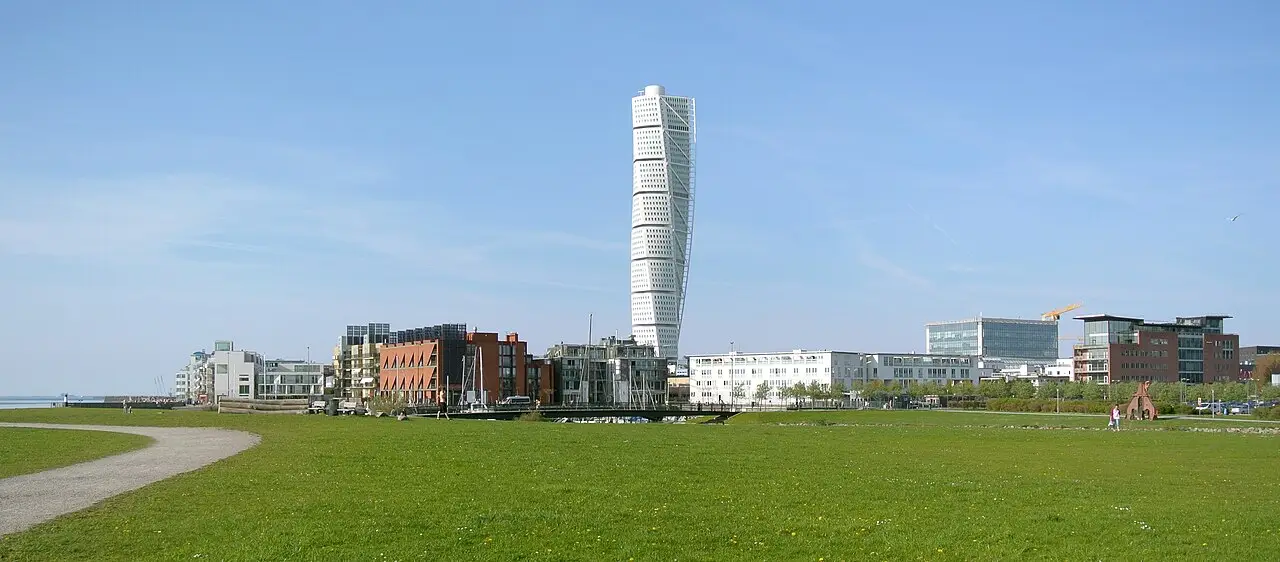
 Sweden
Private English lessons for Sweden
Turn the English you already have into English you trust
One tutor works with you on the parts that still feel shaky, whether that is an English 6 requirement, an IELTS or TOEFL score, a meeting with a foreign client, or simply sounding like yourself when you speak.
Your week, Europe/Stockholm time
Wed20:00
Sat07:00
You already speak English here, so what is left to learn?
If you grew up in Sweden, English has probably been around you for as long as you can remember. Foreign programs on Swedish television usually keep their original soundtrack with Swedish subtitles, so English-language films and series reach the living room in their original voices long before anyone opens a grammar book. English has also been a compulsory school subject since 1952, and today it is the first compulsory foreign language, with a minimum of 480 teaching hours written into the compulsory school timetable.
The results are easy to see. In the 2025 edition of a global English proficiency index covering 123 countries and territories, Sweden scored 609 and ranked 8th, inside the very high proficiency band. Back in a 2005 EU survey, 89 percent of people in Sweden said they could hold a conversation in English, while 30 percent said the same for German and 11 percent for French.
So why would anyone here book a tutor? A strong national average tells you very little about your own English on the day it matters. Chatting with a tourist is one skill. Writing a seminar paper, defending a proposal to a client in another country, reaching the score a university asks for, or speaking without that small pause before a tricky word are different skills, and each one improves fastest with someone who listens closely to you. That is the space where a private tutor earns their place, and it is where most of this page lives.

The people in Sweden who choose a personal tutor
Population records counted 10,610,500 residents at the end of June 2026, and the people among them who want more English are a varied group. Some went through Swedish school and now need their English to work harder for them. Others arrived with a different first language, and common immigrant languages in Sweden include Arabic, Serbo-Croatian, Greek, Kurdish, Persian, Polish, Spanish and Somali. For many of these learners, English joins Swedish and their first language, and they bring real strengths to it.
Sweden also protects five national minority languages, Finnish, Meankieli, Romani, Sami and Yiddish, alongside Swedish Sign Language, so several languages already have a protected place in Swedish life. At school, every pupil must also study a second foreign language besides English, municipalities offer at least two to choose from, and around 90 percent of pupils study one by year six. English often shares the week with homework in another language, which is one reason a calm, focused hour of English can feel like a relief.
- Upper secondary students and graduates aiming for the English 6 or English 7 requirement
- Professionals who use English with customers, suppliers and colleagues abroad
- Newcomers building English alongside Swedish
- Children and teenagers who want calm support next to their school English
- Adults who understand almost everything and want to speak with the same ease

How Swedish shapes the way your English sounds
Your first language leaves fingerprints on your English, and for Swedish speakers the fingerprints are mostly about rhythm and vowels. Swedish has nine vowel qualities, each with a long and a short form, and in Swedish the length of the vowel is generally treated as the main difference between words, with the quality of the vowel coming second. English leans the other way for many vowel pairs. The difference between ship and sheep, or full and fool, depends a great deal on the shape of the vowel itself, so your tutor helps you notice the shape of each vowel as well as its length.
Swedish also has a lexical pitch accent, the acute and the grave, which gives the language its familiar melody. Primary stress in Swedish can fall on any of the last three syllables of a stem, and moving it can change the meaning of a word. English works with stress too, though its patterns are different: PHOtograph and phoTOGraphy, or a REcord and to reCORD. If some of the Swedish melody carries over into your English sentences, it is something you can learn to hear and adjust.
All of this can be worked on calmly. Your tutor simply listens for the patterns that are yours, names them kindly, and gives you short drills that fit into a normal conversation. If your first language is Arabic, Persian, Polish or Somali, the patterns will be different again, and your tutor adjusts to the sounds you actually make.
What school gives you, and the step up to university English
Each municipality decides when English teaching begins, though it must start by the third school year at the latest, and some pupils begin in year one. The national syllabus sets goals to aim for and goals to reach by years three, five and nine, and English is tested nationally in year six and year nine. For years 1 to 3, the syllabus groups the central content into four strands: the content of communication, listening and reading, speaking and conversing, and writing.
University asks for something more specific. Most bachelor's and master's programs in Sweden require English 6, also called English level 2, while a few master's programs ask for English 5 or English 7. University Admissions Sweden also notes that a school or university certificate alone is generally not enough to prove the level, so it pays to check early which kind of proof your own application needs.
This is where many students discover a gap between everyday English and academic English. Reading a long research article, summarizing it fairly, building a paragraph that makes one clear point, and citing sources in English all take practice. Students are also leaning on new tools: in 2024, 25 percent of people aged 16 or older in Sweden had used generative AI tools in the previous three months, and 72 percent of those users used them in formal education. A tutor helps you write and speak in your own voice, so the English on the page is English you can defend in a seminar.

For children and teenagers at Swedish schools
Younger children may hear less English at home than you expect. Foreign children's programs on Swedish television are typically dubbed into Swedish, so small children meet far fewer original English soundtracks than older viewers do. With English starting somewhere between year one and year three, a young learner may arrive in class with very little English in their ears, and a patient tutor can turn those first words into play and short, friendly conversation.
For older students, the pressure points are the national tests. English is tested in year six and year nine, and at upper secondary the national test in English 6 has three parts: speaking in pairs, about 15 minutes per pair; reading and listening, with 90 minutes for reading and about 50 for listening; and a writing task with 100 minutes of test time. The test aims to show general English skills regardless of where, when or how the student learned them, and it is not based on specific teaching materials.
That last point shapes how a tutor helps. Your child practices holding a real conversation with a partner, reading for the main idea under time pressure, listening to unfamiliar voices, and planning a piece of writing before the clock runs out. Lessons stay friendly, and parents receive the same clear progress reports adult learners do.
IELTS, TOEFL, PTE and Cambridge for university entry in Sweden
If you are proving English 6 or English 7 with an international test, University Admissions Sweden lists exactly which results it accepts. The thresholds below are the ones it publishes, and while most programs ask for English 6, a few master's programs ask for English 5 or English 7, so read the entry requirements for each program you apply to.
Two details trip people up. TOEFL iBT changed its scale, so results from 20 January 2026 and earlier are read on the old scale and results from 21 January 2026 onward on the new 1 to 6 scale. And the University Admissions Sweden list does not mention the Duolingo English Test, while IELTS General Training, TOEFL Essentials, TOEFL ITP and Cambridge First Certificate are not accepted for the English requirement. Choosing the right test before you start saves you time.
Test preparation with Britemy runs in two phases with the same tutor. The first phase builds the four skills, reading, listening, speaking and writing, because a solid foundation is what holds up under exam pressure. The second phase is score strategy: drills in the official formats, timed mock tests, and section by section timing. You move to the second phase when your foundation is ready, and your coordinator tracks the change in your reports.
- English 6: IELTS Academic overall 6.5 with no section below 5.5, PTE Academic 62 with writing 61, or Cambridge C1 Advanced with at least 180
- English 7: IELTS Academic overall 7.0 with no section below 6.0, PTE Academic 68 with writing 61, or Cambridge C2 Proficiency with at least 200
- TOEFL iBT on the old scale: total 90 for English 6, or total 100 for English 7, with written 20
- TOEFL iBT from 21 January 2026: total 4.5 for English 6, or total 5 for English 7
- IELTS Academic
- TOEFL iBT
- PTE Academic
- Cambridge C1 Advanced and C2 Proficiency
- National tests in English (school years 6 and 9, upper secondary English 5 and 6)
Studying abroad with support from CSN
Plenty of students in Sweden take their studies abroad. In 2025, 26,233 students received study support from CSN to study abroad, slightly up from 25,882 in 2024 and down from 31,553 in 2016. Measured another way, 22,300 students studied abroad with CSN support in 2024/2025, which is under 5 percent of all students with study support and 20 percent fewer than in 2001/2002.
The favorite destinations in 2024/2025 were the USA with 3,033 students, the United Kingdom with 1,641 and Spain with 1,592. The most popular cities were Riga with 1,026, Copenhagen with 778, London with 594, Milan with 478 and Kaunas with 471. Several of those cities are outside the English-speaking world, and in an international classroom English can become the language you share with classmates from many countries, in lectures, group projects and daily life.
Each university abroad sets its own language requirements, so your first task is to find out which test and which score your chosen school asks for. Once you know, your tutor can plan backward from the deadline. Even when no test is required, a few months of lessons focused on lectures, academic reading and group discussion can make the first semester easier.
English for a country that sells to the world
Sweden's goods exports reached 209 billion US dollars in 2025, up 6 percent from the year before and equal to 0.82 percent of world goods exports. Trade on that scale involves plenty of everyday conversations in English: sales calls, supplier negotiations, support tickets, board presentations and long email threads with partners in other time zones. You may manage these perfectly well and still feel a gap between how they sound in Swedish and how they sound in English.
New tools have changed part of the job. In 2026, 47 percent of people aged 16 and older in Sweden said they had used generative AI tools, up from 25 percent in 2024. A tool can tidy an email. It cannot sit with you in a video meeting when a client pushes back on price, or help you find the right words when a colleague asks a question you did not expect. Those live moments are what lessons are built around.
With a tutor, you bring your real material: the slide deck for next week, the contract clause you need to explain, the small talk before a meeting that always feels stiff. You rehearse, your tutor listens, and together you sharpen the phrases you will actually use. Normal working hours in Sweden are at most 40 a week, and full-time work usually happens in the daytime, so early mornings, lunch breaks and evenings are natural times for a lesson.

Starting English as an adult, even while you learn Swedish
In a country where 89 percent of people said they could hold a conversation in English in a 2005 survey, starting from the beginning as an adult can feel lonely. You are in good company, though: common first languages among people who moved to Sweden include Arabic, Kurdish, Persian, Somali, Polish and others, and many newcomers are building Swedish for daily life while English waits in the background for work, travel or helping their children with homework.
Learning two new languages at once is demanding, and it is entirely possible. Lessons at the beginner level move at your pace, use plain, useful English from the first hour, and give you short phrases you can say out loud straight away: introducing yourself, asking for help, talking about your work, understanding a simple message. Grammar is added in small, clear steps along the way.
Tell us in your free consultation which languages you already speak and what you need English for. That helps your tutor plan the first lessons around your real life, and the languages you already know can give you useful shortcuts into English.
Fitting lessons around Swedish working life
Swedish working life is built with clear limits, and that makes planning lessons easier. Normal working hours are at most 40 a week by law. Under the Working Hours Act you may not work more than five hours in a row without a break, and you have the right to at least 11 hours of continuous rest each day and 36 hours of continuous free time each week. That leaves room in your evenings and weekends, where one or two lessons a week can fit comfortably.
Holidays matter too. Employees have the right to at least 25 days of paid holiday a year under the Annual Leave Act, whether they work full time or part time, and if you take a long stretch in summer, it is easy to plan around. Britemy allows one pause per package for up to 30 days, which suits a long summer break, and you can reschedule a single lesson without charge when you give at least 24 hours' notice.
Sweden uses Central European Time, UTC+01:00, and Central European Summer Time, UTC+02:00. Summer time starts on the last Sunday in March and ends on the last Sunday in October. Agree lesson times in Swedish time and double check them in the weeks the clocks change.
Lessons on Europe/Stockholm time (UTC+01:00, summer UTC+02:00)
- Wed20:0060 min
- Sat07:0060 min
Moving a lesson costs nothing with at least 24 hours' notice.
From Stockholm to Uppsala, and everywhere in between
In December 2023, the three largest urban areas in Sweden were Stockholm with 1,652,895 residents, Gothenburg with 674,529 and Malmo with 339,316, with Uppsala fourth at 174,982. Each city has its own rhythm. Stockholm has the deepest pool of working professionals and university students; Gothenburg has a large student and professional community; Uppsala is home to a large university population preparing for English-taught studies; and Malmo sits in the south, where many residents work or study across borders. Copenhagen was the second most popular study city for students abroad with CSN support in 2024/2025, with 778 students.
Because lessons run online, you can learn the same things wherever you live. A student in a small town in the north and a manager in central Stockholm get the same tutor matching, the same coordinator and the same progress reports. All you need is a quiet corner, a stable connection and a device with a camera and microphone.
- Stockholm
- Gothenburg
- Malmo
- Uppsala
Online lessons that feel like a real conversation
Every lesson runs on a video call, one tutor and one learner. That format suits Sweden well, where 84 percent of people aged 16 and older had bought goods or services online in 2026 and Statistics Sweden tracks learning activities over the internet in its yearly survey. You open your laptop or tablet, your tutor greets you, and you are speaking within the first minute.
A video call also makes it easy to work with real material, such as a report you need to present, a paragraph from your essay or a news article you read and talk about together. Your tutor points out pronunciation as you go, so you leave each lesson with a few clear things to practice.
Online lessons also remove the travel. On a dark evening, opening a laptop at home is far easier than heading out across town, and that small convenience is often what keeps learners steady through a whole package.

Lessons at home when a tutor is close by
Some learners, and many parents of younger children, prefer a tutor sitting at the same table. Britemy can offer lessons at home wherever a vetted tutor is available near you. Availability depends on where you live and which tutors are nearby at the time, so this is something we look at together during your free consultation.
If a home tutor is not available near you, online lessons give you the same one to one attention, the same coordinator and the same progress reports on the CEFR scale. Whichever format you choose, the focus stays on you speaking from the first lesson.
A tutor who listens to how you actually speak
Your tutor is experienced and skilled in their field, and their job is to learn how you use English: where you are quick, where you hesitate, which words you avoid, and what you need the language for. From there, each lesson is built around you. A student preparing for English 7 and a sales manager preparing for a trade fair will both speak a lot in their first lesson, about very different things.
You speak from the first lesson, and accuracy is polished along the way. That means your tutor will let small mistakes pass while you are telling a story, then come back to the two or three that matter most. Over time, those corrections add up to English that is both fluent and precise.
Personal fit matters. If the chemistry is not right, or your goals change, you can change tutor for free at any time. Just tell your coordinator, who already follows your lessons and reads your tutor's notes.
A coordinator who keeps an eye on the whole picture
Behind every learner there is a coordinator. Your coordinator follows every lesson, reads your tutor's notes, and notices when something needs attention: a skill that is moving slowly, a deadline that is getting close, a schedule that keeps slipping. You always have someone to talk to about the lessons themselves, separate from your tutor.
The coordinator also sends you progress reports on the CEFR scale. For parents, those reports are the simplest way to see what is happening in lessons without sitting in on them. For adults, they turn a vague feeling of getting better into a clear record of which skills have moved and which still need work.
- Follows every lesson and reads the tutor's notes
- Sends progress reports on the CEFR scale, A1 to C2
- Arranges a change of tutor whenever you ask, free of charge
Progress report, CEFR scale
- SpeakingB2
- ListeningB1
- ReadingB2
- WritingB1
Sent by your coordinator after reading your tutor's notes.
Measuring progress on the CEFR scale
Progress is easier to keep up when you can see it. Britemy reports your level on the CEFR, the Common European Framework of Reference for Languages, which describes ability in six levels: A1 and A2 for basic users, B1 and B2 for independent users, and C1 and C2 for proficient users. Each level describes what you can do with the language, such as following a meeting, writing a clear report or arguing a point in a seminar.
The scale connects neatly to Swedish university entry. Among the results accepted for English 6 is the Cambridge exam named C1 Advanced, and for English 7 the exam named C2 Proficiency. If you are aiming for those requirements, your reports show how close your skills are to the level each exam is built around, skill by skill.
Progress on the CEFR is rarely even. If you grew up watching subtitled programs in English, you may find your listening and reading ahead of your writing or your speaking under pressure. Your reports make that pattern visible, so lessons can lean on the skills that need it most.
Programs you can choose from
Every program is one to one, and every program starts from where you are today. Your lessons can combine goals, for example conversation practice with a writing focus, and change direction as your needs change.
For test preparation, the same tutor takes you through both phases: first the four skills, then score strategy with format drills, timed mock tests and section timing. The tests covered include IELTS, TOEFL, TOEIC, Cambridge, the Duolingo English Test and PTE Academic.
- General English, from beginner to advanced
- Conversation and pronunciation for confident, natural speech
- Business English for meetings, presentations, negotiation and email
- Academic English for essays, seminars and university reading
- English for children and teenagers alongside school
- Job interview practice in English
- Test preparation for IELTS, TOEFL, TOEIC, Cambridge, Duolingo English Test and PTE Academic
What your first month with Britemy looks like
It starts with a free consultation. You tell us what you need English for, how you use it now and how much time you have, and we suggest a sensible plan and a package size. Packages start at four sessions, and you pay for the package in one payment before your first lesson.
In your first lesson you talk. Your tutor listens to your speaking, asks about your goals and gives you a first set of things to work on. Over the next few lessons the plan becomes more specific, and your coordinator reads the notes from each one. A package is active for 30 days from your first lesson, plus a 15 day grace period, and you can pause once per package for up to 30 days.
By the end of the first month, you should have a clear picture of your level on the CEFR, a short list of habits you are working on, and a plan for the next stretch. If something does not fit, whether the tutor, the timing or the focus, tell your coordinator and it gets adjusted.
Lessons, payment and your rights in Sweden
- Price
- Prices are shown in USD before you pay. Packages start at four sessions. From USD 15 a session. See every price
- Payment
- Pay by card from almost anywhere, including Visa, Mastercard, Amex, Apple Pay and Google Pay.
- Where
- Learn online from anywhere, or at home wherever a vetted tutor is available near you.
- Cancelling
- You can cancel within 14 days of buying your package and get your money back. If you asked us to start lessons inside that period, we keep the value of the lessons you have already had. Read the policy.
- Free
- The consultation, and changing tutor at any time.
Questions from Sweden
My English is already good. Is a private tutor really worth it?
For many people in Sweden the answer is yes, because good everyday English and English that holds up under pressure are different things. A tutor works on the specific moments where you still hesitate, such as academic writing, presentations, negotiation or pronunciation, so the hours go into what you actually need.
Can a tutor help me meet the English 6 requirement for a Swedish university?
Yes. Most bachelor's and master's programs in Sweden require English 6, and University Admissions Sweden accepts several international results for it, including IELTS Academic overall 6.5 with no section below 5.5, PTE Academic 62 with writing 61, and Cambridge C1 Advanced with at least 180. Your tutor builds the four skills first and then works on score strategy for the test you choose. No one can promise a score, and your reports show honestly how close you are.
Does University Admissions Sweden accept the Duolingo English Test?
Its list of accepted results does not mention the Duolingo English Test, so if your goal is a Swedish university place, choose a test that is on the list, such as IELTS Academic, TOEFL iBT, PTE Academic or Cambridge C1 Advanced or C2 Proficiency. Britemy also prepares learners for the Duolingo English Test, so if you are applying elsewhere, check what your target school accepts.
My TOEFL iBT result is from before 21 January 2026. Which scale applies to me?
Results from 20 January 2026 and earlier are read on the older scale, where English 6 needs a total of 90 and English 7 needs 100, with written 20. Results from 21 January 2026 onward use the 1 to 6 scale, with a total of 4.5 for English 6 and 5 for English 7. If you are taking the test now, your tutor prepares you for the current format.
Can my child get help before the national test in English?
Yes. English is tested nationally in year six and year nine, and the upper secondary test in English 6 includes speaking in pairs, reading, listening and writing. The test is not tied to specific teaching materials, so lessons focus on real skills: speaking with a partner, reading for meaning, listening to different voices and planning a written answer within the time.
I take a long summer holiday. What happens to my package?
Employees in Sweden have the right to at least 25 days of paid holiday a year, so a long summer break is worth planning for. You can pause your package once for up to 30 days, and a package is active for 30 days from your first lesson plus a 15 day grace period. You can reschedule a single lesson without charge when you give at least 24 hours' notice.
I am still learning Swedish. Is it too much to start English at the same time?
It is demanding, and it is entirely possible. Beginner lessons move at your pace and give you useful phrases from the first hour. Tell us during the free consultation which languages you already speak, whether that is Arabic, Persian, Somali, Polish or another, so your tutor can plan around your strengths.
How do lesson times work with Swedish time and the clock changes?
Sweden uses Central European Time, UTC+01:00, and switches to summer time, UTC+02:00, from the last Sunday in March until the last Sunday in October. Agree your lesson times in Swedish time with your tutor, and take a quick look at your schedule in the weeks the clocks change.
Can a tutor come to my home instead of meeting online?
Home lessons are possible wherever a vetted tutor is available near you, and we check availability for your area during the free consultation. When no home tutor is nearby, online lessons give you the same one to one attention, the same coordinator and the same progress reports on the CEFR scale.