































































 Qatar · قطر
One to one English for life in Qatar
Speak English with ease in the office, on campus and wherever life takes you next
English is Qatar's common second language beside Arabic. Work with one tutor, talk from the first lesson and polish accuracy along the way, online or at home wherever a vetted tutor is available near you.

Your week, Asia/Qatar time
Tue20:00
Fri07:00
Sat11:00
English as the meeting point of a very mixed country
Qatar was home to 3,143,491 people in the 2024 mid-year estimate, and the people who keep the country moving come from many language backgrounds. Of the 2,240,506 people employed in 2024, 127,477 were Qataris and 2,113,029 were non-Qataris. Put a project engineer from one country, a site supervisor from another and a client from a third around the same table, and English is a natural common ground. Arabic is the official language of the state, and English is commonly used as a second language across the country.
That gives English in Qatar a very practical shape. For many residents it can be the language of the morning handover, the report to head office and the small talk with a neighbor whose first language differs from yours. For Qataris it is a bridge to undergraduate courses that are typically taught in English, to degrees abroad, and to roles in a private sector the country aims to grow. International schools teach in English, while the national system teaches in Arabic, so a family can easily live between the two.
Adult literacy sits at around 98% of people aged 15 and over, according to a 2026 industry report, so most adults here already read well in at least one language. What many learners want is something else: the nerve to speak up in a meeting, the precision to write for work, and a test score that opens the next door. One to one lessons give you room to work on exactly the part of English that is holding you back, at a pace that suits your week.

Who studies English one to one from Qatar
The expatriate workforce grew from 316,000 people in 1995 to about 2 million by 2023, and that growth shapes who looks for a tutor. Many learners already use English all day and want it to sound sharper, warmer or more persuasive. Others arrived with a language from home and now need English to step into a supervisor role. Qatari learners often have a clear horizon in view, because Qatar's outbound student mobility ratio reached 19% in 2021, among the highest in the world, and a degree overseas often starts with an English score.
When three new IELTS venues opened in Doha in May 2022, the test organizer described its candidates as university applicants, people already studying in Qatar, and working professionals planning a move to Canada, Australia or New Zealand. One to one lessons can serve all three groups, and a few more besides.
- Qatari school leavers preparing for English-taught degrees at home or a place at a university abroad
- Expatriate professionals who use English daily and want to sound clearer and more confident in meetings
- Supervisors in construction, retail and support services who coordinate crews from many language backgrounds
- Children and teenagers at English-medium private schools who want steady support beyond the classroom
- Professionals building an IELTS score for a move to Canada, Australia or New Zealand
- Adults who last studied English at school and want to rebuild it calmly from the ground up
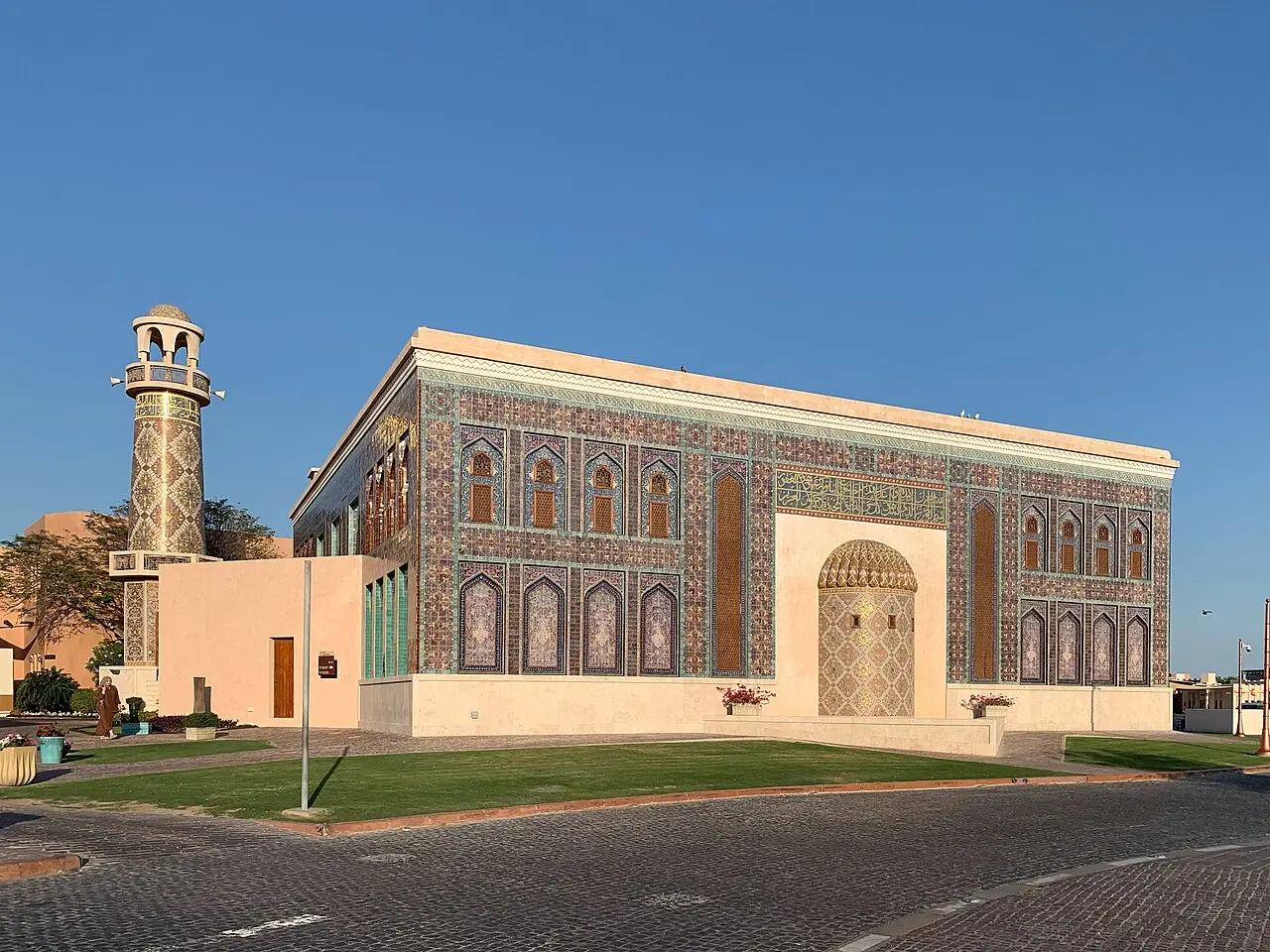
Doha, Al Rayyan, Umm Salal and everywhere between
Qatar has grown quickly. The 2020 census counted about 2,846,000 people, an increase of 67.5% on 2010. In that census, Doha municipality alone held 41.7% of the population, which makes it the largest home for working adults, school pupils and university applicants who want to improve their English.
Just beyond the capital, the suburbs are dense. Umm Salal, a growing residential area north of Doha, had the second-highest population density in the country in 2020 at 471.0 people per square kilometer, and Al Rayyan came third at 337.5. Al Rayyan is a large suburban base of families and working adults right next to Doha, so for many households there, finding time in the evening matters.
Your lessons run on a video call, so the district you live in does not limit the tutors you can work with. A learner in a tower in central Doha and a learner in a villa compound further out have the same one to one lessons, the same coordinator following every lesson and the same progress reports. If you move house mid-package, nothing about your online lessons needs to change.
- Doha
- Al Rayyan
- Umm Salal
English for Qatari careers in public service and beyond
The largest group of employed Qataris works in public administration and defense. In 2024 that sector employed 66,701 Qataris, followed by 15,293 in education and 9,748 in health and social work. In fields like these, English can come up in many tasks: briefing papers drafted with international partners, calls with foreign delegations, medical literature, and the training courses that come with a promotion.
The direction of travel is also clear. Qatar's Third National Development Strategy, running from 2024 to 2030, aims to raise the share of skilled workers to 46% and to employ over 20% of the Qatari workforce in the private and public-private sectors. Moving into a company that answers to international clients can mean more English, used under more pressure: pitching a proposal, defending a budget line, interviewing for a new post.
Lessons for these goals feel like rehearsal for your real week. You bring the email you have to send, the slide deck you have to present or the interview you are dreading, and your tutor works through it with you until the words come out the way you meant them.
- Presentations and briefings with a clear structure and confident delivery
- Meeting English for agreeing, disagreeing politely and summarizing decisions
- Email and report writing that sounds professional without sounding stiff
- Interview practice for private-sector and public-private roles
The English each Qatari industry asks of you
Construction was Qatar's largest employer in 2024 with 702,938 workers, followed by wholesale and retail trade with 256,600 and administrative and support services with 198,020. Most of the workforce comes from many language backgrounds, and English, commonly used as a second language, can carry the instructions, the safety rules and the customer conversations. Each sector leans on a different slice of the language.
Professional training in Qatar, mostly delivered by private providers, is popular in fields including air transport, management, occupational safety, oil and gas, IT and teacher training. Your tutor can tune lessons to the vocabulary and situations of your own field, so the phrases you practice on Tuesday are the ones you use on Wednesday.
- Construction and engineering: site instructions, toolbox talks, safety briefings and progress reports to clients
- Retail and trade: greeting customers, handling complaints gracefully and explaining products clearly
- Administration and support services: phone manners, scheduling, minutes and polite written requests
- Air transport: announcements, service phrases and calm problem solving with travelers
- Oil, gas and safety roles: technical reading, incident reporting and precise spoken handovers
- IT and teaching: explaining complex ideas simply and writing documentation others can follow
From Grade 1 classrooms to English-taught campuses
English starts early in Qatar. It is the first foreign language taught in all schools from Grade 1, and the Ministry of Education and Higher Education sets curriculum standards for English in all public K-12 schools alongside mathematics, science, Arabic and Islamic studies. Formal reading instruction in Arabic also begins at age 6 in Grade 1, so children meet English and formal Arabic reading in the same year.
The school map is varied. In the 2021-2022 school year the country had 338 private schools and 212 public schools. Public schools generally teach in Arabic and follow the national curriculum, while private schools teach in English and offer British, American, Indian, French and IB programs, with some expatriate communities running their own schools under ministry regulation. If your child moves between the two systems, a tutor can help bridge grammar or academic writing.
Higher education sharpens the need further. In 2020-21 Qatar had 33 public and private universities with over 41,000 registered students, and eight international university branches operate in Education City. Undergraduate courses are typically taught in English, so a student who reads Arabic fluently may still need help with lecture listening, note taking and the essay conventions professors expect.
Lessons that fit a Qatari school year
The school calendar sets the rhythm for children and teenagers, and lessons can follow it closely. During Ramadan in 2025-2026, government school students from kindergarten to Grade 12 attended from 9:00 am to 12:30 pm. In the summer hours from 3 May to 3 June 2026, government schools started at 07:00 and finished at 12:00 for kindergartens, 12:30 for primary and 12:45 for preparatory and secondary. Those early finishes can open up calm afternoon time for a lesson once lunch and rest are done.
The 2025 to 2028 calendars also place the mid-year break in the last third of December and add two extra days off during Ramadan in 2025-2026 and 2027-2028. You can use those breaks for a short burst of focused reading and speaking work so the new term starts with fresh confidence.
There is good reason to give reading extra attention. In PISA 2022, Qatari 15-year-olds scored 419 in reading against a global average of 476. A one to one tutor can slow down, read alongside the learner, and build the habit of explaining a text aloud in English, which strengthens comprehension and speaking together. Younger children can build reading and speaking at their own pace, while teenagers work on essays, presentations and the vocabulary of science and social studies.
Getting ready for a degree in the UK, the US and beyond
Studying overseas is a well-trodden path from Qatar. The country's outbound student mobility ratio was 19% in 2021, among the highest in the world, a pattern a UK education market brief links to limited domestic higher education capacity, high disposable income and wide scholarship availability for Qataris. UNESCO reports 8,054 Qatari students studying abroad.
The United Kingdom is the most popular destination, well ahead of the United States, Canada and Australia. Around 3,000 Qatar-domiciled students study in the UK, about 40% of them expatriates, and the most popular subjects are engineering and technology, business and management, and computing. In the United States, 500 Qataris studied in 2021-2022, 11% fewer than the year before.
The rest of the application deserves the same care. Your tutor can help you draft a personal statement that sounds like you, practice for an admissions interview, and prepare for the reading load of a first-year engineering or business course. Once you arrive, the same tutor can keep working with you online on seminar discussion and academic writing, so the support continues while you settle into a new campus and a new city.
IELTS and TOEFL prepared in two steady phases
IELTS and TOEFL iBT are the two scores people in Qatar ask about most. A student guide for the country notes that undergraduate courses are typically taught in English and that applicants whose first language is not English take one of these tests, with minimums of about 6.0 to 6.5 for IELTS and 70 to 80 for TOEFL depending on the university. IELTS is also a test that professionals planning a move to Canada, Australia or New Zealand sit, and several venues run it in Doha.
Britemy prepares you for these tests, and for TOEIC, Cambridge exams, the Duolingo English Test and PTE Academic, in two phases with the same tutor. The first phase builds a solid foundation in listening, reading, writing and speaking, because a score rests on real skill. The second phase turns to score strategy: drills in the exact task formats, timed mock tests under exam conditions, and a plan for how long to spend on each section.
You move to the second phase once your foundation is ready, with the same tutor who built it. Scores depend on many things on the day, so we never promise a band or a date. What you can count on is a clear plan, honest feedback after each mock test, and a tutor who knows where your marks are leaking.
- IELTS
- TOEFL iBT
Sounds and slips Arabic speakers can smooth out
Every first language leaves fingerprints on English, and Arabic leaves a few that are easy to spot and very fixable. If Arabic is your first language, your tutor will listen for these patterns from the first lesson and build short, regular practice around the ones that affect you. If you grew up with another language, the tutor listens for your own set of habits in the same way.
Correction happens gently and in context. You keep talking, the tutor notes what to revisit, and together you return to it with targeted drills once the conversation has done its job.
- Arabic has no /p/ or /v/ sound, so 'park' can become 'bark' and 'very' can become 'ferry'; /t/ and /d/ can also blur together
- Consonant clusters often gain a helper vowel, so 'spring' comes out as 'sipring' and 'months' as 'monthiz'
- English has many more vowel sounds, which makes ship and sheep, or pot, pet and pat, hard to tell apart
- The verb 'to be', the helper 'do' and the article 'a' tend to drop out, giving 'I going home' or 'He happy'
- Adjectives sometimes follow the noun, as in 'the pen red' for 'the red pen'
Talking from the first lesson onward
Many learners know this story well. They understood the grammar at school, passed their exams, and then went quiet the first time a manager or a customer asked them something in English. Britemy lessons start from the other end. You speak in your first lesson, about things that matter to you, and your tutor polishes accuracy as you go.
Fluency grows from repetition in a safe space. With one tutor and one learner, the space is private, the turn is always yours, and sounding slow in front of colleagues stops being a worry. You try a sentence, your tutor helps you reshape it, and you try again until it feels natural. As you keep practicing, the hesitation can shorten and your answers can grow longer.
Practice is tied to real situations from your life here: chatting with a neighbor in the compound, asking a question at a clinic, negotiating with a supplier, or introducing yourself at a new office. Because the scenarios are yours, the confidence carries straight into your week.
Finding lesson time in a Qatari week
Doha runs on Arabia Standard Time, UTC+3, all year round, because Qatar does not use daylight saving time. Your lesson time stays fixed through the seasons, which makes a weekly routine easy to keep.
Working hours shape the rest. Under the Labour Law, private-sector working hours are capped at 48 a week and 8 a day, with total daily hours including overtime limited to 10. During Ramadan the cap drops to 36 hours a week and 6 a day, which can free up time for study. Friday is the weekly rest day for workers outside shift schedules, so a Friday afternoon can suit a lesson well.
Students have their own rhythm. During Ramadan in 2025-2026 government school students attended from 9:00 am to 12:30 pm, which leaves a long afternoon free. You can plan lessons around prayer times, family evenings and shift rotations, and you can move a lesson at no cost with at least 24 hours' notice when your month changes.
- Early morning before a day shift starts
- A short evening lesson after the working day
- Friday afternoon on the weekly rest day
- A focused lesson in the shorter Ramadan working day
Lessons on Asia/Qatar time (UTC+03:00)
- Tue20:0060 min
- Fri07:0060 min
- Sat11:0060 min
Moving a lesson costs nothing with at least 24 hours' notice.
A video call that works across a connected country
Qatar is a highly connected place to learn from. At the end of 2025 the country had 3.10 million internet users, an internet penetration of 99.0%. In October 2025 there were 4.75 million mobile connections, equal to 152% of the population, and 2.95 million social media user identities, equal to 94.3%. Video conferencing tools were popular among students for study and online classes, as a trade analysis reported for 2022 to 2023, so learning by video call may already feel familiar.
Your Britemy lessons run on a video call with your tutor, one to one. You can join from home, from a quiet corner of the office or from wherever you can talk freely for a while. You speak from the first lesson, your tutor polishes accuracy along the way, and a coordinator follows every lesson and sends progress reports on the CEFR scale.
Online lessons also travel with you. If you spend a few weeks away, your lessons can continue on the same video call with the same tutor, and one package pause of up to 30 days is there for the times you need a real break.
Lessons at home when a tutor is close by
Some learners concentrate best at their own kitchen table, and some parents prefer a younger child to learn in familiar surroundings. Britemy offers lessons at home wherever a vetted tutor is available near you. During your free consultation, you can ask whether that is possible where you live and get an honest answer.
When a home tutor is available, the lesson works the way it does online. You speak from the start, your tutor polishes accuracy along the way, and a coordinator follows every lesson, reads the tutor's notes and sends progress reports on the CEFR scale.
If no tutor is near enough, online lessons give you the same one to one approach, the same coordinator and the same progress reports, all on a video call from wherever you are.
One tutor who learns how you learn
Britemy tutors are experienced and skilled in their field. A Qatari student preparing for engineering in the UK needs different English from a hotel supervisor polishing guest conversations or an eight-year-old reading her first chapter books in English, and one to one lessons let your tutor work on the English you need.
Because the tutor works with you alone, every minute is shaped around your needs. They remember the word you keep stumbling on, the presentation you have next week and the topic that gets you talking. Over time they build a picture of how you learn best and plan each lesson from it.
The fit should feel right. If it does not, you can change your tutor at any time, and the change costs you nothing.
Seeing your progress on the CEFR scale
Britemy reports your level on the CEFR, the Common European Framework of Reference for Languages. It is an international scale with six steps, from A1 for a beginner through A2, B1, B2 and C1 to C2 for a very advanced user. Each step describes what you can actually do in English, such as handling a phone call, following a lecture or writing a persuasive report, which makes it far more useful than a vague label like intermediate.
A coordinator follows every lesson you take, reads your tutor's notes, and sends you progress reports on the CEFR scale. That way you can see where you stand on the scale as your lessons go on.
Progress takes different shapes for different learners. Some people jump quickly in speaking and slowly in writing, and others the reverse. Seeing the full picture helps you and your tutor decide where to spend the next month, and it gives you something concrete to show a sponsor, a manager or yourself.
Progress report, CEFR scale
- SpeakingB2
- ListeningB1
- ReadingB2
- WritingB1
Sent by your coordinator after reading your tutor's notes.
What your first month with Britemy looks like
Everything begins with a free consultation before you buy anything, a chance to talk through what you want English to do for you.
Packages start at four sessions. You pay for the package in full before the first class. A package stays active for 30 days from your first lesson, with a 15-day grace period after that, and you can pause once per package for up to 30 days if work travel or family plans get in the way.
Plans change, so you can move a session at no cost as long as you give at least 24 hours' notice. In your first lessons you speak from the start, your tutor listens for your strengths and habits, and your coordinator follows every lesson and sends progress reports on the CEFR scale so you can see where you stand.
- Free consultation before you buy
- One tutor working with you one to one, and a free tutor change at any time
- Speaking from the first lesson, with accuracy polished along the way
- Progress reports from your coordinator on the CEFR scale
Lessons, payment and your rights in Qatar
- Price
- Prices are shown in USD before you pay. Packages start at four sessions. From USD 15 a session. See every price
- Payment
- Pay by card from almost anywhere, including Visa, Mastercard, Amex, Apple Pay and Google Pay.
- Where
- Learn online from anywhere, or at home wherever a vetted tutor is available near you.
- Cancelling
- You can cancel within 3 days of buying your package and get your money back. If your lessons start more than 30 days later than we agreed, you can ask for your money back. If a lesson falls short of what we promised, we teach it again or refund it. Read the policy.
- Free
- The consultation, and changing tutor at any time.
Questions from Qatar
I studied English at school in Qatar but freeze when I have to speak. Where would we start?
English is taught in all schools in Qatar from Grade 1, so you may already know more than you realize. Your tutor gets you speaking in the very first lesson about familiar topics, then uses what you say to decide which grammar and vocabulary to revisit. The freeze often eases once speaking becomes a weekly habit with one patient listener.
What IELTS or TOEFL score do universities in Qatar usually ask for?
A student guide for the country puts typical minimums at about 6.0 to 6.5 for IELTS and 70 to 80 for TOEFL, depending on the university. Always check the exact requirement for your program. Your tutor builds your four skills first and then moves you into score strategy with timed mock tests, though no score can be promised in advance.
I am planning to move to Canada, Australia or New Zealand. Can you prepare me for IELTS?
Yes. When new IELTS venues opened in Doha in 2022, the test organizer named working professionals planning a move to those countries among the people who sit the test. Your tutor starts with a foundation in listening, reading, writing and speaking, then moves to format drills, timed mock tests and section timing. Your coordinator sends progress reports on the CEFR scale along the way.
Can lessons work around Friday and the shorter Ramadan working day?
They can. Friday is the weekly rest day for workers outside shift schedules, so a Friday afternoon lesson can work well. During Ramadan the private-sector cap drops to 6 hours a day, which can leave time for study, and you can move a lesson at no cost with at least 24 hours' notice.
My first language is Arabic and people sometimes hear 'b' when I say 'p'. Can a tutor help?
Very much so. Arabic has no /p/ or /v/ sound, so mixing /p/ with /b/ and /v/ with /f/ is one of the most common patterns for Arabic speakers. Your tutor uses short listening and pronunciation practice inside real conversation, and with steady practice the new sounds start to come out without you thinking about them.
My daughter attends an English-medium private school. Can a tutor support what she studies in class?
Yes. Private schools in Qatar teach in English and follow British, American, Indian, French or IB programs, and your daughter's tutor can work alongside her curriculum. That might mean reading comprehension, essay structure, science vocabulary or speaking practice for presentations, shaped around what her teachers are covering this term.
Can a tutor come to my home instead of meeting online?
Lessons at home happen wherever a vetted tutor is available near you, and you can ask about it during your free consultation. When nobody is close enough, your lessons run online on a video call with the same one to one approach, the same coordinator and the same progress reports.
What happens if I travel and need to pause my lessons?
Each package can be paused once, for up to 30 days. A package is active for 30 days from your first lesson, plus a 15-day grace period, and you can move a session at no cost with at least 24 hours' notice. That gives you room to plan your lessons around a trip.
Which time zone are my lessons scheduled in?
Your lessons can be planned in Qatar time, Arabia Standard Time at UTC+3. Because Qatar does not use daylight saving time, your lesson time stays the same all year, which makes it easy to keep a steady weekly routine with your tutor even when other countries shift their clocks.