

































































 Portugal
English lessons for Portugal
You already understand English. Now it is time to speak it with ease.
Years of subtitled films exposed many people in Portugal to English early and often. One to one lessons with a tutor matched to you turn that listening into easy, confident conversation for work, study and travel.

Your week, Europe/Lisbon time
Wed07:00
Fri20:00
Sat09:00
A country that grew up reading subtitles
If you grew up in Portugal, there is a good chance your first English teacher was a television screen. Portugal banned the dubbing of Portuguese cinema in 1948, and the first Hollywood film dubbed into Portuguese arrived only about 20 years after the dictatorship ended in 1974. So films and cartoons reached you in their original English voices, with Portuguese words running along the bottom of the screen. You heard English long before anyone asked you to conjugate a verb in it.
A University of Lisbon academic has called this preference for subtitles decisive, because it exposed people to English much more often and much earlier. The numbers point the same way. A 2019 study of TOEFL scores from 135 countries between 2008 and 2015 found that countries which subtitle English-language media tend to score higher, and it put Portugal's average at 94, ahead of Spain's 89.
That history shapes how you learn today. Your ear is often ahead of your mouth. You follow a podcast, catch the joke in a series and read an email without trouble, yet a live conversation with a client or a professor can still feel slower than you would like. Lessons with Britemy start from that strength. Your tutor builds on everything you already understand and spends the time where it pays off most, which is turning comprehension into speech you can produce on the spot.

The sounds that give a Portuguese speaker away
Every first language leaves a fingerprint on the English you speak, and for about 95% of people in Portugal that first language is Portuguese. European Portuguese has habits that sound lovely at home and can trip you up in a meeting with colleagues abroad. Knowing them in advance makes your practice far more efficient, because your tutor can aim at the few patterns that cause most of the misunderstandings.
Here are three patterns from European Portuguese, and what each one can do to your English.
- Weak vowels. European Portuguese reduces unstressed vowels more than other varieties, so they are often shortened or dropped in fast speech. Carried into English, that habit can make longer words such as 'development' or 'interesting' collapse into fewer syllables than a listener expects, and the word becomes hard to catch.
- Nasal vowels. In Portuguese, a written m or n at the end of a syllable is dropped and nasalizes the vowel before it. Bring that reflex into English and words like 'team', 'him' or 'phone' can lose their final consonant, so 'team' drifts toward 'tea' and the listener has to guess.
- Consonant clusters. Portuguese syllables rarely end in two consonants, and most word-opening clusters are a consonant plus r or l. English piles consonants together in words like 'strengths', 'texts' and 'asked', and the natural reflex is to slip in a small extra vowel or quietly drop one of the sounds.
Speaking from the very first lesson
Britemy lessons are built around talking. From your first session you speak, answer, ask, tell stories and argue a point, and your tutor polishes your accuracy along the way. For someone who already understands a lot of English, this order matters. Grammar exercises on their own rarely melt the hesitation that comes when a real person is waiting for your reply, while regular conversation with patient feedback does exactly that.
A typical lesson moves between open conversation and focused practice. You might describe your week, then rehearse a call you have coming up, then work through the three phrases you kept reaching for and could not find. Your tutor notes the slips that repeat, explains them simply, and brings them back in later lessons until the correct form comes out without thinking.
Because there is one tutor and one learner, nobody else is waiting for a turn. You can stop to ask why a phrase sounds odd, try a sentence three times, or take the conversation somewhere that genuinely interests you. That freedom is what builds confidence. You leave each lesson having said a great deal of English out loud, and over the weeks the pause before you speak gets shorter.
Tourism, hotels and the guests who arrive every day
Tourism is one of the clearest reasons English matters in Portugal. In 2024, preliminary national statistics counted 31.6 million guests and 80.3 million overnight stays in tourist accommodation, a record year, and non-residents accounted for 70.3% of those nights. If you work at a reception desk, in a restaurant, on a guided tour or in a shop near the sea, many of the people in front of you come from abroad.
The largest non-resident markets by overnight stays that year were the UK at 18.1%, Germany at 11.3%, Spain at 9.7%, the US at 9.2% and France at 8%. Across several of these markets, English is a common shared language for visitors. The fastest-growing overseas markets were Canada, up 17.1%, and the US, up 12.1%, both English-speaking countries.
Lessons for hospitality focus on the moments you actually face. Your tutor can rehearse check-ins, complaints handled calmly, recommendations for a day trip, allergy questions at dinner and the small talk that turns a good stay into a glowing review. Services made up 76.7% of Portugal's GDP in 2025 and 73.2% of its labor force, which places most jobs in sectors such as tourism, trade and business services, where contact with foreign clients is common. The same practice serves people across all of those sectors.

English for a country that sells to the world
Portugal's exports reached 134.6 billion euros in 2025, and behind those sales sit countless conversations with buyers, partners and suppliers abroad. A 2023 report pointed out that as a smaller, export-dependent country, Portugal has a strong economic incentive to learn English for business, and the same report noted that Portuguese has about 230 million speakers worldwide against about 600 million for Spanish.
Most multinational company headquarters in Portugal sit in the Lisbon area, which also hosts a major international technology conference. If you work in one of those offices, English may well run through your reports and your video calls with colleagues in other countries. Here are goals your lessons can focus on:
- Running and following meetings where several accents share one table
- Writing emails that are short, polite and clear on the first read
- Presenting results and handling the questions that follow
- Negotiating with suppliers and clients while keeping every nuance
- Preparing for an interview with an international employer
Lessons that fit a Portuguese working week
Portuguese rules in 2026 cap the typical full-time schedule at 40 hours a week and 8 hours a day, with Sunday as the weekly rest day under the general regime. That leaves room for English around your working hours, and you choose a regular time you can actually keep week after week.
Mainland Portugal and Madeira use UTC+00:00 in winter and UTC+01:00 in summer, with daylight saving time from the last Sunday in March to the last Sunday in October. The Azores sit one hour behind the mainland all year, at UTC-01:00 in winter and UTC+00:00 in summer. You agree on a regular time with your tutor in your own local time, and the lesson keeps its place when the clocks change.
Portugal knows how much the clock matters. The mainland switched to Central European Time in 1992 and returned to Western European Time in 1996, because the change brought dark winter mornings during school and work hours. If your mornings are precious, a later time may suit you better, and if your evenings belong to family, an earlier one keeps them free.
Life also bends around the school calendar, which runs from mid September to mid June with breaks at Christmas, Easter and Carnival. You can move a lesson at no cost with at least 24 hours' notice, and each package allows one pause of up to 30 days, which helps when a holiday or a busy season interrupts your rhythm.
Lessons on Europe/Lisbon time (UTC+00:00, summer UTC+01:00)
- Wed07:0060 min
- Fri20:0060 min
- Sat09:0060 min
Moving a lesson costs nothing with at least 24 hours' notice.
From Lisbon and Porto to Braga and Coimbra
In 2025 the city of Lisbon had an estimated 658,236 residents and its metropolitan area about 3.35 million, roughly 28% of the country's population. It hosts most multinational company headquarters in the country, so work-driven English demand is strongest here.
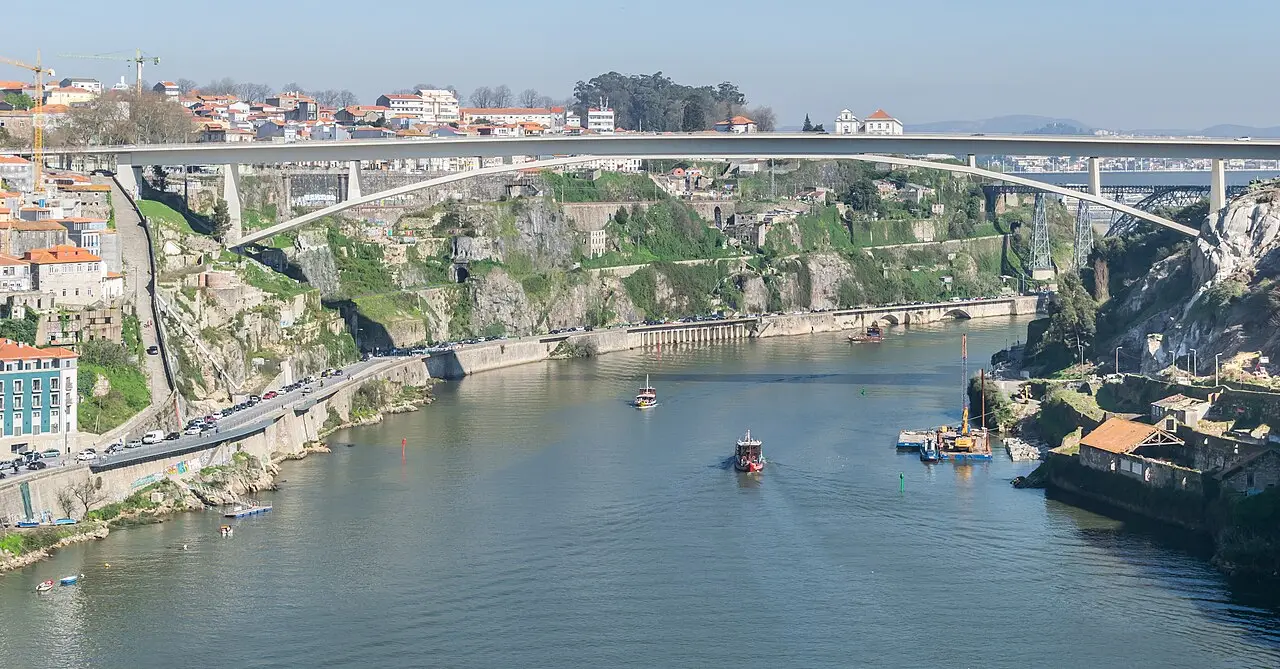
Porto's municipality had 273,476 residents in 2025 and its metropolitan area 1,861,727, the second-largest urban area in Portugal. More than 3 million tourists visited Porto in 2025, and the city's foreign residents in 2021 included people from Brazil, Italy, Spain, France and India. Porto also hosts many national company headquarters.
Braga counted 146,543 inhabitants in 2021, up from 136,885 in 2011, which makes it one of the larger urban markets outside Lisbon and Porto. In the center of the country, Coimbra counted 106,655 and is the base of one of the oldest universities. The 2021 figures also list Vila Nova de Gaia at 188,421 and Amadora at 171,454. Wherever you live, from a big metro area to a quiet town, lessons run online on a video call, so the tutor you get depends on your goals and your schedule alone.
- Lisbon
- Porto
- Braga
- Coimbra
Supporting school English from year 3 to the national exams
Children in Portugal start English as their first foreign language in grade 3, at about 8 or 9 years old, and the school curriculum for foreign languages is aligned with the CEFR. CEFR stands for the Common European Framework of Reference, a scale used across Europe that describes language ability in six steps, from A1 for a beginner to C2 for someone who handles the language with ease. In grades 7 to 9 pupils add a compulsory second foreign language alongside English, so English shares the timetable with more subjects as they grow.
Schools decide how to divide the weekly workload of 25 hours in the first cycle, 1,350 minutes in the second and 1,500 minutes in the third, so the number of English hours varies from one school to the next. Education is compulsory until age 18, and national exams in June and July for the 9th, 11th and 12th years shape the final stretch, with the 11th and 12th year results feeding into university access.
A tutor works in the gaps a timetable leaves. For younger children that means playful speaking practice and reading aloud, so English becomes something they enjoy using out loud. For teenagers it means conversation practice, writing that follows the structure their teachers expect, and calm, steady revision in the months before June. Parents and guardians can follow progress through the coordinator's reports and see what is improving.

Studying in English, at home or abroad
Portuguese universities increasingly teach in English. Higher education institutions offer some first, second and third cycle courses in English, and national policy since 2016 supports promoting higher education in both English and Portuguese. A 2024 market report found that the fastest growth in English-taught degree programs between 2021 and 2024 happened in Turkiye, Italy and Portugal.
So you may need academic English without ever leaving the country: reading research articles, writing a dissertation chapter, presenting in a seminar or defending a thesis. If you plan to study in English, an IELTS listing checked against admissions pages in April 2026 shows an overall IELTS Academic band of 6.5 for both bachelor's and master's entry at four Portuguese universities.
Many families also have ties far beyond the border. Large Portuguese communities live in France, about 2.58 million counting people born in Portugal and people of Portuguese ancestry, in Switzerland, roughly 200,000 to 265,000, in the United Kingdom, about 170,000, and in Germany, roughly 115,000 to 244,000, with figures that vary by definition. Whether you are joining relatives in the UK, applying to a program taught in English or moving to an international team, your tutor builds the academic and everyday English that the move takes.
IELTS, TOEFL and other English tests, in two phases
Two tests stand out for learners in Portugal. IELTS Academic is used for university entry, and the April 2026 listing shows an overall band of 6.5 for bachelor's and master's study at four Portuguese universities. For TOEFL iBT, a study of scores from 2008 to 2015 shows Portuguese test takers averaging 94.
Britemy prepares you for IELTS, TOEFL, TOEIC, Cambridge exams, the Duolingo English Test and PTE Academic, and preparation always runs in two phases with the same tutor. The first phase builds a foundation in the four skills of reading, writing, listening and speaking. The second phase moves to score strategy, with drills in the official format, timed mock tests and section timing, so you know exactly how long each part deserves.
If you arrive with strong listening, the foundation phase can give extra time to speaking and writing, where task responses need structure, range and a clear line of argument. Your tutor tells you honestly when your foundation is ready for strategy work, and you decide on a test date with a clear picture of where you stand. Nobody can promise a particular score or date, so the plan is built around steady progress you can see in every report.
- IELTS Academic
- TOEFL iBT
A tutor chosen for the way you learn
Every Britemy learner works with one tutor, one to one. Your tutor is experienced and skilled in the area you need, whether that is hospitality English, academic writing, a child's first reading books or preparation for a test. During your consultation you describe your goals, your schedule and how you like to learn, and a tutor is matched to that picture.
Good chemistry matters. If the match does not feel right after a lesson or two, you can change tutor at any time and the change costs you nothing. That keeps the relationship honest, because you stay with a tutor for one reason only, which is that the lessons work for you.
Your tutor prepares each lesson around your progress, keeps notes on what you said and where you hesitated, and adjusts the next session to match. Over the weeks the lessons start to feel like a conversation with someone who knows your goals well and remembers the details of your work, your studies and your plans.
A coordinator, notes and progress on the CEFR scale
Behind every lesson sits a coordinator. Your coordinator follows your lessons, reads your tutor's notes and sends you progress reports on the CEFR scale, from A1 to C2. You see where you started, what has moved and what to focus on next, written in plain language you can act on.
If your listening runs ahead of your speaking, as it often does after years of subtitled films, the report shows it clearly. You and your tutor can then decide together where the next month of lessons should go, whether that is fluency in conversation, pronunciation, writing for work or the skills a test asks for.
The coordinator is also the person to contact when your plans change: a new job, an exam on the horizon, a move to another city or a busy season at work. Your plan bends with your life.
Progress report, CEFR scale
- SpeakingB2
- ListeningB1
- ReadingB2
- WritingB1
Sent by your coordinator after reading your tutor's notes.
Online lessons on a connection you already use
Lessons run online on a video call, which suits life in Portugal well. In 2025, 89.5% of people aged 16 or over used the internet, and use was 99.8% among 16 to 24 year olds, 98.3% among 25 to 34, 98.6% among 35 to 44 and 96.7% among 45 to 54. It was 86.1% for people aged 55 to 64 and 60.7% for 65 to 74, so if you are newer to video calls, your tutor can take the first minutes slowly until everything feels easy.
All you need is a quiet place, a stable connection and a device with a camera and microphone. Online lessons save travel time, let you keep the same tutor if you move between cities or spend the summer abroad, and make it simple to bring along a document or a slide you are preparing for work and talk it through.
Your tutor can note corrections as you talk, so you keep speaking and still see each fix written down. You can keep those notes as a personal phrasebook to review on the train or right before a meeting.
Lessons at home, where a tutor is nearby
Some learners like to sit across the table from their tutor, especially younger children and adults who would like to keep screens for work. Britemy can offer lessons at your home wherever a vetted tutor is available near you. Availability depends on where you live and which tutors are close by, so the best step is to ask about it during your consultation.
Home lessons follow the same model as online ones: one tutor, one learner, a coordinator following your progress and the same reports on the CEFR scale. You can mix the two, meeting at home when that works and switching to a video call when the week gets busy or plans change.
How your first package works
Everything starts with a free consultation. You talk through your goals, your level as you see it and the times that suit you, and you get an honest picture of what lessons could look like before you buy anything.
Packages start at four sessions. The full package is paid ahead of the first lesson. A package is active for 30 days from your first lesson, with a 15-day grace period after that, and you can pause once per package for up to 30 days.
In the first lessons your tutor gets to know how you speak, where you hesitate and what you want English for. By the end of the month you can have a routine, a short list of habits you are working on and a clearer sense of your next step. As reports arrive from your coordinator, you see where you stand on the CEFR scale.
If at any point the tutor is the wrong fit, you can change tutor at no cost, and you can move any lesson at no cost with at least 24 hours' notice.
Lessons, payment and your rights in Portugal
- Price
- Prices are shown in EUR before you pay. Packages start at four sessions. From EUR 13 a session. See every price
- Payment
- Pay by card from almost anywhere, including Visa, Mastercard, Amex, Apple Pay and Google Pay.
- Where
- Learn online from anywhere, or at home wherever a vetted tutor is available near you.
- Cancelling
- You can cancel within 14 days of buying your package and get your money back. If you asked us to start lessons inside that period, we keep the value of the lessons you have already had. Read the policy.
- Free
- The consultation, and changing tutor at any time.
Questions from Portugal
I understand English films without subtitles but freeze when I have to speak. Can lessons help?
Yes, and this is one of the most common starting points. Years of subtitled films exposed many people in Portugal to English much more often and much earlier, so your ear is often already trained. That means your tutor spends most of the time getting you to produce English out loud: answering, describing, arguing and telling stories. You speak from the first lesson and accuracy is polished along the way, so the gap between what you understand and what you can say narrows lesson by lesson.
I live in the Azores. Will the lesson times work for me?
Yes. The Azores run one hour behind the mainland all year, at UTC-01:00 in winter and UTC+00:00 in summer. Lessons are online, so you agree on a regular time with your tutor in your own local time, and it keeps working through the clock changes in March and October.
My child already has English at school. Why add a tutor?
English starts in grade 3, and each school decides how many hours it gets within the weekly workload, so practice time varies from school to school. A tutor adds speaking time, one to one, at the pace your child needs, and a coordinator sends progress reports so you can see what is improving.
I need IELTS 6.5 for a master's program in Portugal. How would you prepare me?
An April 2026 listing shows an overall IELTS Academic band of 6.5 for master's entry at four Portuguese universities, so your target is a common one. Preparation runs in two phases with the same tutor. First you build a foundation in reading, writing, listening and speaking. Then you move to score strategy with drills in the official format, timed mock tests and section timing. Your tutor tells you honestly when you are ready to book the test, and your coordinator reports your progress on the CEFR scale throughout.
I work in hospitality. Can lessons focus on the guests I meet every day?
Yes. Non-residents made up 70.3% of overnight stays in Portuguese tourist accommodation in 2024, so your tutor can build lessons around check-ins, complaints, recommendations, allergy questions and small talk. You can bring real situations from your shifts and practice them until the phrases come naturally.
Can I have lessons at home instead of online?
Lessons can take place at your home wherever a vetted tutor is available near you. Mention it during your consultation and the team checks which tutors are close by. Online lessons on a video call remain an option, and many learners combine the two.
What if I do not get along with my tutor?
You can change tutor at any time, and changing costs you nothing. Tell your coordinator what is missing, whether that is more conversation, more structure or a different focus, and the next match takes that into account.
Can I talk to someone before I pay for anything?
Yes. The consultation before you buy is free. You explain your goals and schedule, ask about packages, which start at four sessions, and find out how lessons would work for you before you commit.
What happens if I go away for the summer or a long holiday?
Each package allows one pause of up to 30 days. A package is active for 30 days from the first lesson, plus a 15-day grace period, and you can move a lesson at no cost with at least 24 hours' notice. Because lessons are online, you can simply keep going from wherever they are.