



















































 Poland · Polska
English lessons in Poland
Turn the English you understand into English you speak
One to one lessons with an experienced tutor, on a video call or at home where a vetted tutor is near you. You speak from the first lesson, and a coordinator follows every lesson and reports your progress.
Your week, Europe/Warsaw time
Tue18:00
Fri07:30
Sat09:00
Poland reads English well and wants to speak it more
English is part of growing up in Poland. It is the most common foreign language taught in schools and universities, and young people and young adults who went through high school or higher education commonly speak it. In the 2026 edition of a global English proficiency index built on online tests taken by adults, Poland scored 587 and ranked 15th in the world, well above the global average of 485. That is a strong base, and you may well come to your first lesson with more English than you think you have.
The same index shows where the base is uneven. Polish adults scored 614 in reading and 562 in listening, then 518 in writing and 503 in speaking. Put simply, the receptive skills sit well above speaking. You may read reports at work without trouble and follow a series without subtitles, and still feel your mind go quiet when a colleague from another office asks you something on a call. The national score was also 13 points lower than before.
This page is written for that gap. It explains how one to one lessons with Britemy turn the English you already understand into English you can produce out loud, at the speed of a real conversation, and how those lessons fit a Polish working week, a Polish school year and the exams Polish learners actually sit.
Speaking from your very first lesson
Britemy lessons start with your voice. From the first session you speak, and your tutor polishes accuracy along the way as it comes up in what you actually say. For a learner whose country reads at 614 and speaks at 503 on the national index, this order matters. You already hold a large store of words and grammar. What is missing is practice pulling them out under a little pressure, with someone listening and waiting for your answer.
So your lessons are built around your own voice. Your tutor asks, you answer, they follow up with a gentle second question, and you answer again. Mistakes are welcome, because each one shows your tutor exactly what to work on next. Corrections can arrive in a way that keeps the conversation moving: a quick recast of your sentence, a note to come back to at the end, a short drill on the one pattern that keeps tripping you up.
With regular practice, answers can start to come faster, and you translate less in your head before you speak. You pick up phrases for buying a moment to think, asking someone to repeat, and steering a conversation back to ground you know. Confidence grows from evidence, from having spoken English out loud many times to a real person who understood you.
- Speaking from the very first lesson
- Corrections that keep the conversation flowing
- Phrases for thinking time, clarifying and changing topic
- Short drills on the patterns that slow you down
The sounds and habits Polish speakers carry into English
Polish and English differ in ways that are very predictable, and that is good news, because predictable patterns can be trained. Research on the English of advanced Polish learners points to a handful of recurring issues, and a tutor who knows them can work on them for a few minutes in every lesson.
The first is the pair of th sounds. They do not exist in Polish and are among the hardest sounds for Polish learners, especially when they sit next to other consonants, as in three, throw, birthday, healthy and sixth. The second is stress. Polish puts stress on the second-last syllable of a word, so Polish speakers often carry that rule into English and place stress where an English listener does not expect it, in words such as industry and demonstrated.
The third is spelling. Polish learners apply Polish spelling-to-sound habits to English, pronouncing silent letters like the t in nestle or the b in tomb. In one classification of 61 error sources, spelling was the largest group. Polish rules such as devoicing certain consonants at the end of a word and letting neighboring sounds change each other's voicing also travel into English, and long words of more than five syllables bring trouble of their own.
All of this is simply your first language doing its job. Your tutor points out the few patterns that most affect how easily people understand you, gives you short and focused practice, and then keeps listening for them in free conversation so the new habit sticks.
- The th sounds in three, throw and birthday
- Word stress in industry and demonstrated
- Silent letters in tomb and nestle
- Final consonants and very long words
English at work, from service desks to strategy meetings
For many adults in Poland, English is a working language. At the end of the first quarter of 2025 the country had 2,081 business service centers, run by 1,258 investors from 50 countries and employing 488,700 people, an increase of 6.2 percent on the year. Foreign-owned centers accounted for 84.3 percent of that employment, and the sector was estimated to contribute 5.7 percent of GDP in 2025. If you work in one of these centers, your lessons can follow the calls, meetings and messages your job involves.
The proficiency index shows how unevenly English is spread across jobs. Teachers scored 633, customer service 624, strategy and project management 611, IT and students 610, and human resources 544. If you work in a role at the lower end of that range, or in a role that is about to bring you closer to international colleagues, focused speaking practice can help you close the distance.
Lessons for work start from your real tasks. You might rehearse the stand-up you lead every morning, practice explaining a delay to a client calmly, prepare questions for a performance review, or run through a presentation until the transitions feel natural. Your tutor builds vocabulary around your field and polishes the phrases you will actually use on Monday morning.
- Meetings, stand-ups and status updates
- Client calls and difficult conversations
- Presentations and the questions that follow
- Emails and short written reports
- Job interviews and performance reviews
Business services, tourism and the English they run on
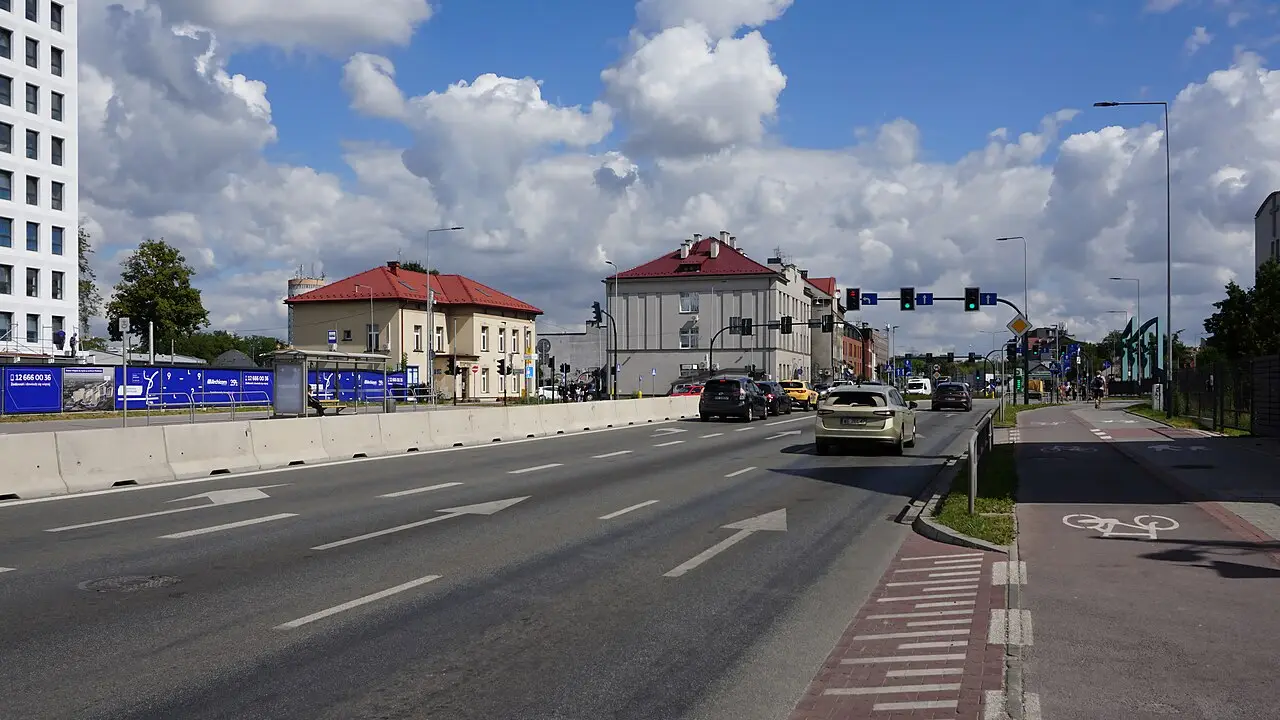
Two parts of the Polish economy stand out for anyone learning English for work. The first is business services. Krakow alone had 312 centers and nearly 108,000 employees at the end of the first quarter of 2025, the largest count among the cities in the sector report. Across the sector, teams in finance, IT support, HR and analytics fill those centers.
The second is tourism and hospitality. From January to August 2024 Poland recorded 5.18 million foreign tourists, up from 4.76 million in the same months of 2023. That growth supports English use in hospitality and tourism, from hotel front desks and restaurants to guided tours.
Each sector needs its own kind of English. A service center analyst needs precise phrasing for tickets, process changes and tense client calls. A hotel receptionist needs warmth, speed and the language for small problems that must be solved politely and on the spot. Your tutor shapes lessons around the situations you meet, so your practice time goes into English you will use the same week.
Fitting lessons into a long Polish working week
Polish working weeks are long. In 2022 people in work averaged 40.4 hours a week against 37.5 across the EU, with employees at 39.6 hours and the self-employed at 44.5. When your week is that full, a course with fixed group times and a commute can be hard to keep up. One to one lessons on a video call remove the commute, and moving a lesson costs nothing with at least 24 hours' notice.
Poland runs on Central European Time, UTC+1 in winter and UTC+2 in summer, one hour ahead of London in winter, and the clocks move twice a year, so it is worth checking your lesson times again whenever the clocks change.
For pupils the rhythm is set by the timetable. School lessons last 45 minutes, and upper grades in single-shift schools usually start at 8 a.m. and finish around 2 to 3 p.m., Monday to Friday, so a lesson in the late afternoon fits naturally after homework. The school year has two semesters with a two-week winter break that falls between mid-January and early March depending on the province, and the summer break runs until 31 August. You can keep lessons going through the holidays, or add more in the months before an exam.
Lessons on Europe/Warsaw time (UTC+01:00, summer UTC+02:00)
- Tue18:0060 min
- Fri07:3060 min
- Sat09:0060 min
Moving a lesson costs nothing with at least 24 hours' notice.
Live lessons on a video call, wherever you are in Poland
Britemy lessons run online on a video call, and in Poland the conditions for that are good. In 2024, 95.9 percent of households had internet access, up 2.6 percentage points on the year before. A laptop or tablet, a headset and a quiet corner are all you need.
Online learning keeps growing, too. Before COVID-19 online degree courses were not very popular in Poland, although universities could deliver up to 60 percent of a program through e-learning. Across the EU, 33 percent of internet users took an online course or used online learning material in the three months before a 2024 survey, up from 30 percent in 2023. A live lesson with a person who knows your name and your goals is the most human form of it.
If technology is not your favorite thing, that is fine. In 2024, 48.8 percent of people aged 16 to 74 in Poland had basic or above-basic digital skills, which means many people are still building those skills. A video lesson asks for little beyond a working microphone and camera, and once the call is open the English can take center stage.
Online also means distance plays no part in who teaches you. Tutors are experienced and skilled in their field, and over video you can work with one whose experience fits your goal, whether that is a business presentation, a matura oral exam or relaxed conversation about the things you enjoy.
Lessons at home when a tutor is near you
Some learners prefer to sit across the table from their tutor. Britemy can arrange lessons at home wherever a vetted tutor is available near you. Whether that works for your address depends on which tutors are close by, so the honest answer comes during the free consultation.
Home lessons follow the same model as online ones: one tutor, one learner, speaking from the first lesson, and a coordinator who follows every session. Your tutor writes notes after each session, your coordinator reads them, and your progress reports use the same CEFR scale either way.
Where a vetted tutor near you is available, home lessons and video calls can sit side by side, so a busy week or a trip does not have to break the rhythm. You keep the same tutor and the same plan, and you still speak from the first minute of every lesson.
English for pupils, from the early grades to the matura
Polish children meet English early. In Grades I to III a foreign language is taught inside integrated early school education, with no separate weekly hours fixed, so the class teacher decides how much time it gets. From Grade IV to Grade VIII one modern foreign language is compulsory at 3 hours a week in each grade, 15 hours in total, and a second compulsory language starts in Grade VII at 2 hours a week.
That timetable builds a foundation, and a 45-minute school lesson is shared by the whole class. One to one lessons give a pupil a full lesson of speaking with one tutor, and a tutor can follow the school syllabus, prepare for tests and fill gaps without the pupil feeling exposed in front of classmates.
English also competes with everything else in a pupil's week. Between 2013 and 2022 the share of Polish lower secondary pupils learning two or more foreign languages fell by 31.7 percentage points, one of the largest drops among EU countries. Whatever mix of languages a pupil studies, it pays to make the English hours count.
Compulsory education in Poland covers ages 7 to 18, and the school year runs from 1 September to 31 August. Tutors for younger learners can use games, stories and movement to hold attention, while teens work on conversation, essays and the skills they will need for the matura. If you enrolled a pupil, the coordinator's progress reports on the CEFR scale let you see what is improving.
The matura, certificates and the tests universities accept
The matura is the national school-leaving exam, and passing it is needed for university admission. To pass, students need at least 30 percent in each compulsory subject, and a modern foreign language is compulsory both in writing and orally. English is the most popular modern foreign language chosen. In 2024, 96 percent of students who sat the matura English exam passed it, and in the preliminary 2026 results 95 percent passed, with an average of 78 percent on the basic-level English exam.
With pass rates that high, a strong result and a calm, confident oral exam are natural goals. Across the whole matura, 81.1 percent of graduates passed in 2026, 85.9 percent at general secondary schools and 71.3 percent at technical secondary schools. A tutor can work through the speaking tasks, timed writing and the reading strategies students need, especially at the extended level.
After school, international tests take over. One Polish university's recruitment list accepts English certificates at B2 or above in all four skills, and sets minimums of IELTS 5.5, TOEFL iBT 72 and PTE Academic 59. B2 is a level on the CEFR, the Common European Framework of Reference, a six-level scale that runs from A1 for beginners to C2 for the most advanced learners.
Britemy prepares learners for IELTS, TOEFL, TOEIC, Cambridge exams, the Duolingo English Test and PTE Academic in two phases with the same tutor. First comes a foundation in the four skills. Then comes score strategy: drills in the official format, timed mock tests and practice in pacing each section. You move to the second phase when your foundation is ready.
- Matura English at basic and extended level, written and oral
- Cambridge English B2 First, C1 Advanced and C2 Proficiency for university and work
- IELTS, TOEFL iBT and PTE Academic for university admission
- TOEIC for candidates who need workplace English on paper
- Matura (basic and extended English)
- Cambridge English B2 First, C1 Advanced and C2 Proficiency
- IELTS, TOEFL iBT and PTE Academic
- TOEIC
Studying in English, in Poland and abroad
Higher education in Poland has a strong international side. In the 2022/23 academic year about 105,000 foreign students studied at Polish universities, 8.7 percent of 1.21 million students, and 37 percent of those foreign students studied in English. The largest groups came from Ukraine, Belarus and Turkey, and management, computer science and medicine were the most popular fields. If you study in Poland, your lecture hall may already be partly English-speaking.
Many Polish students also look outward. The UK was the top destination for Polish students before Brexit, and the number of Polish students there fell 73 percent, or 8,520 students, from 2020 to 2021. In the 2020/2021 academic year 1,328 Polish students studied in the United States, 12.2 percent fewer than the year before. Ties to the UK run deep: about 682,000 UK residents were born in Poland, according to a survey series published until June 2021.
Polish young people also often attend school abroad to build their English, including the specialized vocabulary they will need for academic work later. Whatever your route, academic English asks for skills everyday conversation does not: following a lecture at speed, joining a seminar discussion, writing an essay with a clear argument and citing sources properly. Your tutor can build those skills alongside your exam preparation, so you can arrive better prepared to take part from the start.
From Lublin to Gdansk, English across the map
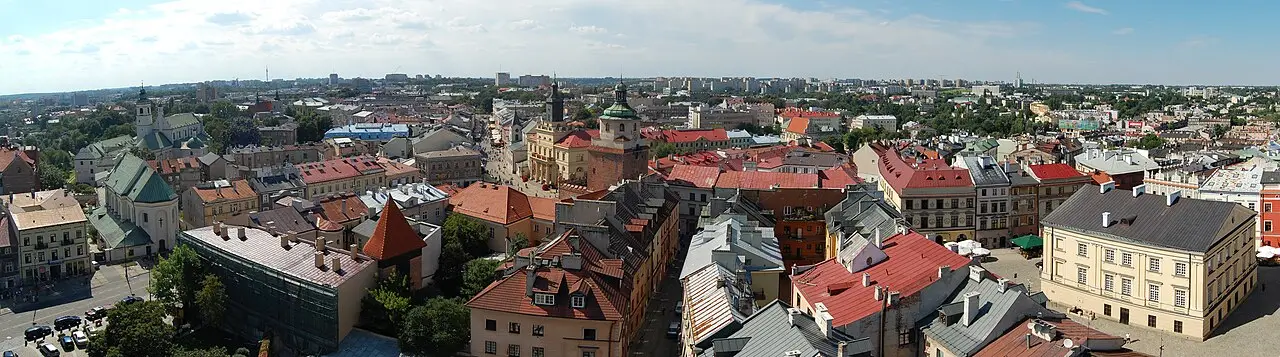
English is strong across Poland, and it varies by place. In the 2026 index the highest city scores were Lublin at 610 and Krakow at 608, followed by Poznan at 602, Gdansk at 596, Warsaw at 591 and Lodz at 590. By region, Lesser Poland scored highest at 604 and Lubusz lowest at 575, a spread of 29 points across the 16 regions.
Each city brings its own reasons to learn. Lublin is a large university city where students take English alongside their degree. Krakow, with 312 business service centers and nearly 108,000 employees in that sector, is full of people who use English all day at work. Warsaw is the capital and the main market for business-focused learners, with a large concentration of corporate and service jobs. Poznan combines a university population with a business one, and Gdansk scored 596 with a steady base of adults who need English for work and travel.
With online lessons, your city does not limit which tutor you can work with. A learner in a small town in Lubusz has the same access as one in central Krakow, and the lesson plan follows your goals wherever you log in from.
- Warsaw
- Krakow
- Lublin
- Poznan
- Gdansk
A country that invests in learning English
Learning English outside the regular classroom is popular in Poland. Private language schools offering English courses and summer programs draw many students. Polish young people often go to school abroad to strengthen their English, and English is the most common foreign language in Polish schools and universities.
If you have spent years in courses like these, you may know a rule well and still hesitate to use it live, with a real person waiting for your answer. The 2026 proficiency index points the same way for the country as a whole: Polish adults scored 614 in reading and 503 in speaking.
One to one lessons respect that background. You will be met where you are, with your existing knowledge put to work from the first session. Your tutor finds where your English is solid, where it has gaps, and where you know the rule but need many chances to say it out loud, and plans lessons around those three areas.
A tutor with experience in your field
Every Britemy learner works with one tutor, one to one. Tutors are experienced and skilled in their field, whether that field is teaching children, English for the workplace or preparing for exams such as IELTS. For test preparation, the same tutor takes you through both phases, from a foundation in the four skills to score strategy.
Your tutor learns how you think, which topics keep you talking and which mistakes you tend to repeat. Lessons build on each other, and the notes your tutor writes after each session record what you practiced and what comes next, so nothing you worked on gets lost between weeks.
If the match does not feel right, you can change tutor free of charge at any time. Chemistry matters in one to one learning, and a good fit makes it far easier to speak freely and to keep showing up.
A coordinator who follows every lesson
Behind every tutor there is a Britemy coordinator. The coordinator follows every lesson, reads your tutor's notes and sends you progress reports on the CEFR scale, from A1 to C2. You always know where you stand and what the next step looks like.
Around the lessons, the practical rules are simple. Moving a lesson costs nothing with at least 24 hours' notice, changing tutor is free at any time, and each package allows one pause of up to 30 days when life gets busy. Because the coordinator reads every set of notes, the picture of your progress stays complete.
If you enrolled a pupil, the reports let you follow progress without sitting in on lessons. For adults, the reports are a quiet record of how far you have come, which is useful on the weeks when progress feels slow.
Progress report, CEFR scale
- SpeakingA2
- ListeningA1
- ReadingA2
- WritingA1
Sent by your coordinator after reading your tutor's notes.
Your first month with Britemy
It starts with a free consultation. You tell us what you want English for, how much time you have and what has or has not worked for you before. From there you choose a package. Packages start at four sessions and are paid for in full before you start.
In the first lessons your tutor listens closely. You speak from the beginning, and the tutor notes your strengths, the sounds and structures that slow you down, and the topics that matter to you. Those notes go to your coordinator, who follows every lesson from the first one.
A package is active for 30 days from the first lesson, with a 15-day grace period after that. Moving a lesson costs nothing when you give at least 24 hours' notice, and you can pause a package once, for up to 30 days, if work or travel gets in the way. Your coordinator sends progress reports so you can see what has changed.
- A free consultation before you buy
- Speaking from the first lesson
- Packages from four sessions
- Move a lesson with at least 24 hours' notice
- One pause per package, up to 30 days
Lessons, payment and your rights in Poland
- Price
- Prices are shown in USD before you pay. Packages start at four sessions. From USD 15 a session. See every price
- Payment
- Pay by card from almost anywhere, including Visa, Mastercard, Amex, Apple Pay and Google Pay.
- Where
- Learn online from anywhere, or at home wherever a vetted tutor is available near you.
- Cancelling
- You can cancel within 14 days of buying your package and get your money back. If you asked us to start lessons inside that period, we keep the value of the lessons you have already had. Read the policy.
- Free
- The consultation, and changing tutor at any time.
Questions from Poland
My reading is good but I freeze when I speak. Can one to one lessons help?
That pattern shows up in the national numbers. In the 2026 proficiency index, Polish adults scored 614 in reading and 503 in speaking. Britemy lessons put your speaking first: you talk from the first lesson, your tutor polishes accuracy along the way, and every lesson is built around your speaking.
Can a tutor help my child prepare for the matura English exam?
Yes. The tutor can work on both the written paper and the oral exam, with timed writing, reading strategies and speaking tasks. A pass needs at least 30 percent and most candidates pass English, so a confident oral and a stronger result are natural goals, especially at the extended level.
Which English certificate do Polish universities accept?
Requirements differ by university and program, so always check the one you are applying to. One Polish university's recruitment list accepts certificates at B2 or above in four skills, with minimums of IELTS 5.5, TOEFL iBT 72 and PTE Academic 59. Britemy prepares learners for all of these in two phases with the same tutor.
What time are lessons, and do they follow Polish time?
Poland uses Central European Time, UTC+1 in winter and UTC+2 in summer, and the clocks change twice a year, so it is worth checking your lesson times when they do. If a time stops working for you, moving a lesson costs nothing with at least 24 hours' notice.
Can I have lessons at home in Poland?
Britemy can arrange lessons at home wherever a vetted tutor is available near you. Whether that works for your address depends on which tutors are close by, so the free consultation is the place to ask. Lessons on a video call work anywhere you have a good connection.
What happens if I do not get on with my tutor?
You can change tutor free of charge at any time. Your coordinator follows every lesson and reads your tutor's notes, so the record of your progress carries on with the coordinator when you switch, and you keep speaking from the first lesson with your new tutor.
I work in a business service center. Can lessons focus on my job?
Yes. Lessons start from your real tasks: client calls, stand-ups, tickets, process changes, presentations and reviews. The sector employed 488,700 people at the end of the first quarter of 2025, and your tutor builds vocabulary around your field.
Can you help with the th sounds and English word stress?
Yes. The two th sounds do not exist in Polish, and the Polish habit of stressing the second-last syllable often carries into English. Your tutor spots the patterns that most affect how easily you are understood and gives you short, regular practice inside your lessons.
How will I know I am making progress?
Your coordinator follows every lesson, reads your tutor's notes and sends progress reports on the CEFR scale, the six-level European framework that runs from A1 for beginners to C2 for the most advanced learners. You see which skills have moved and what your tutor will focus on next.