

































































 Luxembourg
English lessons for Luxembourg
Give English the same daily practice your other languages already get
Life here already runs in several languages. Britemy gives you one tutor who has you speaking English from your first lesson, and a coordinator who tracks your level on the CEFR, Europe's six-step scale from A1 to C2.
Your week, Europe/Luxembourg time
Tue20:30
Fri08:00
Sun10:00
English, the fourth language in a country of three
Luxembourg has three administrative languages, French, German and Luxembourgish, and Luxembourgish has been the national language by law since 24 February 1984. English has no official seat at that table, and still it keeps showing up wherever you go: in the meeting room, in the email thread with a colleague two countries away, in the series you watch on your phone at night. For many people here English is the language they meet last at school, arriving in secondary school after German and French, and once working life begins it becomes the second most spoken language at work after French.
The survey figures point the same way, although estimates differ from one survey to another. A summary of a 2023 Eurobarometer survey reports that 71 percent of people in Luxembourg said they speak English, up from 56 percent in 2012, and that only 3 percent called it a mother tongue, so almost everyone who speaks it learned it on top of another language. In 2022, 94.5 percent of adults aged 25 to 64 knew at least one foreign language and 54.1 percent knew three or more, the second highest share in the European Union. Juggling languages is simply part of ordinary life here.
That background changes how your lessons begin. You may already know how to learn a language, and you may understand a good deal more English than you produce. In 2022, 68.8 percent of adults aged 25 to 64 said they were proficient in their strongest foreign language, which tells you how much language skill people here already carry. So a Britemy lesson in Luxembourg rarely starts from a blank page. Your tutor looks for the exact place where your English stalls, maybe speaking up in a fast meeting, writing a report that sounds natural, or following a podcast at full speed, and builds the work from there.
Talking from the first lesson and polishing as you go
Maybe you can read an English contract or a technical article without much trouble, yet you hesitate the moment someone asks you a question out loud. That is a very common place to be. Reading and listening grow quietly on their own, while speaking needs a partner, and a busy multilingual week rarely offers one who will wait patiently while you search for the word. Britemy is built around that gap. From the first lesson you talk: about your work, your weekend, the news, the traffic on the way in, and your tutor keeps the conversation moving at a pace you can hold.
Accuracy follows along the way. Your tutor notes the slips that really matter, the tense that keeps sliding, the preposition that sounds right in another language you speak, the word order that copies a different grammar, and brings them back in short, focused moments. The fix lands while the conversation is still warm, so the correct form sticks to something you actually wanted to say.
This rhythm may feel familiar from the way you picked up your other languages: you use the language, someone corrects you, and you use it again. One to one lessons give English that same loop, with one helpful difference: a tutor who is listening to every sentence you say and remembers what you struggled with last week, so each lesson starts a little further along than the one before.

Who takes English lessons in Luxembourg
Luxembourg's population is unusually mixed, and that mix shapes who comes to English lessons. On 1 January 2025 the country had 682,000 residents: 361,200 Luxembourgers and 320,700 people of other nationalities, among them 89,700 Portuguese and 49,200 French citizens. In the 2021 census, Luxembourgish was the main language for 48.9 percent of residents, Portuguese for 15.4 percent, French for 14.9 percent, English and Italian for 3.6 percent each, and German for 2.9 percent. Very few people grow up with English at home, and most meet it at school, where every secondary pupil studies it, or later at work.
Work pulls in a second wave of learners every morning. In 2024 about 47 percent of the roughly 489,000 employees in Luxembourg were cross-border workers, and the country counted 229,100 non-resident cross-border wage-earners, most of them from France, Germany and Belgium. Three out of four residents work in a multilingual environment, so English can become the bridge between colleagues whose first languages never overlap.
One to one lessons can be shaped for learners such as these:
- Professionals in banking, insurance, trade and the European institutions who write, present and negotiate in English every week.
- Residents who arrived from Portugal, Italy or further away and are adding English to the languages they already use daily.
- Pupils in the national program or in one of the international programs who want calmer, more personal practice than a full class allows.
- University students and researchers who read, write and present in English on campus.
- Adults coming to English later in life who want a patient tutor, a clear plan and room to make mistakes.
English at work in a three-language economy
According to a 2021 STATEC survey, French is the most important workplace language in Luxembourg and English is the second most spoken, dominating banking, finance, insurance, international trade and the European institutions. In 2024 the country had 517,700 domestic jobs, and 54,800 of them were in financial and insurance activities. If your desk sits anywhere near that world, you probably already know how much of your day happens in English: the client call at nine, the slide deck for a regional team, the compliance summary that has to read cleanly the first time.
Local languages still matter, and that is part of the pressure. A 2019 University of Luxembourg study of job advertisements found that almost half of the offers required all three official languages, and demand for Luxembourgish rose from 50 percent to 67 percent between 2014 and 2019. English is often the extra language on top of an already full list, so the time you can give it is precious and the lessons need to be precise.
That is why your tutor works with the English you actually use. Bring the email you hesitated over, the presentation you have next Thursday, or the interview question you dread, and the lesson is built around it. English is also frequently acceptable in dealings with government services here, so you can also practice the calls and forms of everyday admin with your tutor.
- Meetings: interrupting politely, summarizing a discussion and disagreeing without sounding abrupt.
- Writing: emails, reports and messages that sound clear and confident in a professional register.
- Presenting: structuring a talk, handling questions and keeping your voice steady.
- Career moves: interviews, salary conversations and introducing yourself in a new team.

From the capital to the old steel towns of the south
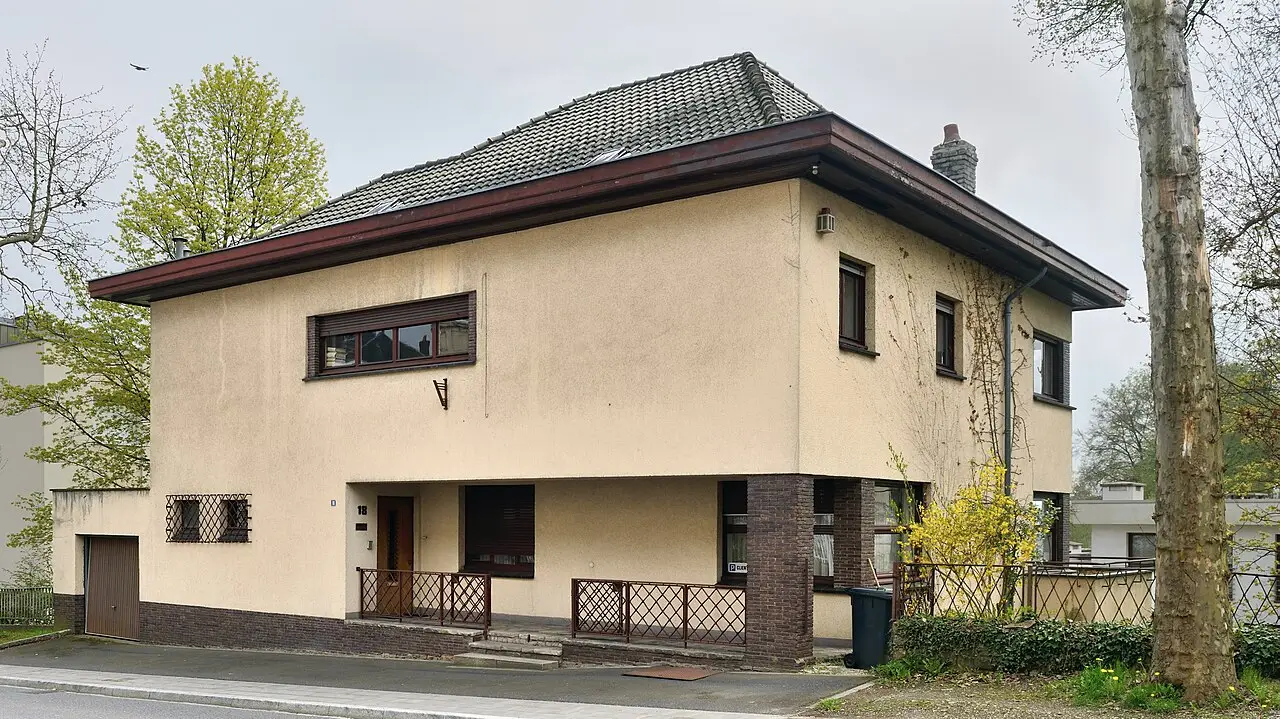
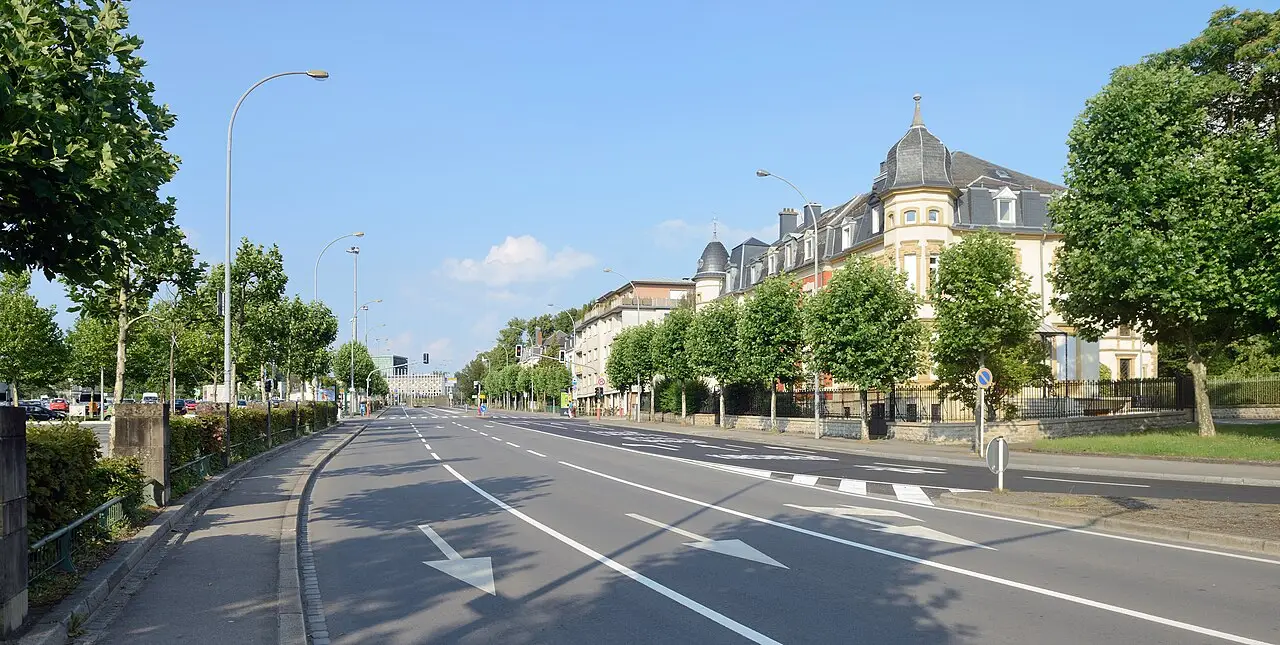
Luxembourg City had 137,678 inhabitants in 2026, and foreigners made up 69.5 percent of its population, the highest share of any commune in the country. It hosts the Court of Justice of the European Union, the European Court of Auditors, the European Investment Bank and Eurostat, and it has grown into a banking and administrative center. In a city like that, English can be the language that a Portuguese accountant, a German lawyer and a Luxembourgish manager end up sharing at the same table.
Esch-sur-Alzette is the second most populous commune, with 37,922 inhabitants in 2025, and University of Luxembourg buildings now stand around the old Belval blast furnaces. Students and young researchers there meet English in their study and research, and a tutor can help turn English you read into confident speaking and academic writing.
Differdange, the third most populous commune, had 30,364 inhabitants in 2024, up from 28,532 in 2021, a rise of about 6 percent in three years. It is a former steel town with a diverse working population, the kind of place where neighbors, coworkers and classmates may each bring a different first language home in the evening.
Wherever you live, in one of these three communes or in a smaller town, online lessons reach you the same way. The town you live in shapes the reasons you need English, and your lessons run the same way in every one of them.
- Luxembourg City
- Esch-sur-Alzette
- Differdange
Where English sits in the school and university path
The school system here is a language journey in its own right. In public primary school, children learn to read and write in German, which is the language of instruction for every subject except French. French is spoken from cycle 2 and written from cycle 3. English waits until secondary school, where most pupils start it in the second year, 6e, and pupils in the Latin section begin a year later.
In classic secondary education, students choose a third language in 6e from English, Latin or Chinese, and those who pick Latin or Chinese take English as a fourth language in 5e. From the fourth year, 4e, most classic secondary subjects are taught in French, with German and English as the exceptions, while general secondary education mostly keeps German as its teaching language. Alongside all of this, pupils study Luxembourgish for one hour a week in the first years. Secondary lessons last 50 minutes, compulsory teaching time is at least 30 lessons a week, and the school year generally runs from 15 September to 15 July.
So English arrives late and competes with several other languages for attention. A pupil may understand a text well and still have had few chances to speak at length. One to one lessons give that missing speaking time, and they help with oral presentations, essays and the reading that schoolwork asks for.
University continues the multilingual pattern. The University of Luxembourg had 7,500 students in the 2023/2024 winter semester, up from 6,566 in 2019/2020. Most bachelor programs are taught in French, while German and English also play a strong role, and in some fields such as law French and English dominate. Students often need English that holds up in seminars and written assignments, and that is exactly what a tutor can rehearse with you.
Children and teenagers in national and international programs
In 2024/2025 Luxembourg had 115,965 pupils: 95,037 in the national program and 20,928 in international programs at primary or secondary level. The public international schools offer the International Baccalaureate in French or English, a British-track school that teaches in English under a UK program, and a European school system where pupils choose French, German or English as their section language. That year 3,851 pupils were in the European Baccalaureate cycle, 1,078 in the international A-levels program and 421 in the International Baccalaureate.
For a pupil taught in English, a tutor helps keep pace with the vocabulary and writing demands of each subject. For a pupil in the national program, English is one subject among many, and the tutor's job is to turn classroom knowledge into a voice the pupil can actually use.
Younger children already have a full week. The primary curriculum framework prescribes 28 lessons a week and 1,008 lessons a year for cycles 2 to 4, which cover children aged about 6 to 11. Lessons for this age stay lively and full of talking, so English feels more like play than like one more homework subject.
Teenagers get something different: a tutor who is happy to talk about music, sport and plans after school, and who can also sharpen an essay or rehearse an oral presentation. Whether a parent, a grandparent or the teenager books the lessons, every plan is shaped around the young learner, their pace and what they want English for.
IELTS, Cambridge English and the other tests you might need
Luxembourg's national language institute offers adult courses in ten languages, English among them, and serves as the official certification center for international language exams. It offers Cambridge English exams at five levels, A2 Key for Schools, B1 Preliminary, B2 First, C1 Advanced and C2 Proficiency, which it lists for immigration, education and employability. It also offers IELTS Academic and IELTS General Training, which it lists for registration at English-speaking universities and for immigration to English-speaking countries. Its Belval and Mersch sites are open Monday to Thursday from 8:00 to 17:00 and Friday from 8:00 to 16:00, and closed at weekends.
Britemy prepares you for these exams with the same tutor from start to finish, in two phases. The first phase builds the foundation in all four skills, listening, reading, writing and speaking, because strategy only works on top of solid English. The second phase turns to the score itself: drills in the exact format of each paper, timed mock tests and practice in how to divide your minutes between sections.
You move to the second phase when your foundation is ready, and your coordinator's reports show you when that point is getting close. If a university or an employer abroad asks for a different test, the same two-phase approach covers the TOEFL, TOEIC, Duolingo English Test and PTE Academic as well.
- Cambridge B2 First and C1 Advanced: listed for education, immigration and employability.
- IELTS Academic and IELTS General Training: listed for registration at English-speaking universities and for immigration to English-speaking countries.
- A2 Key for Schools and B1 Preliminary: the first two of the five Cambridge English levels on offer.
- IELTS (Academic and General Training)
- Cambridge English Qualifications (A2 Key for Schools to C2 Proficiency)
Getting ready to study abroad
Studying abroad is a common step here. In the 2023/2024 winter semester, 15,455 residents applied for state aid for study programs abroad, with 4,219 in Germany, 3,105 in Belgium and 2,319 in France. The ministry's study abroad guide has dedicated country sections for Australia, Belgium, Spain, France, Italy, Latvia, the Netherlands, Poland, the United Kingdom and Sweden, so the list of possible destinations stretches well beyond the neighboring countries.
If you are heading to an English-speaking university, IELTS Academic is one of the exams the national language institute lists for registration there, so it is worth knowing early which proof of English your program asks for. Closer to home, English also plays a strong role at the University of Luxembourg, where it sits alongside French and German in many programs.
Lessons for future students focus on the English you will need in the first semester, long before the first graded essay. You practice taking notes from a fast lecture, summarizing an article, joining a seminar discussion and building an argument in academic writing. Your tutor can also help with the personal statement and the interview that some programs ask for, so the application itself shows your English at its best.
Start early if you can. A year of steady lessons before you leave lets the first months abroad go into settling in and making friends, with the reading already within reach.
Reading your progress on the CEFR scale
The CEFR, the Common European Framework of Reference for Languages, describes language ability in six steps. A1 and A2 cover the basics: introducing yourself, handling simple everyday exchanges and understanding slow, clear speech. B1 and B2 are the independent levels, where you can follow most conversations, explain your opinion and work in English with some effort. C1 and C2 describe advanced users who read demanding texts, write with precision and switch register easily.
The scale is useful here because you may already know your level in other languages in the same terms. Many exams use it directly too: the Cambridge English exams carry the level in their names, from A2 Key for Schools up to C2 Proficiency, so a target like B2 First tells you exactly which step you are aiming at.
Your coordinator sends progress reports that place you on this scale, based on what your tutor observes lesson by lesson. You can see which skills are moving fastest and which ones need more attention. How long each step takes depends on where you start, how often you have lessons and how much English you use between them, so your plan is reviewed as you go and adjusted to your real pace.
Progress report, CEFR scale
- SpeakingB2
- ListeningB1
- ReadingB2
- WritingB1
Sent by your coordinator after reading your tutor's notes.
One tutor who learns how you learn
Every Britemy learner works with one tutor, one to one, from the first lesson onward. Your tutor is experienced and skilled in the kind of English you need, whether that is conversation, business communication, school support or exam preparation, and is chosen after a consultation in which you describe your goals, your schedule and the way you like to learn.
Working with the same person week after week has real advantages. Your tutor remembers the meeting you were nervous about, the essay topic your teacher set, and the sound you keep swallowing at the end of words. Each lesson picks up where the last one stopped, so very little time goes into reintroducing yourself. Because you are the only learner in the session, you also get all of the speaking time, which is the thing a multilingual life rarely leaves room for.
Chemistry still matters, and you stay in control of it. If the match does not feel right, changing tutor is free at any time, and your coordinator arranges a new tutor who fits better. Your coordinator, who follows every lesson and reads your tutor's notes, keeps your progress in view through the change.
A coordinator who keeps an eye on every lesson
Behind each tutor there is a coordinator, and that is what turns a series of good lessons into a plan. Your coordinator follows every lesson, reads the notes your tutor writes after each session, and looks at how your English is moving over weeks, beyond what any single hour can show.
From those notes your coordinator writes progress reports that place you on the CEFR scale, from A1 to C2, and describes what improved, what still needs work and what comes next. If you are preparing for an exam, the reports help decide when you are ready to move from building the foundation to working on score strategy.
Your coordinator is also the person to talk to when something changes. A new job that suddenly needs more presenting, a school term that ends in oral exams, a month of heavy travel: you tell your coordinator, and the plan shifts with you. And if you ever want a different tutor, your coordinator handles the change so you can keep going.
Fitting lessons around commutes, school days and long weeks
Luxembourg runs on Central European Time, UTC+01:00 in winter and UTC+02:00 in summer, with daylight saving from the last Sunday in March to the last Sunday in October. You plan your lessons in that local time, so the clock on your wall is the only one you need.
Commuting shapes many working days here. In 2024, 47 percent of employees were cross-border workers, about 126,000 of them from France alone, which for many people means travel at both ends of the day. Online lessons let you skip a second journey: you can have a lesson at home in the evening after the commute, or from a quiet room at the office before your day fills up, whatever you and your tutor agree on.
For children, the school timetable offers natural openings. The model timetable for primary school runs from 8 a.m. to 12 p.m. on all five weekdays, plus 2 p.m. to 4 p.m. on Monday, Wednesday and Friday, which leaves Tuesday and Thursday afternoons without classes, although each municipality sets its own exact times. For secondary pupils, the school year from 15 September to 15 July leaves the summer free for extra English practice before the new school year.
Life still gets in the way sometimes. Moving a lesson costs nothing when you give at least 24 hours' notice, so a late meeting or a sick day does not have to cost you a session.
Lessons on Europe/Luxembourg time (UTC+01:00, summer UTC+02:00)
- Tue20:3060 min
- Fri08:0060 min
- Sun10:0060 min
Moving a lesson costs nothing with at least 24 hours' notice.
Online lessons on a connection you already trust
Britemy lessons run online on a video call, and Luxembourg is well prepared for that. At the end of 2025 about 674,000 people in Luxembourg used the internet, a penetration rate of 98.8 percent, and there were about 941,000 mobile connections, equal to 138 percent of the population. In 2024 the country had 271,400 internet access subscriptions, of which 179,500 ran between 100 Mbps and 1 Gbps and 47,300 at 1 Gbps or more.
You are probably already comfortable with the format. In 2024 about 75 percent of the population made calls or video calls over the internet, and 75 percent used instant messaging. A lesson simply puts that familiar screen to a new use, with your tutor on the other side and your own English at the center of the conversation.
Online lessons also widen the choice of tutor. Since nobody needs to travel, you are matched on goals and teaching style, and distance plays no part. A laptop or tablet, headphones with a microphone and a quiet corner are all you need, and the session feels surprisingly personal once the conversation is flowing.
Lessons in your own living room, when a tutor lives nearby
Some learners prefer to sit across the table from their tutor, and young children in particular often focus better that way. Britemy offers lessons at your home wherever a vetted tutor is available close to where you live. Availability depends on the tutors near you, so the consultation is where you find out whether a home tutor is an option for your address.
You choose the place, usually your own home. The lesson itself follows the same approach as online: you speak from the first minute, your tutor writes notes afterward, and your coordinator follows your progress on the CEFR scale.
If no tutor is close enough to visit, online lessons give you the same tutor quality and the same coordinator support, and the consultation is the place to talk through which setup suits you best.
How your first month with Britemy unfolds
Everything starts with a free consultation before you buy anything. You talk about why you want English, how you use it today, what time of day works for you and whether you want online lessons, lessons at home where possible, or both. From that conversation your tutor match takes shape.
Packages start at four sessions. You pay for the whole package at the start, before your first lesson takes place. A package is active for 30 days from your first lesson, with a 15-day grace period after that, and you can pause once per package for up to 30 days if work, travel or a family event gets in the way.
Your first lessons are mostly conversation. Your tutor listens closely, sees where your English flows and where it catches, and starts shaping a plan around the goals you named. Within the first weeks the routine usually starts to settle: a regular time, a familiar face on screen or at your door, and a growing list of phrases you now use without thinking.
Your coordinator follows all of it, reads every lesson note and sends you a progress report on the CEFR scale, so by the end of your first package you can see exactly where you stand and decide calmly what comes next.
Lessons, payment and your rights in Luxembourg
- Price
- Prices are shown in EUR before you pay. Packages start at four sessions. From EUR 13 a session. See every price
- Payment
- Pay by card from almost anywhere, including Visa, Mastercard, Amex, Apple Pay and Google Pay.
- Where
- Learn online from anywhere, or at home wherever a vetted tutor is available near you.
- Cancelling
- You can cancel within 14 days of buying your package and get your money back. If you asked us to start lessons inside that period, we keep the value of the lessons you have already had. Read the policy.
- Free
- The consultation, and changing tutor at any time.
Questions from Luxembourg
I already speak three or four languages. Will English lessons feel too basic for me?
Very unlikely. In 2022, 54.1 percent of adults aged 25 to 64 in Luxembourg knew three or more languages, and one to one lessons suit that kind of learner well. Your tutor skips what you already know and spends the time on the specific gaps, such as speaking under pressure, writing with the right tone or following fast conversation in meetings.
Can my lessons focus on the English I use in banking, insurance or the European institutions?
Yes. English dominates banking, finance, insurance, international trade and the European institutions here, so many learners bring real work into the lesson: a presentation, a client email, a report or an interview. Your tutor builds role plays and writing practice around those tasks so the English you rehearse is the English you need on Monday morning.
Do you prepare for the IELTS and Cambridge English exams offered in Luxembourg?
Yes. The national language institute offers IELTS Academic, IELTS General Training and Cambridge English exams from A2 Key for Schools to C2 Proficiency. Britemy prepares you in two phases with the same tutor: first a solid foundation in all four skills, then score strategy with format drills, timed mock tests and section timing. Scores depend on the day and on you, and the aim of the work is that you walk in knowing the format inside out.
My child studies in an English section of an international program. Can a tutor help?
Yes. Luxembourg's public international schools include programs taught in English, and 20,928 pupils followed international programs in 2024/2025. A tutor can help a young learner keep up with subject vocabulary, essays and presentations in English, and for younger children lessons stay playful, with plenty of talking.
Which time zone are my lessons scheduled in?
Your lessons are booked in Luxembourg time, which is Central European Time: UTC+01:00 in winter and UTC+02:00 in summer, with the clock change on the last Sunday in March and the last Sunday in October. You simply pick times that suit you, and the calendar follows the local clock all year.
I spend a lot of my day commuting. How can I fit lessons in?
In 2024, 47 percent of employees in Luxembourg were cross-border workers, so many working days start and end with travel, and online lessons add none. You might take an evening lesson once you are home, or join from a quiet office room before the working day begins. If plans change, you can move a lesson at no cost by giving at least 24 hours' notice.
Can a tutor come to my home for lessons?
Home lessons are possible wherever a vetted tutor is available close to where you live. During the consultation we check whether that is the case for your address. If there is no tutor nearby, online lessons give you the same tutor quality, the same coordinator and the same progress reports.
What happens if my tutor and I are not a good match?
Tell your coordinator and you will be matched with a new tutor. Changing tutor is free at any time, and your coordinator, who has followed every lesson and read every note, makes sure the new tutor continues from where you are.
How long will it take me to reach B2 or C1?
That depends on your starting level, how many lessons you take each week and how much English you use in between, so nobody can give you an honest fixed date. What you do get is a clear picture: your coordinator places you on the CEFR scale in regular progress reports, so you can see each step as it happens and adjust the plan if you want to move faster.