
































































 Lithuania
English lessons for learners in Lithuania
Turn the English you already know into English you use with confidence
You probably met English at school, perhaps next to Russian or German. Britemy pairs you with one tutor who gets you speaking from the first lesson, online on a video call, while a coordinator follows every lesson and reports your progress.

Your week, Europe/Vilnius time
Mon19:00
Thu07:00
Sat09:00
A country of language learners, ready for the next step
If you live in Lithuania, chances are you already speak more than one language. In 2022, 95.3 percent of adults aged 25 to 64 knew at least one foreign language, the fourth highest share in the European Union, while the EU average sat at 74.7 percent. That is a remarkable starting point, and it changes what English lessons should feel like. If you first met English at school, at work or online, what you may want now is English that sounds more natural, more precise and more relaxed.
The picture is also shaped by history. Lithuania was the only EU country in 2022 where people aged 55 to 64 knew foreign languages about as often as people aged 25 to 34. The reason is simple: older generations learned Russian, and younger generations learned English. In the 2022 census, 55.6 percent of residents said they knew English as a foreign language, with Russian at 68.2 percent and German at 10.5 percent. So around one kitchen table you may find a grandparent who reads Russian with ease, a parent who uses English on client calls, and a teenager who switches between languages without a second thought.
One to one lessons suit this landscape well. Your tutor starts from the English you already have, whichever road brought you to it, and builds the speaking habits that a busy classroom may not have had time for.

Who books a private English tutor in Lithuania
In 2022, over 90 percent of employed people in Lithuania knew a foreign language, and over 95 percent of young adults aged 18 to 24 did. So for many people the question is about depth, ease and confidence in English. People who look for one to one lessons may come from a few groups, each with its own reason:
- Professionals in business services, finance and technology who use English every day and want to sound sharper in meetings and on calls.
- School pupils who started English in the early grades and want more speaking practice, stronger writing or support before their state exams.
- University applicants preparing IELTS Academic or TOEFL iBT for an English-taught degree at home or abroad.
- Adults who learned Russian at school and now want English for travel, for relatives living abroad or for a change of career.
- Parents who want their child to speak English with confidence alongside the lessons taught at school.
- People who grew up speaking Russian or Polish at home, use Lithuanian every day, and are adding English as another working language.
English at work in the business services boom
Business services are one of the places where Lithuania puts its language skills to work. In 2024 the global business services sector employed over 27,200 people in the country, and centers owned by US companies accounted for 38 percent of that employment. The most multilingual center worked in 29 languages, and Vilnius had 37.5 business services employees for every 1,000 residents. If you work in one of these teams, English may be the language of your tickets, reports, client calls and team chat.
The English these jobs ask for is specific. You may write a clear email and still freeze when a client on a call asks an unexpected question. You may follow a colleague from another country perfectly and still feel that your own sentences come out stiff. A private tutor works on exactly those moments, using the situations you face each week:
- Rehearsing the calls you actually have, from a quick status update to a tense escalation.
- Turning written English that is correct into English that sounds friendly and direct.
- Building the vocabulary of your own team, whether that is finance operations, IT support or customer care.
- Practicing presentations along with the questions that come after them.
Fintech, technology and the port: English for local industries
Financial technology has a strong home in Lithuania. At the end of 2023 the country ranked first in the EU for fintech licenses issued. The 2025 to 2026 overview counted 248 fintech companies established in the country, with 7,800 professionals in the sector, and fintechs licensed in Lithuania served about 40 million European customers in 2025.
Around them stands a wider technology workforce: Eurostat counted 77,600 ICT professionals in Lithuania in 2025. In these fields English carries code reviews, compliance documents, investor updates and product demos. The vocabulary is technical and the stakes are real, because one unclear sentence in a regulatory reply or a pitch can slow a whole team down.
Lessons for this world focus on precise, confident English. Your tutor can work with the kind of material you handle, such as a feature you need to explain to a client or a short talk for a team meeting, and help you say it clearly and naturally. On the coast, Klaipeda is the only major seaport in the country, and shipping and logistics bring their own English, from schedules and port calls to client correspondence.
Speaking from the very first lesson
Plenty of learners can read an English article or follow a series without subtitles, yet hesitate the moment they have to speak. That gap between understanding and speaking is exactly where Britemy lessons begin. From your first lesson you speak, and your tutor polishes your accuracy along the way.
The order matters. When grammar comes first, many learners wait until they feel ready before they open their mouths, and that moment can take years to arrive. When speaking comes first, you build the habit of expressing yourself with the words you already have, and your tutor gently fills the gaps with a better verb, a smoother phrase or a sound that needs a little work.
Your tutor keeps the conversation tied to your own life. An analyst might talk through a quarterly review, a pupil might describe a weekend by the sea, and a retired engineer might tell the story of a first trip to London. Because the topics feel natural, the English starts to feel natural too, and confidence grows from the experience of being understood.
Sounds and patterns that Lithuanian speakers often work on
Every first language leaves fingerprints on the English you speak, and knowing yours makes practice faster. Lithuanian has a rich sound system of its own, and a few of its features meet English in interesting ways:
These patterns give your practice a clear map. Your tutor notes the ones that show up in your speech and comes back to them in short, regular exercises, so improvements stick while the lesson stays a conversation.
- The th sounds. The Lithuanian consonant inventory lists no dental fricatives, so words like think and this are typical practice targets. Your tutor shows you where to place your tongue and drills word pairs until they feel easy.
- The w sound. The 32-letter Lithuanian alphabet has no w, so the English w in words like wine and window is a typical practice target. Short listen and repeat exercises help it settle.
- Stress and rhythm. Lithuanian has free accent, distinctive vowel length with six long and four short vowels, and a pitch accent on heavy syllables. English rhythm squeezes some syllables and stretches others, so practicing stressed and unstressed syllables makes you much easier to follow.
- Soft and hard consonants. Every Lithuanian consonant except /j/ has a palatalized and a plain version, which can shape how English consonants sound. Your tutor helps you hear the English version and match it.
- Word endings and word order. Lithuanian nouns are declined in seven cases, so endings carry meaning. English puts that meaning into word order and small words like to, of and for, so prepositions can deserve extra attention.

English for children and teenagers next to school
Children in Lithuania meet English early. The first foreign language, usually English, typically starts in the 2nd form at ages 7 to 8, and some schools begin in the 1st form. A second foreign language can start in the 5th form and becomes compulsory from the 6th. For the 2025 to 2026 and 2026 to 2027 school years, the national timetable lists 108 hours a year, or 3 lessons a week, of foreign-language teaching in grades 5 and 6.
Most Lithuanian pupils also study two or more foreign languages. A 2016 report based on Eurostat data found that only about 17 percent of secondary pupils in grades 5 to 12 studied a single foreign language, against almost 39 percent across the EU. From September 2026, Spanish joins English, French and German as a choice of first foreign language in primary school.
With two or more languages on the timetable, one to one lessons give your child extra room to talk, ask questions and make mistakes without a class watching. Younger children learn through stories, games and songs. Teenagers can follow their school topics, build essay writing, prepare for state exams, or simply gain the confidence to chat with online friends from other countries.
Education is compulsory from age 6 or 7 to 16, upper secondary lasts two years and ends with the matura, and the school year begins on 1 September. Starting lessons in September lets your tutor walk alongside the school year from its first week.
Studying abroad from Lithuania, and at home in English
Some Lithuanian students head abroad for their degrees. UNESCO data show that in 2022, 8 percent of Lithuanian students were mobile. The United Kingdom hosted 2,843 of them, or 35 percent, followed by the Netherlands with 1,567 (19 percent), Germany with 798 (10 percent) and Denmark with 694 (8 percent).
The map keeps shifting. Between 2019 and 2022 the number of Lithuanian students in the United Kingdom fell from 4,410 to 2,843, a drop of 36 percent, while the number in the Netherlands rose from 1,094 to 1,567, a rise of 43 percent. Whichever direction you choose, lectures, seminars and group projects will ask you to listen, speak, read and write at university level, often from the very first week.
You may also need academic English without leaving the country. Several Lithuanian universities in Vilnius, Kaunas and Klaipeda offer bachelor's and master's programs taught in English. A tutor can prepare you for the parts of student life that a test score never shows, such as asking a question in a seminar, writing a polite email to a professor or presenting a group project to a room of classmates from many countries.

The English tests learners in Lithuania prepare for
If you are applying to an English-taught degree, the version of the test you take matters. A third-party directory last checked in March 2026 lists IELTS Academic as the accepted IELTS test for degree admission at Vilnius University, with an overall minimum of 5.5 for undergraduate and 6.5 for postgraduate study. General Training is not accepted there, so make sure you prepare for the Academic version.
A third-party study guide gives IELTS 6.0 to 6.5 or TOEFL iBT 80 to 90 as the usual range for English-taught programs in Lithuania, and IELTS 6.5 or TOEFL iBT 90 for most English-taught master's programs at Vilnius University. Results generally need to be less than two years old, so plan your test date around your application window, and always confirm the current requirement with the university you choose.
Britemy prepares you for IELTS, TOEFL, TOEIC, Cambridge, the Duolingo English Test and PTE Academic in two phases with the same tutor. First comes a foundation in the four skills of listening, reading, writing and speaking. Then comes score strategy: drills in the official format, timed mock tests and practice in pacing each section. You move to the second phase when your foundation is ready.
School leavers face state exams too. Students seeking state-funded university places, except in the arts, must pass at least three state exams and may take up to six, and a state exam counts as passed at 35 points out of 100. If English is one of your exams, a tutor can strengthen your skills alongside the work you do with your class teacher.
- IELTS Academic
- TOEFL iBT
- State matura exam in English
From Vilnius to Kaunas and Klaipeda
Vilnius is the capital and the largest city, with 619,405 residents in the city proper, 767,907 in the urban area and 888,043 in the metro area by the 1 July 2026 estimates, and a metro economy of 36.2 billion euros. The city has a large business services and fintech workforce that works in English, with 37.5 business services employees per 1,000 residents in 2024, so business English, presentations and job interviews are natural lesson goals for learners in the capital.
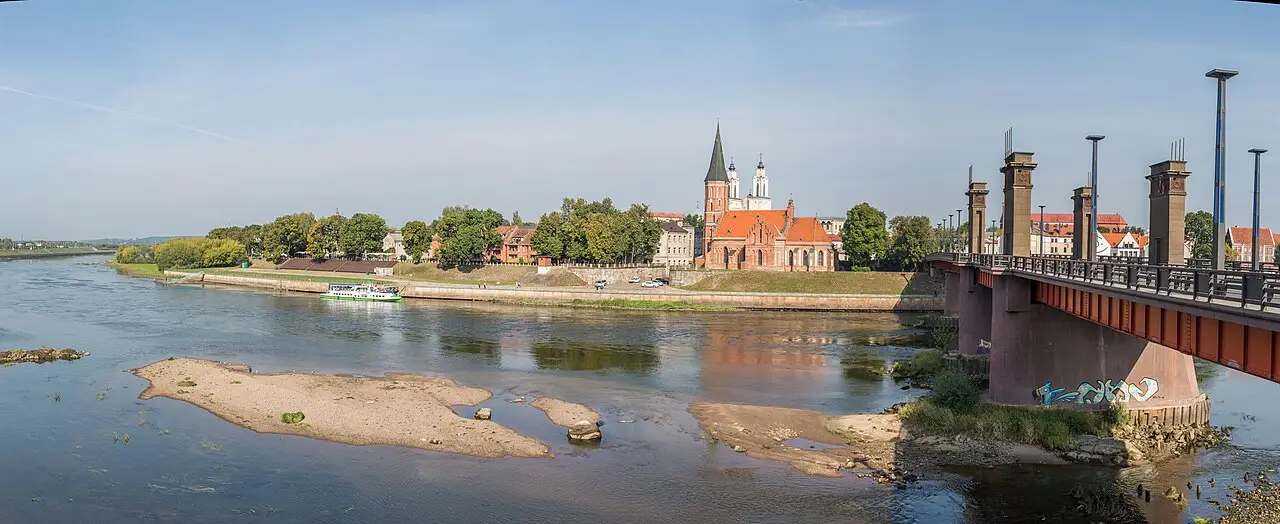
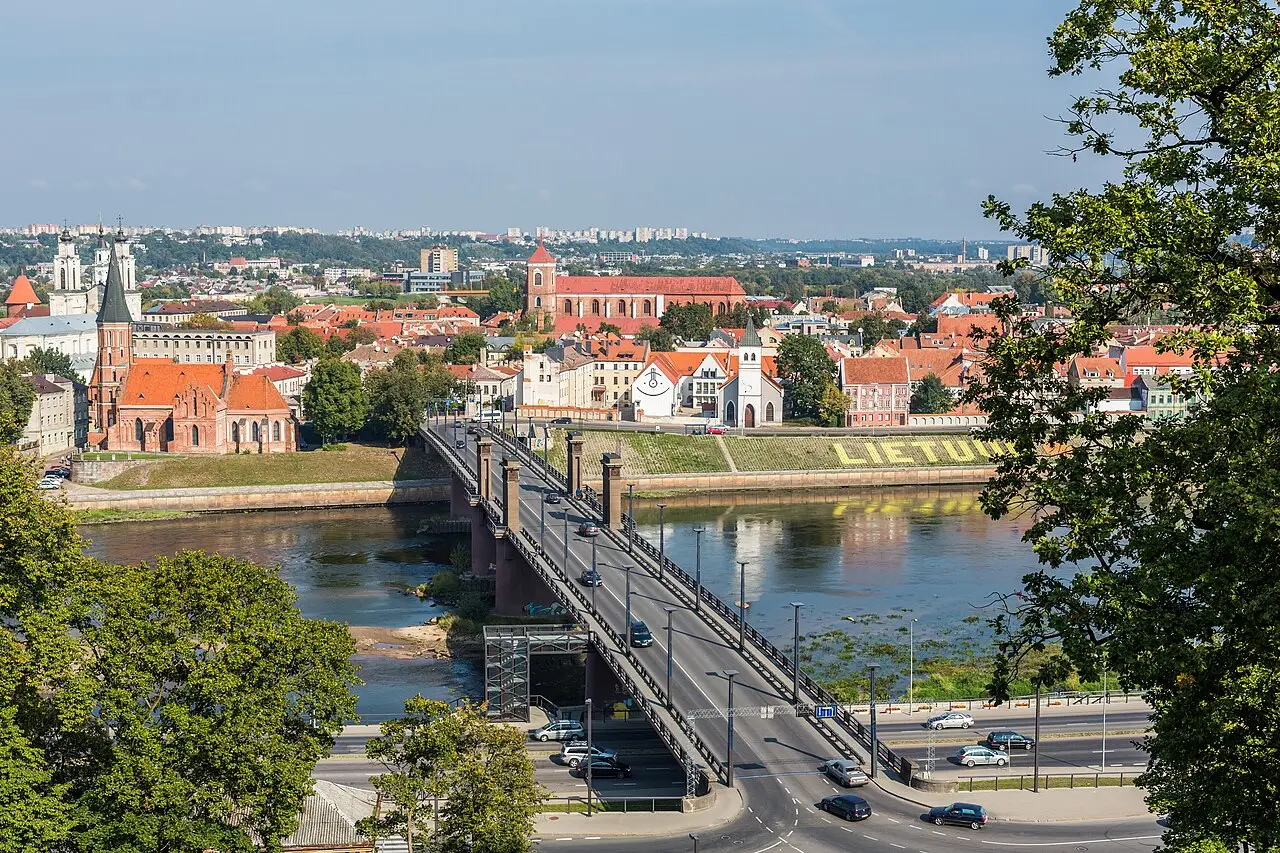
Kaunas, the second city, had 304,198 residents in 2024, a metro economy of 15.86 billion euros and a GDP per capita of 27,000 euros. The city has several universities, some of them offering English-taught degree programs, so many students and young professionals live here, and academic English, test preparation and interview practice are natural goals.
Klaipeda had 160,979 residents in 2025 and 228,748 in its metro area. It is the only major seaport in the country and is home to an English-language university, so learners there may combine English for shipping and logistics with study goals.
Wherever you live, from these three cities to smaller towns across a country of just under 2.9 million people in 2025, online lessons work the same way and your tutor is one click away.
- Vilnius
- Kaunas
- Klaipeda
Fitting lessons around your working day
Lithuania runs on Eastern European Time, at UTC+2 in winter and UTC+3 in summer. In 2022 the national investment agency listed standard working hours of 8 AM to 5 PM or 9 AM to 6 PM on a 40-hour week, so you may look for a lesson slot that sits comfortably around those hours. Bring the times that suit you to your free consultation, and you will hear what is possible. Here are some windows you might weigh around your own day:
- Early morning, before the office opens or before school starts.
- A midday break, if your work allows a focused session.
- Evening, after work or after homework is done.
- Weekends, when the working week is out of the way.
Lessons on Europe/Vilnius time (UTC+02:00, summer UTC+03:00)
- Mon19:0060 min
- Thu07:0060 min
- Sat09:0060 min
Moving a lesson costs nothing with at least 24 hours' notice.
Online lessons on a connection that is ready for them
Lessons run online on a video call, and Lithuania is well set up for that. In late 2025, 2.52 million people used the internet, a penetration of 89.5 percent, and in 2025 the country had 3.59 million mobile connections, equal to 127 percent of the population. The median mobile download speed reached 123.32 Mbps in the twelve months to August 2025.
Household internet access rose from 65 percent in 2014 to 90 percent in 2024, and in 2024 about 25 percent of Lithuanian internet users searched for learning material online. A live lesson gives that habit a structure, with a person who knows your level, chooses the next step and listens carefully when you speak.
All you need is a laptop, tablet or phone with a camera and a microphone, plus a quiet corner. You can join from your flat, from a meeting room during lunch or from a desk in the university library, and the lesson feels the same wherever you sit.
Lessons at home, where a tutor is near
Some learners prefer to sit at the same table as their tutor, especially young children and people who find screens tiring after a long workday. Britemy offers lessons at home wherever a vetted tutor is available near you. Ask about it during your free consultation and you will hear plainly what is possible where you live.
A lesson at home follows the same method as a lesson online: speaking from the first minute, notes after every session and progress reports from your coordinator. If no tutor is near you yet, online lessons give you the same kind of tutor and the same care on your screen, and you can always ask again later.
One tutor for every lesson
With Britemy you learn with one tutor who teaches you in every lesson. Tutors are experienced and skilled in their field, whether your goal is English for a young child, the rhythm of a business call or the IELTS writing tasks.
Before you buy, you have a free consultation where you describe your goals, your schedule and how you like to learn. If after a few lessons you feel another tutor would suit you better, changing tutor is free at any time, and you can ask whenever you feel the fit could be closer.
Because you work with the same person every time, your tutor remembers the mistake you made last week, the presentation you have on Thursday and the word you keep forgetting. That continuity is what turns separate lessons into steady progress.
A coordinator who follows every lesson
Behind every Britemy tutor stands a coordinator. Your coordinator follows each of your lessons, reads your tutor's notes and sends you progress reports on the CEFR scale. CEFR, the Common European Framework of Reference for Languages, describes language ability in six levels, from A1 for beginners to C2 for near-complete mastery.
For a busy professional, this means you can see where you stand without guessing. For a parent, it means a clear picture of how a child is moving between school reports. For a test candidate, it means an honest view of whether the foundation is solid enough to start score strategy.
If something is drifting, such as a schedule that keeps slipping or lessons that feel too easy, your coordinator is the person who notices and helps you and your tutor adjust the plan.
Progress report, CEFR scale
- SpeakingB1
- ListeningA2
- ReadingB1
- WritingA2
Sent by your coordinator after reading your tutor's notes.
Where you are on the CEFR scale and where you go next
If you learned English at school and use it now and then, you may find yourself somewhere in the middle of the scale, with good understanding and less practice in speaking. The six levels look like this:
Your progress reports place you on this scale, so you can see your movement between levels and within them. How fast you move depends on your starting point, how often you have lessons and how much you practice in between, so your coordinator talks with you about milestones that are realistic for your life.
- A1 and A2: you handle everyday phrases, simple introductions and short exchanges about familiar topics.
- B1: you cope with most travel situations, describe experiences and give short reasons for your opinions.
- B2: you take part in discussions with ease, follow longer talks and write clear, detailed texts.
- C1: you use English flexibly for social, academic and professional purposes, with well-organized speech and writing.
- C2: you understand almost everything you hear or read and express yourself precisely, even on subtle points.
Programs that fit learners in Lithuania
Every Britemy program follows the same principles: one tutor, speaking from the first lesson, and a coordinator following your progress. What changes from program to program is the material and the goal, so you can pick the one that matches where you want your English to take you:
If you are unsure which program fits, the free consultation is the right place to talk it through, and your tutor can shift the focus later as your goals change.
- General English, from beginner to advanced, for adults who want to speak more freely.
- Business English for meetings, presentations, email writing and negotiation.
- Job interview practice for roles in international teams.
- Conversation and pronunciation, focused on the sounds and rhythm that need your attention.
- English for kids and teens, linked to school topics and to real conversation.
- Cambridge Young Learners English for children taking a first international exam.
- Test preparation for IELTS, TOEFL, TOEIC, Cambridge, the Duolingo English Test and PTE Academic.
What your first month looks like
Your first month sets the rhythm for everything that follows. Packages start at four sessions, and a package is active for 30 days from your first lesson plus a 15-day grace period. The whole package is paid before that first lesson. Here is how the month usually unfolds:
If a holiday or a work trip gets in the way, you can pause your package once, for up to 30 days. Give at least 24 hours' notice and you can move a single lesson without losing it, so a sudden deadline does not have to cost you a session.
- Before you buy: a free consultation where you share your goals, your level and your schedule.
- First lesson: you speak from the start, and your tutor listens for your strengths and the patterns to work on.
- Early lessons: your tutor builds a plan around your goal, whether that is a client call, a school exam or an IELTS date.
- Through the month: your coordinator reads the notes after every lesson and keeps an eye on your progress.
- End of the package: a progress report on the CEFR scale and a conversation about your next step.
Lessons, payment and your rights in Lithuania
- Price
- Prices are shown in EUR before you pay. Packages start at four sessions. From EUR 13 a session. See every price
- Payment
- Pay by card from almost anywhere, including Visa, Mastercard, Amex, Apple Pay and Google Pay.
- Where
- Learn online from anywhere, or at home wherever a vetted tutor is available near you.
- Cancelling
- You can cancel within 14 days of buying your package and get your money back. If you asked us to start lessons inside that period, we keep the value of the lessons you have already had. Read the policy.
- Free
- The consultation, and changing tutor at any time.
Questions from Lithuania
I learned English at school years ago. Can I pick it up again at my own level?
Yes. Your tutor starts from the English you have today, which for many people who learned at school means good understanding and rusty speaking. You speak from the first lesson, your tutor notes what comes easily and what needs work, and your coordinator places you on the CEFR scale so you can see where you are heading.
My English works for email but I freeze on calls at work. Can lessons help with that?
That is a goal a tutor can work on directly. Your tutor rehearses the calls you really have, from status updates to tricky client questions, and helps you answer in English that sounds calm and natural. Over time the call stops feeling like a test and starts feeling like a conversation.
Which IELTS do I need for Vilnius University?
A third-party directory checked in March 2026 lists IELTS Academic as the accepted version, with an overall minimum of 5.5 for undergraduate and 6.5 for postgraduate study, and General Training is not accepted. Requirements can change, so confirm with the university before you book your test, then prepare in two phases with the same Britemy tutor.
How do lesson times work in Lithuania's time zone?
Lithuania uses Eastern European Time, UTC+2 in winter and UTC+3 in summer. Lessons run in your local time. Bring the times that suit you to your free consultation and you will hear what is possible. If your week changes, moving a lesson costs nothing with at least 24 hours' notice.
Can my child have lessons alongside the English taught at school?
Yes. In Lithuania the first foreign language, usually English, typically begins in the 2nd form at ages 7 to 8, and private lessons add speaking time that a class may not allow. Your child's tutor can follow school topics, help with homework and exam skills, and use stories and games for younger learners, while the coordinator keeps you informed with progress reports.
Can a tutor come to my home?
Lessons at home are offered wherever a vetted tutor is available near you. Ask during your free consultation and you will hear plainly what is possible where you live. If there is no tutor near you yet, online lessons on a video call follow exactly the same method and give you the same coordinator support.
What if my tutor does not suit me?
Changing tutor is free at any time. Tell your coordinator what you would like to be different, perhaps a slower pace, more speaking or more focus on business topics, and you can continue with a different tutor. Your coordinator keeps following your progress with the new tutor, so you carry on from where you are.
How do packages and payment work?
Packages start at four sessions. You pay for the full package before the first session. A package stays active for 30 days from your first lesson plus a 15-day grace period, and you can pause it once for up to 30 days. Current prices are shown on this page.
I grew up speaking Russian or Polish at home. Does that change how I learn English?
It can shape which sounds and patterns feel easy and which need practice, and that is useful information for your tutor. In the 2021 census, 6.79 percent of residents gave Russian and 5.12 percent gave Polish as their native language, and your tutor can plan lessons around the habits your own languages bring.