
































































 Sri Lanka
English lessons for learners in Sri Lanka
Speak the link language with confidence, one tutor and one learner at a time
Sinhala or Tamil may be the language of your classroom. With your own tutor, you speak English from the first lesson, online on a video call or at home wherever a vetted tutor is available near you.
Your week, Asia/Colombo time
Tue19:30
Fri08:00
Sun12:00
English in Sri Lanka, the link language most people learn second
Under the 1978 Constitution, Sinhala is the official language, Tamil is also an official language, both are the national languages, and English holds a role of its own as the link language. That phrase is worth pausing on. A link language is one that can join people who grew up with different first languages, and English is a language a Sinhala speaker and a Tamil speaker can share. For most students it arrives after the language they study in at school, which for the great majority is Sinhala or Tamil.
The school system reflects that. Article 21 entitles a person to be educated in either national language, Sinhala or Tamil, and the 2025 school census shows how learners use that right. Of the students in government schools, 2,692,039 studied in Sinhala medium, 913,364 in Tamil medium, and 142,141 in bilingual or English medium, which is fewer than 4 in every 100. Bilingual medium means some selected subjects taught in English, and the rest in Sinhala or Tamil, from grade 6 to 11. English medium means every subject in English, and it applies to the advanced level grades 12 and 13.
The schools that offer those options are few. In 2025, 630 government schools offered Sinhala and bilingual mediums, 209 offered Tamil and bilingual mediums, and 40 were trilingual, out of 10,047 government schools in total. So for most learners English arrives as a subject alongside a school life lived in another language. That is a perfectly good starting point. What one to one lessons add is time to use English out loud, with one person listening closely to you.
A country that already believes in extra classes
Paying for extra classes has a long history in Sri Lanka. Household survey data show that the share of households with school-age children paying for private tutoring climbed from about 23 percent in 1995-96 to 64 percent in 2006-07, and that by then poorer households were commonly paying for it as well. Those figures are from 2006-07, the latest the survey data offers, and they show that by then families across income levels were making room for extra learning.
The reason is easy to see. Competition for places is a stated driver of private tutoring. In 2011, university admissions came to 15.45 percent of eligible candidates, and when the 2015 analysis was written the country had 15 public universities. With admission that selective, it is easy to see why families invested in extra classes.
English sits inside that culture in a particular way. A 2016 study of Tamil-speaking undergraduates reports that English is seen as the language of prestige and intellect in Sri Lanka, and that many students feel uncomfortable the first time they try to speak because they fear failure, ridicule and laughter. A private lesson changes the setting for a shy speaker. With one tutor and one learner, the only person listening is someone whose whole job is to help you finish the sentence.

Where English fits in the school years
Schooling in Sri Lanka runs in four cycles: primary from grade 1 to 5, junior secondary from grade 6 to 9, ordinary level in grades 10 and 11, and advanced level in grades 12 and 13. English is formally taught from grade 3. In March 2024 the Education Ministry also reported an activity-based oral English program for grades 1 and 2, and said 13,800 primary teachers had completed its training.
The reform plan the Ministry presented on 11 July 2025 continues in that direction. It brings an activity-based integrated curriculum to primary school, a modular and credit-based curriculum for grades 6 to 13, and a national level assessment for 7 subjects in grades 10 and 11.
The ordinary level, grades 10 and 11, ends in a national examination. In the 2024 G.C.E. Ordinary Level examination, with results released in July 2025, the pass rate in English was 73.82 percent. Sinhala Language and Literature reached 87.73 percent and Tamil Language and Literature 87.03 percent, while Mathematics stood at 69.07 percent. Overall, 73.45 percent of candidates qualified to continue to the Advanced Level. English came in below both national language papers that year, and a tutor working with you one to one can keep steady practice going through grades 10 and 11.
Lessons for children and teenagers
In 2025, 266,281 children started grade 1 in government schools: 189,525 in Sinhala medium, 76,639 in Tamil medium, and 117 in bilingual classes. With only 117 starting in bilingual classes, nearly every child meets English as a school subject: first through an activity-based oral program in grades 1 and 2, then formally from grade 3.
A one to one tutor can keep that early English playful and spoken. For a young child, a lesson might be a short story read together, a game that needs a few new words, a song, and plenty of answering questions out loud. For a teenager, lessons usually follow what is happening at school: reading a passage and talking about it, planning and writing a paragraph, or practicing the kind of questions that come up in class. With only one learner in the lesson, the tutor can slow down on whatever is shaky and move briskly past what is already solid.
A parent, guardian or older sibling who enrolls a child stays close to the learning through the coordinator's progress reports, and teenagers who enroll themselves receive the same reports. Those reports use the CEFR, an international scale that describes language ability in six levels from A1, a first beginner, to C2, near mastery, so everyone can see what the next step looks like.
Sounds Tamil-speaking learners find hard, and simple ways to practice them
A study of 150 Tamil-speaking undergraduates at one Sri Lankan university, published in 2016, reports several pronunciation patterns. They are worth knowing, and each one can be worked on in short, regular drills with your tutor. If your first language is Sinhala, the study does not cover you, and your tutor listens for the sounds that matter in your own speech:
- V and W. Learners often swap them, so wet comes out as vet. A tutor can show you that w starts with rounded lips that never touch your teeth, while v starts with your top teeth resting lightly on your lower lip.
- Consonant clusters at the start of a word. School can become ischool, with an extra vowel slipped in front. Short drills with words like school, street, spring and student help you start directly on the s.
- Close vowels. The sounds in bat and bet are hard to tell apart because Tamil has fewer vowels. Pairs such as bad and bed, man and men, or sat and set train your ear and your mouth together.
- Level pitch at the end of a statement. English statements usually fall at the end. A level finish can make a sentence sound unfinished, so the listener keeps waiting for more.
- A trilled r. It changes the rhythm of a sentence and can shift the moment when the other person expects to take their turn in the conversation.
Speaking from your very first lesson
With Britemy you speak from the first lesson, and accuracy is polished along the way. That order matters in a place where, as one study of Tamil-speaking undergraduates found, many students feel uncomfortable the first time they speak because they fear ridicule and laughter. Waiting until your grammar feels perfect usually means waiting a very long time. Speaking a little today, with someone patient, is how the fear gets smaller.
In practice, the first lesson is a conversation about you: your work or studies, why you want English now, and the moments when you freeze. Your tutor listens, keeps the talk moving, and notes the mistakes that get in the way of being understood. Those are polished along the way, and you try the sentence again until it sits comfortably.
The pronunciation study above looked only at Tamil speakers. If your first language is Sinhala, your tutor listens closely in the first lessons, notes the sounds that need attention, and builds practice around them in the same way. Over the following weeks the conversations stretch. You might describe a process at work, explain a decision, tell the story of your weekend, or argue a point you care about. Each time you finish a sentence you would have avoided a month earlier, the language becomes a little more yours.
English for a job here or overseas
Working abroad is a large movement in Sri Lanka. By 13 December 2024, 300,162 Sri Lankans had left for foreign employment that year, and the national bureau expected the full total to pass 311,000. Women made up 40 percent of those departures, 122,358 of 300,162.
The destinations are varied. In 2024, up to 13 December, Kuwait received 73,995 Sri Lankan workers, the United Arab Emirates 49,499, Romania 10,274, Israel 9,211, Japan 8,251 and South Korea 7,002. Each of those places has its own language, and English can help you settle into a workplace where your colleagues come from many countries.
One to one lessons let you prepare for the job you are actually going to. A caregiver can practice explaining a daily routine and understanding instructions from a family or a doctor. A driver, a hotel worker or someone on a building site can rehearse safety language, directions and the small talk that makes a new team friendlier. Someone heading for an office role can practice interviews on a video call, emails and phone calls. Your tutor shapes the lessons around the vocabulary of your field, so each session is time spent on English you are likely to use in your first week.
Tech services and tourism, two industries that run on conversation
At home, two industries show how much English is worth. Sri Lanka's computer and IT/BPO related services exports earned 848 million US dollars in 2024, up 6.7 percent on the previous year. The first ten months of 2025 came to 671.6 million US dollars, 3.8 percent lower than a year earlier, a reminder that export income can move in both directions. Services sold to clients overseas involve meetings, documents and messages with those clients, and English skills help with all three.
Tourism is the other. Sri Lanka recorded 2,362,521 tourist arrivals in 2025, up 15.1 percent from 2,053,465 in 2024 and above the 2018 total of 2,333,796. Guides, drivers, hotel and restaurant staff, and families who run a guesthouse meet visitors from many countries, and each of those meetings is a chance to use English.
There is a link with digital skills as well. In 2024, the computer literacy rate among people aged 5 to 69 who were literate in English was 74.0 percent, against 41.9 percent among those literate in Sinhala and 42.5 percent among those literate in Tamil. In those figures, English literacy and computer skills go together. If your goal is a role in tech, lessons can focus on stand-up meetings, explaining a problem, writing a clear ticket or presenting a project. If your goal is tourism, they can focus on welcoming guests, describing a place, handling a complaint politely and answering the questions you hear every day.
Graduate study abroad and the English it asks of you
For students, the figures available point to postgraduate study in the United States. In the 2023/24 academic year, 3,424 students from Sri Lanka studied in the United States, up from 3,106 the year before and 2,770 in 2020/21. Graduate students made up 64.3 percent of them, 2,202 people, while 495 were undergraduates (14.5 percent) and 714 were on optional practical training (20.9 percent), working in their field after their degree. Sri Lanka ranked 37th among places of origin, and the states that received the most were Texas, New York, Ohio, California and Michigan.
Graduate study asks a lot of your English. You read dense articles, write papers and a thesis, present in seminars, and talk with supervisors who expect you to defend your ideas. Good grammar on paper and ease in a fast seminar discussion are two separate skills, and the second grows with practice.
A tutor can help on both sides of the move. Before you apply, lessons can cover the English test, your statement of purpose and practice interviews. Once an offer arrives, the focus can shift to academic reading, taking notes from lectures, summarizing an article out loud, and joining a discussion without waiting for the perfect moment. Lessons run online, so they can carry on after you land and keep you company through a demanding first semester.
The English exams learners here prepare for
Two kinds of English exam stand out for learners in Sri Lanka. The first is the G.C.E. Ordinary Level English paper, sat in grade 11. In 2024 its pass rate was 73.82 percent, and 73.45 percent of all candidates qualified to continue to the Advanced Level. A tutor working with a school learner can strengthen school English while keeping speaking alive in every lesson.
The second kind is the international English test that universities abroad usually ask applicants for. With 2,202 Sri Lankan graduate students in the United States in 2023/24, IELTS is one such test. Britemy prepares learners for IELTS, TOEFL, TOEIC, Cambridge English exams, the Duolingo English Test and PTE Academic, and the preparation runs in two phases with the same tutor:
- Foundation: listening, reading, writing and speaking, built up until all four skills are steady enough to carry a test.
- Score strategy: drills in the exact format of your test, timed mock tests, and a plan for how long to spend on each section.
- You move to the second phase when your foundation is ready, and because your tutor stays the same, nothing has to be explained twice.
- G.C.E. Ordinary Level English
- IELTS
Fitting lessons around Poya days, school terms and work
Sri Lanka keeps a single time zone, Sri Lanka Standard Time at UTC+05:30, in effect since 15 April 2006. One clock covers the whole island, so a lesson time means the same thing in Jaffna as it does in Galle.
The year has its own rhythm. The 2026 calendar lists 26 public holidays, 13 of them full moon Poya days, and 9 of the 26 fall on a Saturday or Sunday. Poya days, festival seasons and family events are easy to plan around. You can move a lesson at no charge with at least 24 hours' notice, and a package can be paused once, for up to 30 days, if you travel or need a break.
School has a rhythm too. For the 2026 academic year, Sinhala and Tamil schools closed from 23 December 2025 to 4 January 2026, and the first stage of the first term started on Monday, 5 January 2026. A school holiday is a good moment to start, with a little extra time to settle in before term picks up. With one tutor and one learner, lesson times are arranged with you.
Lessons on Asia/Colombo time (UTC+05:30)
- Tue19:3060 min
- Fri08:0060 min
- Sun12:0060 min
Moving a lesson costs nothing with at least 24 hours' notice.
Online lessons that work on the phone in your pocket
Britemy lessons run online on a video call, which suits the way Sri Lanka gets online. In 2024, 80.3 percent of internet users connected through a smartphone and 17.0 percent through a desktop or laptop, so most online lessons are likely to start on a phone. Internet use reached 54.6 percent of people aged 5 to 69 that year, up from 48.3 percent in 2022, and it peaked at 88.4 percent among people aged 20 to 24.
Where you live makes a difference. Internet use was 67.1 percent in the urban sector, 52.8 percent in the rural sector and 37.7 percent in the estate sector, and 19.1 percent of households owned a desktop or laptop. A few habits help on any connection:
- Use earphones with a microphone, so your tutor hears your pronunciation clearly.
- Prop your phone up at eye level near a window or a lamp, so your tutor can see your mouth when you practice sounds.
- If the signal is weak at home, find the corner with the best reception before the lesson begins.
- Keep a notebook beside you. Writing new words by hand helps them stay.
From Colombo to Jaffna, learning wherever you live
In 2025 the Colombo education district had 391 government schools, 39 of them national schools, and the Western Province had the highest household computer ownership in the country in 2024, at 31.4 percent. That makes it the most connected base of learners on the island.
Gampaha had 533 government schools. Kandy had 647, the most of the districts named here, and the city is the main center of the Central Province, which has 1,507 government schools, for learners who study at school and in private classes. Galle, with 422 schools, is in the Southern Province, which has 1,093, and it sits on the south coast tourist route that brought 2,362,521 visitors to Sri Lanka in 2025.
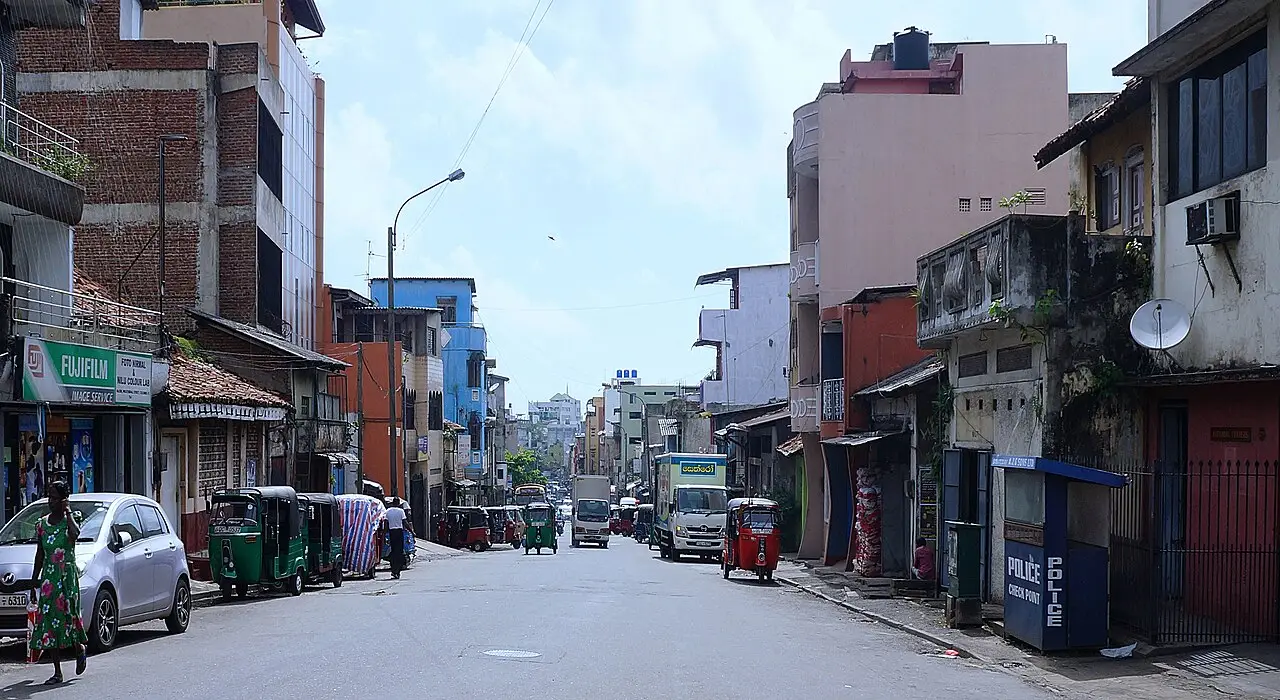
Jaffna had 438 government schools. About 70 percent of Sri Lanka Tamils lived in the Northern Province according to the 2024 census, which makes Jaffna a main home for Tamil-medium learners. The same census found that 10.3 percent of Sri Lanka Tamils living outside the Northern and Eastern provinces were in the Colombo District. Whichever city, town or estate you call home, the lesson itself is the same, one tutor and one learner, with English built around your life.
- Colombo
- Kandy
- Jaffna
- Galle
A tutor at your own table
If you would like a tutor sitting beside you, lessons can take place at home wherever a vetted tutor is available near you. You can ask about it during the free consultation, before you buy, and online lessons on a video call are always there as a dependable option.
Home lessons follow the same model as online ones. You still have one tutor and one learner, a coordinator who follows every lesson and reads your tutor's notes, and progress reports on the CEFR scale. You choose the place, whether that is the dining table, a quiet room or a study corner, and you still speak from the very first lesson.
A tutor matched to you
Britemy tutors are experienced and skilled in their field. You have one tutor, and every lesson belongs to you alone, so the pace, the topics and the amount of conversation can follow your goal and your level. A young child can learn through play, a teenager can work on school English, a professional can focus on meetings and clients, and a test candidate can prepare for an international exam.
It all starts with the free consultation, before you buy. You describe what you need and what has or has not worked for you before. If you learn best with lots of structure, or with lots of open conversation, say so, because a one to one lesson can lean whichever way helps you most.
If it does not feel right after a lesson or two, changing tutor is free at any time. You do not need a long explanation. Good chemistry matters in language learning, because you speak more freely with someone you feel comfortable with, and feeling comfortable is half of what makes a shy speaker start talking.
Seeing your progress on the CEFR scale
Progress at Britemy is measured on the CEFR, the Common European Framework of Reference for Languages. It has six levels: A1 and A2 for beginners, B1 and B2 for independent users, and C1 and C2 for advanced users. Each level is described by what you can do with English, which makes it far more useful than a vague sense of being good or weak at the language.
Roughly, at A1 you can introduce yourself and handle simple, familiar exchanges. At A2 you manage routine tasks like shopping or giving directions. At B1 you cope with most everyday situations and can talk about your plans and experiences. At B2 you follow a complex discussion and argue your view with some ease. At C1 and C2 you use English flexibly for study, work and social life.
A coordinator follows every lesson and reads your tutor's notes. The coordinator then sends you progress reports on the CEFR scale, so you can watch your level move. Everyone moves at their own speed, so the reports describe your own path from wherever you start.
Progress report, CEFR scale
- SpeakingB1
- ListeningA2
- ReadingB1
- WritingA2
Sent by your coordinator after reading your tutor's notes.
Your first month with Britemy
Starting is simple, and the first month tends to follow the same few steps. Here is what to expect from the first conversation to the end of your first package:
- A free consultation. You share your goal, your schedule and how you feel about your English right now, and you can ask anything you want to know before you buy.
- Choosing a package. Packages start at four sessions and are paid for in full before lessons start.
- Your first lesson. You speak from the first minutes, and your tutor notes where you are and what to work on next.
- The following weeks. Lessons settle into a rhythm that suits you, and the coordinator's reports show what is improving.
- Time to use it. A package is active for 30 days from the first lesson plus a 15-day grace period, and you can pause once per package for up to 30 days.
Lessons, payment and your rights in Sri Lanka
- Price
- Prices are shown in USD before you pay. Packages start at four sessions. From USD 15 a session. See every price
- Payment
- Pay by card from almost anywhere, including Visa, Mastercard, Amex, Apple Pay and Google Pay.
- Where
- Learn online from anywhere, or at home wherever a vetted tutor is available near you.
- Free
- The consultation, and changing tutor at any time.
Questions from Sri Lanka
I studied every subject in Sinhala or Tamil. Can I still learn to speak English well?
Yes. Most students in Sri Lanka are in exactly that position: in 2025, fewer than 4 in every 100 government school students studied in bilingual or English medium. Your tutor starts from your current level and gets you speaking from the first lesson, so the language you studied as a subject becomes a language you use.
Can a tutor help my child with O/L English?
A tutor can work on the reading, writing and grammar your child meets in school English, using their own textbook and class work, while keeping speaking in every lesson. English had a 73.82 percent pass rate in the 2024 Ordinary Level exam, so regular practice across the year is worth having.
I am going to work in Kuwait or the UAE. Can lessons focus on my job?
Yes. Share your job during the free consultation, and your one to one lessons can center on it, whether that is caregiving, driving, hospitality, construction or office work. Kuwait and the United Arab Emirates were the two largest destinations for Sri Lankan workers in 2024 (to 13 December).
Do lessons work on a phone with mobile data?
They do. In 2024, 80.3 percent of internet users in Sri Lanka went online through a smartphone, so a phone is the usual way in. Earphones with a microphone and a spot with good reception help a lot, so your tutor can hear your pronunciation clearly.
I get very nervous speaking English in front of people. Is one to one better for me?
For many nervous speakers it is the most comfortable way to begin. A 2016 study of Tamil-speaking undergraduates found that many students feel uncomfortable the first time they speak because they fear ridicule and laughter. In a private lesson the only person listening is your tutor, who corrects gently and keeps the conversation going at your pace.
Can you prepare me for IELTS before a master's degree in the United States?
Yes. Test preparation runs in two phases with the same tutor: a foundation in listening, reading, writing and speaking, then score strategy with format drills, timed mock tests and section timing. Graduate students were 64.3 percent of Sri Lankan students in the United States in 2023/24, and the same lessons can help with academic English after you arrive.
What happens to my lessons on Poya days and during festivals?
You plan around them with your tutor. The 2026 calendar has 26 public holidays, 13 of them Poya days. You can move a lesson at no charge with at least 24 hours' notice, and you can pause a package once, for up to 30 days, if you are away for longer.
What if I do not get along with my tutor?
Changing tutor is free at any time. If the pace, the style or simply the chemistry is not working, say so and ask for a different tutor. You do not need a long explanation, and you keep learning one to one with someone who suits you better.
How will I know I am actually improving?
A coordinator follows every lesson, reads your tutor's notes and sends you progress reports on the CEFR scale, which runs from A1 for beginners to C2 for advanced users. You see where you stand on the scale and how your level moves over time.