






























































 Liechtenstein
English lessons in Liechtenstein
One tutor, one learner, and English that works across every border you cross
Life here moves between languages and across borders, from dialect at home to colleagues who commute in every morning. Britemy pairs you with one tutor who helps you speak English with ease, online, at the pace your week allows.

Your week, Europe/Vaduz time
Wed08:00
Fri20:30
Sun10:00
English in a country that already thinks in German
German is the official language of Liechtenstein, and Alemannic German is spoken alongside it. In the 2020 census, 36,088 of 39,055 residents, or 92%, named German as their main language, the one they think in and speak best. At home the picture is even more local: 73% of residents said they speak the Liechtenstein dialect within their own four walls, and 8% said they speak standard German there. If you grew up with dialect at home and standard German at school, English arrives as a third register on top of two forms of German, and that is a good place to start from, because you already know what it feels like to switch.
English is also growing quietly as a home language. The same census counted 199 residents who named English as their main language in 2020, up from 139 in 2015 and 59 in 2010. That is still a small group, and it is more than three times larger than it was a decade earlier. Alongside it live Italian with 494 speakers, Portuguese with 390, Turkish with 362, Spanish with 324 and Serbian or Croatian with 288. In a community like that, English gives you one more language to share with a neighbor or a colleague who grew up with a different first language.
This page is written for you if you live or work in Liechtenstein and want English that sounds like you when you speak it. Britemy pairs you with one tutor, you start speaking in the very first lesson, and accuracy gets polished along the way. Everything below explains how that fits the way English is learned, used and tested here.

Who reaches for English in Liechtenstein
On 31 December 2023, Liechtenstein had 40,015 permanent residents, and 34.3% of them were foreign nationals. Add the people who cross the border every morning and the mix grows further: of the 43,162 people employed in the country at the end of 2023, 24,641 lived abroad, which is 57.1% of the workforce. Many of the people you sit next to at work go home to another country in the evening.
Whoever you are on the list below, one tutor and one learner means the lessons are built around one person: you, your goals and your current level. A bank analyst and a twelve-year-old pupil end up with very different lessons, each one shaped by the person sitting in front of the camera.
- Professionals in finance, legal and advisory work who write to and present for clients abroad.
- Engineers and technicians in mechanical engineering, vehicle construction and metal processing who want to handle manuals, emails and calls in English with more ease.
- Cross-border commuters who already juggle two countries and want one more language that works everywhere they go.
- Pupils in primary and secondary school who want more speaking time than a full class can give.
- University applicants aiming at the English-taught master's programs offered in the country.
- Residents whose main language is Italian, Portuguese, Turkish, Spanish or Serbian/Croatian and who want English alongside their German.

The work that shapes English needs here
Liechtenstein's economy leans strongly on industry and services at the same time. In 2023, 14,700 employees, or 34.1%, worked in industry, 28,174, or 65.3%, worked in services, and agriculture accounted for 288 people. A factory floor and an advisory office call for very different vocabulary, very different emails and very different conversations.
Finance and insurance employed 4,901 people in 2023, legal, tax advice and auditing employed 3,132, and mechanical engineering employed 3,030. Vehicle construction added 2,456 jobs and metal production and processing another 1,305. The country has a strong financial sector centered in Vaduz and uses the Swiss franc through a monetary union with Switzerland. Smaller fields matter too: 784 people worked in IT and information services, and 1,363 in education and teaching.
You can bring an email you struggled to write or a presentation you have coming up and talk it through with your tutor in English, so every hour of practice lands directly in your working week.
- Finance and insurance: explaining a product clearly, writing precise client emails, and keeping your tone calm on a difficult call.
- Legal, advisory and audit work: careful reading, structured summaries and the formal register clients expect.
- Mechanical engineering, vehicle construction and metal processing: technical descriptions, safety language, and talking a colleague through a process step by step.
- IT and information services: stand-ups, tickets, documentation, and explaining a technical choice to someone outside your team.
- Education and teaching: classroom English and confident, patient explanations.
English for a workplace that draws on three countries
Of the 24,641 employees who lived abroad at the end of 2023, 14,891 came in from Switzerland, 8,794 from Austria and 652 from Germany. At the same time, 71.6% of everyone employed in the country, 30,898 people, were foreign nationals. With so many colleagues coming in from Switzerland, Austria and Germany and so many foreign nationals in the workforce, a team here can bring together people from very different backgrounds.
Good workplace English means being able to follow a fast call, ask the clarifying question at the right moment, summarize a decision in a short email, and present figures so a client in another country understands them the first time. Those are speaking and listening skills first, and that is where your lessons begin.
Many people also balance work with other commitments. In 2023, 69.3% of employees worked full time and 30.7% part time, and registered unemployment averaged 284 people, a rate of 1.4%. With unemployment that low and nearly a third of employees on part-time schedules, many weeks here are already full, so your lessons need to fit around them.
- Meetings: opening, interrupting politely, agreeing, disagreeing and closing with clear next steps.
- Presentations: structuring a short talk, handling questions, and recovering gracefully when a word escapes you.
- Email and messaging: a tone that is friendly and precise, in fewer words.
- Client calls and negotiation: listening for what is meant, then answering with confidence.
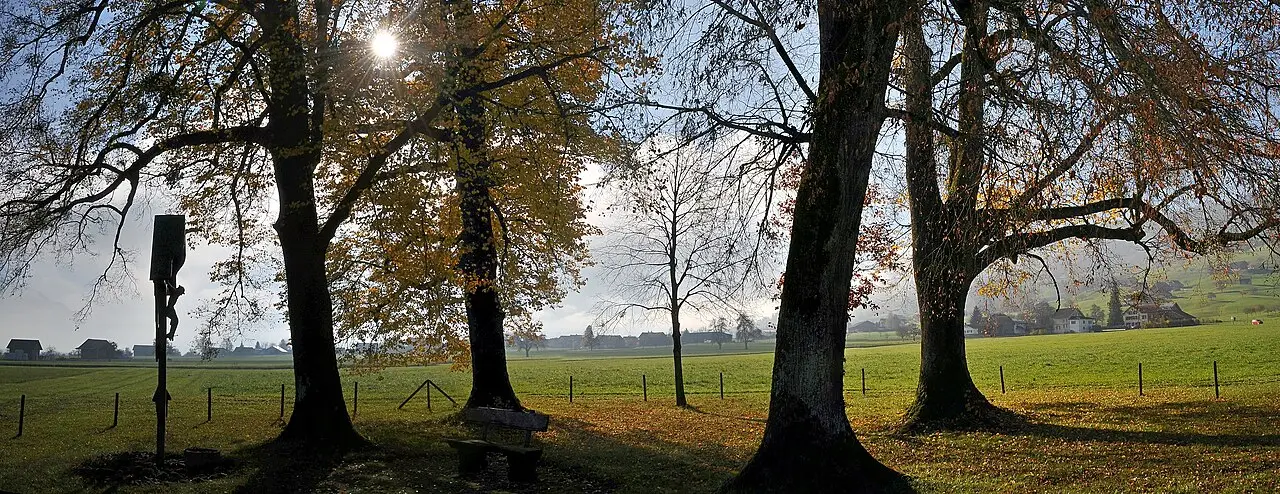
From Vaduz to Balzers, where English gets used
Work in Liechtenstein concentrates in a few municipalities. At the end of 2023, 11,270 people were employed in Vaduz and 10,491 in Schaan, the two largest workplace municipalities, while Triesen counted 3,605 jobs and Balzers 3,500. In both of the big two, a large share of the workforce comes from abroad: 5,705 of the people working in Vaduz and 6,299 of those working in Schaan lived outside the country.
Residents are just as mixed. In 2023, foreign nationals made up 41.2% of residents in Vaduz, 37.1% in Schaan, 37.9% in Triesen and 26.6% in Balzers. Each place has its own rhythm, and the English you need shifts with it.
Wherever you live or work, lessons run online on a video call, so the municipality on your address makes no difference to your lessons.
- Vaduz: the capital and the largest employment center, with 11,270 workplace jobs and a strong financial sector.
- Schaan: the second largest workplace, where more than half of the people employed commute in from abroad.
- Triesen: 3,605 jobs at the end of 2023 and a community where 37.9% of residents are foreign nationals.
- Balzers: the southern municipality with 3,500 jobs and a 26.6% foreign resident share.
- Vaduz
- Schaan
- Triesen
- Balzers
Speaking from the very first lesson
Plenty of people studied English for years at school and still hesitate when a call switches language. The missing piece is usually practice. In a full class, each person speaks for only a few minutes, and a single question asked in front of everyone can feel like a performance.
With Britemy you speak from the very first lesson. Your tutor gives you room to talk, listens to how you put ideas together, and polishes accuracy along the way. Mistakes become material for the next exercise, and nobody else is in the room to hear them, which is exactly what makes it easier to try the sentence you would normally avoid.
If you already move between dialect and standard German every day, you know that switching languages is a skill you can train. Lessons treat English the same way: short, regular speaking practice until the switch into English feels as natural as the one you make at home.

English at school, from year 2 to the upper Gymnasium
Children in Liechtenstein meet English early. Under the school organization ordinance in its version of 1 August 2019, English has two weekly lessons in each of primary school years 2 to 5, and in year 1 it is woven into other subjects. Primary pupils have 24 to 30 weekly lessons in total depending on the year, so English is a small but steady part of a busy timetable. In the 2022/23 school year, 4,807 pupils attended general schools from kindergarten to upper secondary level.
At lower secondary level, English stays. It is a compulsory subject in the Oberschule, and in the Realschule and the lower Gymnasium both English and French are compulsory. In the upper Gymnasium English is a foundation subject for every student, and marks in German, English, French and math count double toward promotion. At the Vocational Baccalaureate School, English sits among the basic subjects next to German and Communication, math, history and civics, and basic law and economics.
Two weekly lessons shared with a whole class leave limited time for each child to speak. One-to-one lessons add that time: lessons can follow the topics from school, gives a young learner room to talk without an audience, and builds the confidence that makes the next class easier. For upper Gymnasium students whose English mark counts double toward promotion, the focus can move to essays, oral presentations and the tasks their school sets.
- Primary years: stories, songs and games that turn two lessons a week into everyday English.
- Oberschule and Realschule: speaking practice, vocabulary and the grammar that comes up in class.
- Gymnasium: essays, literature discussion and oral work, where a double-counted mark makes steady progress matter.
- Vocational Baccalaureate: practical English for work alongside the English studied as a basic subject.
University in Liechtenstein, taught in English
The University of Liechtenstein teaches several of its master's programs in English: the MSc Information Systems, the MSc Architecture and the MSc Innovative Finance. Admission to the MSc Information Systems asks for English at level B2. B2 is a step on the CEFR, the Common European Framework of Reference for Languages, which describes ability in six levels from A1 for beginners to C2 for near-complete mastery. At B2 you can follow lectures, take part in seminar discussions and write a clear argument on a complex topic.
Bachelor studies look different. The Bachelor in Business Administration requires an English level equivalent to the Matura, while the other bachelor programs ask for no English proof at all. In 2022/23, 765 students were counted at universities in Liechtenstein, and in 2023, 232 graduates were counted. It is a compact university system, and its master's programs include three taught in English.
If you are heading toward one of those programs, your lessons focus on academic English: reading research papers efficiently, presenting in a seminar, writing reports with a clear structure and joining a discussion when everyone around you speaks fast. Your coordinator reports your progress on the CEFR scale, so you can see how close you are to B2 well before you apply.
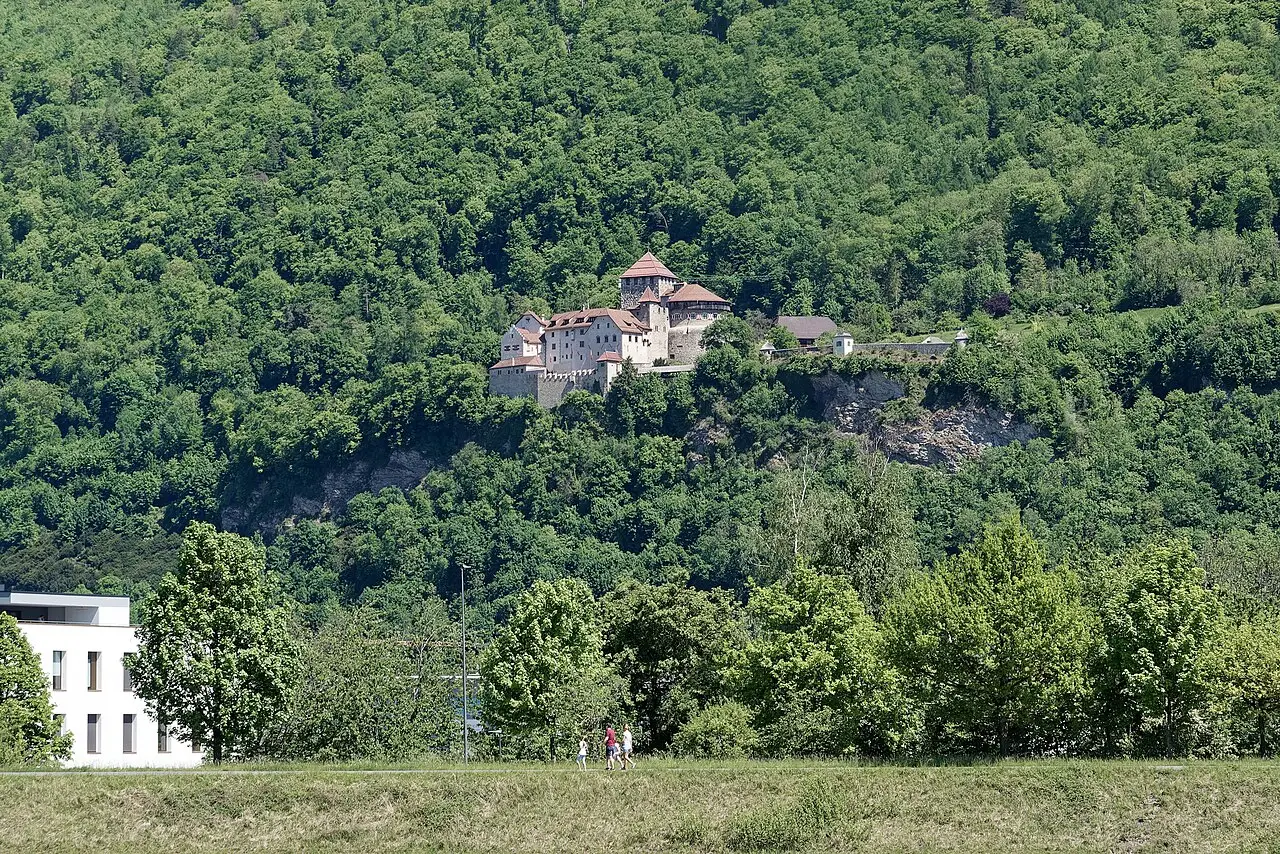
Studying across the border with English in your bag
Many students from Liechtenstein study in a neighboring country. In winter semester 2022/23, 532 of them studied at universities in Switzerland and 378 at Swiss universities of applied sciences, while 195 studied in Austria and 55 in Germany at universities and universities of applied sciences.
Wherever you study, English can come along: reading lists, research papers, group projects with international classmates and exchange semesters all lean on it. Closer to home, the University of Liechtenstein already teaches its MSc Information Systems, MSc Architecture and MSc Innovative Finance in English.
Lessons can prepare you for that shift before it arrives. You practice following a lecture, taking notes in English, asking a question in a seminar, and writing the kind of clear, polite email that a professor or an exchange office is happy to answer. When the semester starts, the language feels familiar and your energy can go to the subject itself.
IELTS, TOEFL and Cambridge, prepared in two phases
The University of Liechtenstein asks exchange students for English at level B2 or higher, and it accepts FCE, IELTS and TOEFL certificates as proof unless English is already the language of instruction at the student's home university. FCE is a Cambridge English certificate on that list. Admission to the English-taught MSc Information Systems also asks for B2, which makes B2 a practical target if you plan to study there.
Britemy prepares you for IELTS, TOEFL, Cambridge, the Duolingo English Test and PTE Academic in two phases, with the same tutor all the way through. The first phase builds the foundation: reading, writing, listening and speaking at the level the exam expects. The second phase is score strategy: format drills, timed mock tests, and section timing so you know how long each part deserves.
Both phases run with the same tutor, and your coordinator's reports show how your level is moving on the CEFR scale. The aim is a steady climb toward the level your application asks for, with enough practice behind you that the exam room feels familiar.
- IELTS: one of the certificates the university lists as B2 proof for exchange students.
- TOEFL: accepted by the University of Liechtenstein for exchange students joining English-taught courses.
- Cambridge FCE: a B2 exam on the same accepted list.
- Duolingo English Test and PTE Academic: also prepared, for institutions that accept them.
- IELTS
- TOEFL
- FCE
Watching your level move on the CEFR scale
Every learner starts somewhere on the CEFR scale. A1 and A2 cover the basics: introducing yourself, everyday phrases and simple exchanges. B1 and B2 are the independent levels, where you can handle work, travel and study with growing ease. C1 and C2 are the advanced levels, where you express fine shades of meaning and change register without effort.
Your first lessons show your tutor where you stand. From there, each lesson adds something you can use, and your coordinator reads the tutor's notes and sends you progress reports on that same A1 to C2 scale. You see which skills are moving fastest and which need more time, so planning the next step becomes a shared, informed decision.
Progress in a language is rarely a straight line, and the reports help you notice the steps you might miss on your own: the meeting you followed without notes, the email you wrote in half the time, the phone call you took without rehearsing it first.
Progress report, CEFR scale
- SpeakingB2
- ListeningB1
- ReadingB2
- WritingB1
Sent by your coordinator after reading your tutor's notes.
Online lessons on a connection built for them
Every Britemy lesson runs online on a video call, and Liechtenstein is well equipped for that. In 2023, fiber to the home covered 100% of households and workplaces, and mobile networks served 97% of the population. At the end of 2023, 16,897 of the country's 19,564 fixed internet connections had a download speed above 200 Mbit/s.
That means you can take a lesson from your office, from home, or from the other side of the border if you commute in from Switzerland or Austria. All you need is a quiet corner, a headset and a device with a camera.
If online life is new to you, you are in good company. In 2022, 9% of the population aged 15 and over said they do not use the internet. If that is you, bring it up in your free consultation, so you know what the video call involves before your first lesson.
Fitting lessons around a cross-border week
Liechtenstein runs on Central European Time, UTC+01:00 in winter and UTC+02:00 in summer. Because lessons happen online, you can join from home, from the office or from wherever you are when the lesson starts, on either side of the border.
With 57.1% of the workforce living abroad and 30.7% of employees working part time, weeks here come in many shapes. Some people would like an early lesson before they cross the border, some a session at lunch near the office, others a quiet evening at home. Bring the times that suit your week to your consultation.
Plans shift, and the lesson rules allow for that. Moving a lesson costs nothing with at least 24 hours' notice. If a longer trip or a demanding stretch at work comes up, you can pause your package once for up to 30 days and pick up where you left off.
Lessons on Europe/Vaduz time (UTC+01:00, summer UTC+02:00)
- Wed08:0060 min
- Fri20:3060 min
- Sun10:0060 min
Moving a lesson costs nothing with at least 24 hours' notice.
One tutor who gets to know your English
Britemy tutors are experienced and skilled in their field, and you work with the same one lesson after lesson. That continuity matters: your tutor learns how you think, which sounds you find hard, which topics wake you up, and builds each lesson on the last one.
A pupil preparing for oral work at the Gymnasium, an engineer who writes technical reports and a finance professional who presents to clients each bring different goals, and your consultation is where you talk yours through before your lessons begin.
If your tutor does not feel right for you, you can change tutor at any time, and changing is free. You need no reason beyond wanting a better fit, and you keep the same coordinator and the same progress reports on the CEFR scale.
A coordinator who keeps track for you
Behind every tutor there is a coordinator. They follow every lesson, read your tutor's notes, and send you progress reports on the CEFR scale, so you always know where you stand between A1 and C2.
Because the coordinator reads every note your tutor writes, the reports reflect the lessons you actually had. Each one gives you a clear look at which skills have moved and which still need time, so you can see your progress in steps you might otherwise miss.
Younger learners often have a parent reading along, and the reports give that parent a clear picture of how English is developing beyond the marks on a school report. Adult learners use the same reports to plan their next goal, whether that is a promotion, an application or simply a more relaxed conversation.
Lessons at home, where a tutor is nearby
Online lessons suit most weeks, and the connection here makes them easy to keep. Some learners still prefer to sit at their own table with a tutor beside them, especially younger children or anyone who simply concentrates better face to face.
Lessons at home are possible wherever a vetted tutor is available near you. Mention it in your consultation, and Britemy will tell you whether that option exists for your address. If it does not, online lessons give you one tutor, a coordinator who follows every lesson and the same progress reports, so your learning keeps moving either way.
Your first month with Britemy
It starts with a free consultation, before you buy anything. You talk about where your English is today, what you want it to do for you and how your week looks, and you leave with a clear picture of how your lessons could look.
Packages start at four sessions. The package is paid for in one payment before the first lesson. A package stays active for 30 days from your first lesson with a 15-day grace period after that, and you can pause it once for up to 30 days if life gets in the way.
- Consultation: your goals, your schedule and the kind of tutor who suits you.
- First lesson: you speak from the start, and your tutor gets a feel for your level.
- The weeks that follow: regular lessons with speaking at the center and accuracy polished along the way.
- Progress report: your coordinator reads your tutor's notes and shows where you stand on the CEFR scale.
Lessons, payment and your rights in Liechtenstein
- Price
- Prices are shown in USD before you pay. Packages start at four sessions. From USD 15 a session. See every price
- Payment
- Pay by card from almost anywhere, including Visa, Mastercard, Amex, Apple Pay and Google Pay.
- Where
- Learn online from anywhere, or at home wherever a vetted tutor is available near you.
- Cancelling
- You can cancel within 14 days of buying your package and get your money back. If you asked us to start lessons inside that period, we keep the value of the lessons you have already had. Read the policy.
- Free
- The consultation, and changing tutor at any time.
Questions from Liechtenstein
I speak dialect at home and standard German at work. Will English be harder for me?
You may find you already have a head start. German is the official language, and in the 2020 census 73% of residents said they speak the Liechtenstein dialect at home, so many people here are used to moving between two forms of German. That habit of switching can help when you add English. Your tutor listens for the sounds and structures you personally find tricky and builds practice around them.
Can lessons follow the English my child studies at school?
Yes. Under the 2019 version of the school organization ordinance, English has two weekly lessons in each of primary years 2 to 5 and remains a compulsory subject in the Oberschule, the Realschule and the lower Gymnasium, so there is plenty to build on. Lessons can follow the topics from class, add speaking practice and help prepare oral presentations, and the coordinator's reports show how your child's level develops.
I need B2 for a master's program at the University of Liechtenstein. Can you help me get there?
Admission to the MSc Information Systems asks for English at B2, and the university asks exchange students for B2 or higher, accepting FCE, IELTS and TOEFL certificates. Your tutor first builds the four skills, then moves to score strategy with format drills and timed mock tests, while your coordinator tracks your level on the CEFR scale along the way.
I commute in from Switzerland or Austria. Can I still take lessons?
Yes. Lessons run online on a video call, so it makes no difference which side of the border you are on. At the end of 2023, 14,891 people working in Liechtenstein lived in Switzerland and 8,794 in Austria, and they can take lessons at home, at the office or wherever they have a quiet moment and a good connection.
What if work forces me to move a lesson?
Moving a lesson costs nothing with at least 24 hours' notice. If a longer trip or a busy stretch comes up, you can pause your package once for up to 30 days. A package stays active for 30 days from your first lesson, plus a 15-day grace period, which gives you room to fit lessons around a full calendar.
What happens if my tutor is not the right fit?
Changing tutor is free at any time, and you do not need to give a long explanation. Tell Britemy what you would like to be different, and you move to another experienced tutor while your coordinator keeps following your lessons and sending your CEFR progress reports.
Can I try Britemy before I buy a package?
Before you buy, you get a free consultation. You talk through your goals, your current level and your schedule, so you know how your lessons could look. Lessons themselves come in packages that start at four sessions, and if the tutor turns out not to suit you, changing tutor is free at any time.
Can my lessons focus on English for finance or industry?
Yes, lessons are built around your field. In 2023, finance and insurance employed 4,901 people in Liechtenstein and mechanical engineering 3,030, and each needs its own kind of English. You can bring the emails, reports and presentations you handle into your lessons and practice them with your tutor, so every lesson feeds straight into your working week.