
























































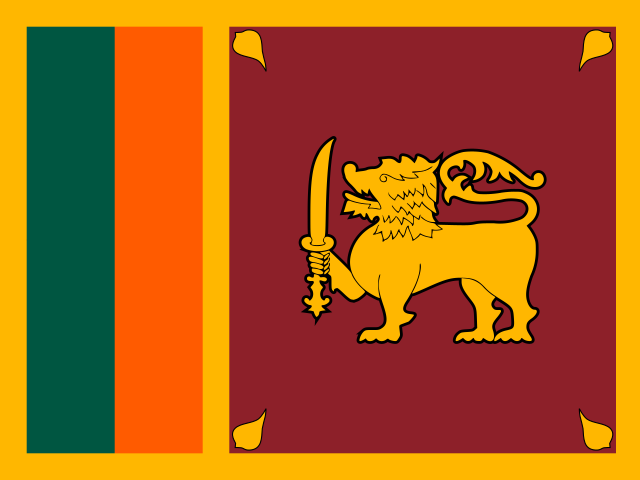









 India
One to one English lessons for India
Speak the English you already know, with one tutor who listens
If you read and write English with ease but go quiet in a meeting, an interview or a call abroad, Britemy gives you one tutor on a live video call, and you start speaking in your very first lesson.

Your week, Asia/Kolkata time
Tue19:30
Fri08:00
Sun12:00
English is already part of your week in India
If you live in India, English is probably part of your days already, and it is the language of the Supreme Court and of every high court. In the 2011 Census about 129 million people, 10.6 percent of the population, said they speak English, which made it the second most spoken language in the country. English is one of the two languages the Government of India uses for communication, and it is an official language in eight states and seven union territories.
Very few of those speakers grew up with it as a first language, though. In the same census only 259,678 people named English as their first language, while about 83 million named it as their second and about 46 million as their third. Hindi was the first language of 43.63 percent of people, and the Constitution lists 22 languages in its Eighth Schedule. So for most people who speak English in India, it is a second or third language. If that is true for you as well, the aim of your lessons is to make speaking it feel as easy as reading it.
That is the gap Britemy works on. You bring years of vocabulary and grammar from school. A tutor who works with you alone helps turn that stored knowledge into speech you trust, in a meeting, an interview or a phone call with someone on the other side of the world.

Who takes private English lessons in India
People who look for a private English tutor in India start from very different places. A 2005 India Human Development Survey of 41,554 households found that 72 percent of men and 83 percent of women spoke no English, while only 5 percent of men and 3 percent of women spoke it fluently. Between those two groups sits everyone who speaks some English without yet feeling fluent, and that middle ground is where one to one lessons can do a great deal.
The same survey found that men who spoke fluent English earned hourly wages about 34 percent higher than men who did not. The figure is old and it describes a link, so treat it as a signal of how much English has long counted in Indian working life. Lessons can be shaped for learners such as these:
- Professionals in IT, outsourcing, finance and law who need English that holds up on client calls and in presentations.
- Students getting ready for IELTS or a UK approved English test before applying to universities abroad.
- School students from English-medium and state-board classrooms who want more time to speak English out loud.
- Adults who left school with little English and want to begin again calmly, at their own pace.
- Women returning to work after a break who want their spoken English back in shape before interviews.

The industries in India that run on English
A large share of India's best-known work happens in English. The national IT industry association estimated that the technology sector employed about 5.95 million people directly in FY2026, up from 5.8 million in FY2025, and that exports made up about 79 percent of industry revenue. The sector serves clients mainly in North America and Europe, so the day of a developer, analyst or support lead in Bengaluru, Chennai, the Delhi region, Hyderabad, Kolkata, Mumbai or Pune can include calls with people abroad who expect clear answers in English.
Law is another field where English carries real weight. Under the Constitution, English is the language of the Supreme Court and of all high courts, and Hindi is also used in the high courts of a few northern states with special approval. For lawyers and law students, that makes court English a daily working language.
Your lessons can center on the situations your work brings. If you work in a software team, you might rehearse a sprint review or explain a delay to a client. If you work in a contact center, you might practice calming an upset caller while keeping your sentences short and warm. If you are in law, you might summarize a judgment aloud and then answer questions about it.
Moving from office English to international English
Indian English has its own well-worn phrases. Prepone, revert and do the needful are common and perfectly clear to colleagues at home, and they can puzzle a client in North America or Europe. Large numbers read in lakh and crore have to become millions and billions. Mass nouns such as evidence, equipment and training are often used as count nouns in Indian English, so a colleague abroad hears evidences or trainings and notices.
Indian English is a full variety of English with its own history, and you keep it. Your tutor helps you pick the form that works for the person in front of you, the way any good speaker shifts between a chat with friends and a formal call. Goals you might bring to your lessons include these:
- Turning please revert and do the needful into requests a client abroad reads at a glance, such as could you reply by Friday.
- Saying 2.5 crore as 25 million without stopping to calculate in the middle of a call.
- Leading a stand-up or status call: opening it, keeping it on track and closing it with clear next steps.
- Presenting a project or a quarterly review with a clear structure and well placed word stress.
- Handling interviews for roles in global teams, from the first introduction to questions about notice periods and relocation.
- Writing emails that sound polite and direct at the same time.

The sounds and habits your tutor will listen for
India's languages come mostly from two families. About 78 percent of people speak an Indo-Aryan language and about 20 percent a Dravidian language, and in the 2011 Census the largest first languages after Hindi were Bengali, Marathi, Telugu, Tamil, Gujarati and Urdu. Each family shapes English pronunciation in its own way, so your tutor first listens to how you speak before deciding what to work on. These patterns come up often in Indian English:
- Aspiration: in Indian English /p/, /t/ and /k/ are usually said without the small puff of air many listeners abroad expect, so words like pin and tin can sound softer than intended.
- Retroflex /t/ and /d/: the tongue curls back, which gives these sounds a heavier quality. Your tutor shows you the lighter tongue position used in many international accents.
- /v/ and /w/: many speakers merge them, so wet and vet can sound the same. Short drills with word pairs make the difference easier to hear and then to say.
- The th sounds: these are often replaced by dental stops. You practice the soft th in think and the voiced th in this until both come out without effort.
- /z/: it often turns into /dʒ/ or /s/, so zero can sound like jeero. Holding a long buzzing z helps your mouth find it.
- Stress and rhythm: English is stress-timed, while many Indian languages are syllable-timed, so learners tend to give each syllable similar weight. Learning which syllable to lean on, as in PHOtograph, phoTOgraphy and photoGRAPHic, often does more for clarity than any single sound.
You speak from the very first lesson
If you have spent years with English as a written subject, with grammar exercises, comprehension passages and board exam answers, you may have had far less time to speak while someone listens carefully. Britemy lessons start there. In your first lesson you talk about your work, your studies or your plans, and your tutor follows what you say.
Accuracy gets polished along the way. Your tutor notes the mistakes that keep coming back and brings them into later lessons in small doses, so you correct them without losing the thread of what you wanted to say. Over time the aim is that you begin sentences without rehearsing them in your head and recover more easily when a word slips away.
Because each lesson is one tutor and one learner, there is nobody to compare yourself with and nobody waiting for their turn. That makes it far easier to try a sentence you are unsure of, and trying unsure sentences is exactly where speaking confidence grows.
Planning to study abroad from India
India sends a remarkable number of students overseas. More than 1 million Indian students were studying in 85 countries as of January 2021, and more than half of them were in North America. In the 2024-25 academic year just over 363,000 Indian students studied in the United States, up 9.5 percent from about 331,000, which made India the largest source of international students there. Canada, Australia and the United Kingdom are the other big destinations, with 137,608 Indian students in Canada in 2025, 118,109 in Australia in 2024 and 92,355 in the United Kingdom in 2025.
Universities and visa rules abroad ask you to prove your English, and the United Kingdom describes the level it needs on the CEFR scale. CEFR stands for the Common European Framework of Reference, a six-step scale that runs from A1 for beginners to C2 for highly skilled users, with B1 and B2 as the independent middle. The United Kingdom Student visa asks for B2 for degree-level courses and B1 below degree level, proved through an approved Secure English Language Test, a qualifying degree or an assessment by the university.
Lessons for study abroad reach past the test itself. Your tutor can help you rehearse an admissions or visa interview, explain your study plan in your own words, keep up with a fast lecture, and join a seminar discussion without waiting for the perfect moment to speak.
IELTS and UK approved tests, prepared in two phases
IELTS is widely used by Indian applicants for study abroad and skilled migration. It comes in two versions: Academic, for university study and professional registration, and General Training, for work, training and migration. It is scored in half-band steps from 0 to 9, with no pass or fail, and most universities in Australia, Canada, New Zealand, the United Kingdom and Europe accept it. Results are valid for two years, so it pays to plan when you sit it.
The stakes are real. Poor IELTS scores were named as a main reason for Canadian study permit refusals in Fall 2021, next to study plans that did not match the student's profile. Students heading to the United Kingdom usually take an approved Secure English Language Test to show the B2 or B1 level their course needs.
Britemy prepares you in two phases with the same tutor. The first phase builds the four skills, listening, reading, writing and speaking, so your English can carry the band you are aiming for. The second phase is score strategy: drills in the exact task formats, timed mock tests and a plan for pacing each section. You move into the second phase when your foundation is ready, and your coordinator's progress reports show your level on the CEFR scale along the way. The same two-phase approach covers TOEFL, TOEIC, Cambridge exams, the Duolingo English Test and PTE Academic.
- IELTS
- Secure English Language Test (approved for the UK Student visa)
How Indian schools and colleges shape your English
India's school system is enormous. In 2023-24 it covered 24.8 crore students, or 248 million, in 14.72 lakh schools with 98.08 lakh teachers. Central boards such as CBSE run alongside state boards, and because education has been on the Concurrent List since 1976, the central government and the states both set policy. That is why two learners of the same age can arrive with very different English, depending on their board, their state and the medium of their school.
English-medium schooling grew fast in the years before the current policy. Enrollment in English-medium schools rose between 2008-09 and 2013-14, from over 15 million students to 29 million, according to national school data. The National Education Policy 2020 then recommended teaching in the mother tongue up to Grade 5, ideally to Grade 8 and beyond, with three languages taught and at least two of them native Indian languages. After the policy was released, the government stated that the medium of instruction would not be moved from English to a regional language, and that the language provisions are advisory, leaving states and schools to decide how to apply them.
In the later grades, Grade 10 students usually take two languages, at least one of them English or Hindi, and Grade 12 students must take English or the local language. After school, the gross enrollment ratio in higher education stood at 26.3 percent in 2019. A tutor can fill whatever your route left out: speaking time for a board student, academic writing for a first-year undergraduate, or a steady restart for someone who studied mostly in another language.
Lessons for young children and teenagers
The 2020 policy replaced the 10+2 pattern with a 5+3+3+4 structure. Its foundational stage covers ages 3 to 7, with three years of preschool followed by Classes 1 and 2. For a child in those years, lessons are playful and built on speaking from the start: naming things, answering simple questions and trying new sounds with a tutor who has time for every attempt. When a parent or guardian books lessons for a young child, the coordinator's progress reports on the CEFR scale show how the child is moving.
Teenagers often bring different goals. They may want to sound natural with friends, hold their own in a class presentation, or prepare for the language subjects they take in Grade 10 and Grade 12. A tutor of their own gives them room to speak without classmates watching, and to ask the questions they would never raise in a full classroom.
Whoever books the package, a parent, an older sibling or the teen themselves, the lesson is built around the learner, and teenagers set their goals with their tutor directly.
Coaching culture and the one to one difference
Extra lessons outside school are a familiar part of growing up in India. In 2017-18, about 20 percent of students from pre-primary level upward took private coaching, and the share peaked at secondary level, with 31 percent of boys and 29 percent of girls. Coaching took roughly 18 percent of what secondary students spent on education that year.
When coaching runs for a group, one teacher works through a syllabus for a full room, and each student gets little time to talk. A Britemy lesson is one tutor with one learner, so the minutes that would be spread across a group all go to you: your sentences, your questions and your pace.
Everyday language habits come into lessons too. Mixed forms such as Hinglish are common among urban and semi-urban young people, and moving between languages is a real skill. Your tutor treats it as one, and helps you notice the moments, such as a client meeting or an exam essay, when English needs to hold all the way through.
Fitting lessons around IST and long working days
India runs on a single time zone, Indian Standard Time at UTC+05:30, and it does not observe daylight saving time. That keeps planning simple: once you settle on a lesson time, it stays put on your side of the call all year.
The harder part is finding the hour at all. Reports describe long working weeks in the IT sector, with a 70-hour week equal to about 12 hours a day over six days. That leaves many learners short windows in the evening or early morning, and those windows are usually where lessons fit best. If your week looks like that, these are the times worth looking at:
- Early morning before the commute, while the house is quiet and your head is clear.
- A lunch-break lesson from a quiet meeting room, if your office allows it.
- Late evening, after the last call with a client in North America or Europe.
- Weekends, if you study or work through the weekdays.
- Moving a lesson costs nothing when you give at least 24 hours' notice, which helps when you can see a release week or an exam coming.
Lessons on Asia/Kolkata time (UTC+05:30)
- Tue19:3060 min
- Fri08:0060 min
- Sun12:0060 min
Moving a lesson costs nothing with at least 24 hours' notice.
Online lessons on the phone you already use
Every Britemy lesson runs live on a video call, so you need a phone, tablet or laptop and a steady connection. In January 2025 India had about 806 million internet users, an internet penetration of 55.3 percent, and about 1.12 billion cellular mobile connections. Median mobile download speed in early 2025 was about 100.78 Mbps and median fixed download speed about 63.55 Mbps, which is enough for a clear video call.
That is a big shift from only a few years earlier. In 2017-18 only about 24 percent of households had internet access, and about 4 percent of rural and 23 percent of urban households had a computer. A phone with a camera is all a video lesson needs, and a pair of earphones and a quiet corner count for more than the device.
If you prefer to learn face to face, lessons can also take place at home wherever a vetted tutor is available near you. You can ask about this during the free consultation.
From Mumbai to Pune, where English works hardest
In the 2011 Census the largest urban agglomerations were Mumbai with 18,394,912 people, Delhi with 16,349,831, Kolkata with 14,057,991, Chennai with 8,653,521, Bengaluru with 8,520,435, Hyderabad with 7,677,018 and Pune with 5,057,709. Together with the wider Delhi region, these cities host most of the revenue of the IT and business process outsourcing sector, which serves clients mainly in North America and Europe.
Lessons are online, so you can learn from any of these cities, or from a smaller town, with the same tutor. If a new job moves you across the country, your lessons simply come along.
- Mumbai: the largest urban agglomeration in the 2011 Census and a major hub for finance and services work that relies on English.
- Delhi and the wider region: the second largest urban agglomeration in 2011, with the Delhi region hosting a large share of IT and outsourcing revenue.
- Bengaluru: known as the IT capital of India, where English is the main business language and Kannada is the mother tongue of only about 42 percent of residents, with Tamil, Telugu, Urdu and Hindi also widely spoken.
- Hyderabad: one of the hubs that host most IT and outsourcing revenue, with strong demand from working professionals.
- Pune: an IT and outsourcing hub with many students and young professionals.
- Chennai: an IT and outsourcing hub in Tamil Nadu, a state that keeps a two-language school policy.
- Kolkata: the third largest urban agglomeration in 2011 and another of the centers that carry the IT and outsourcing sector.
- Mumbai
- Delhi
- Bengaluru
- Hyderabad
- Chennai
- Pune
One tutor who works with you alone
Britemy tutors are experienced and skilled in their field, and each one works with learners one at a time. Whether you need English for client calls, IELTS writing, a child's first English words or a calm restart as an adult, you learn with one tutor, one to one, on a live video call.
Your tutor plans each lesson around you and keeps notes on what you said, which sounds and structures still trip you up, and what you want to tackle next. A software engineer might spend a lesson walking through a system design aloud. A law student might practice a short oral argument. A teenager might describe a cricket match and learn to tell a story in the past tense without stopping.
If the fit does not feel right, you can change tutor at any time, and changing is free. You do not need a reason beyond wanting a better match.
A coordinator who follows every lesson
Behind every Britemy tutor there is a coordinator. Your coordinator follows each of your lessons, reads the notes your tutor writes, and sends you progress reports on the CEFR scale.
Because those reports come from someone who follows your lessons and reads your tutor's notes, each one reflects the work you have actually done in your sessions. The reports place you on the CEFR scale, from A1 for beginners to C2 for highly skilled users, so you always see your level in one clear set of terms.
If you are preparing for IELTS or another test, the reports show your level as you move from the foundation phase into score strategy with the same tutor.
Progress report, CEFR scale
- SpeakingB1
- ListeningA2
- ReadingB1
- WritingA2
Sent by your coordinator after reading your tutor's notes.
Watching your level climb from A1 toward C2
Progress at Britemy is measured on the CEFR scale. A1 and A2 describe basic users who manage everyday phrases and simple exchanges. B1 and B2 describe independent users who can take part in work discussions, follow most lectures and write clear texts. C1 and C2 describe proficient users who express themselves fluently and precisely, even on complex topics.
Your reports show where you stand on the CEFR scale, and your English may not sit at one level across the board. You may find you read and write at a higher level than you speak, especially after years of written exams. Seeing that clearly helps you and your tutor spend lesson time where it lifts your level the most.
We do not promise a level by a certain date, since everyone's starting point and weekly hours differ. What the reports give you is an honest view of how your English is moving over time.
What your first month with Britemy looks like
It begins with a free consultation before you buy, where you talk through your goals and your schedule. That conversation costs nothing and commits you to nothing.
Packages start at four sessions. You pay for the whole package up front, before lesson one. A package runs for 30 days from your first lesson, with a 15-day grace period after that, and you can pause it once for up to 30 days if work, exams or travel get in the way.
- The first lessons: your tutor learns how you speak and what you need, and you are talking from the opening minutes.
- The middle of the package: lessons settle into a rhythm built around your goal and the two or three habits that matter most for you.
- Along the way: your coordinator sends you progress reports on the CEFR scale, so you can see where your English stands.
- Any time along the way: you can switch to a different tutor at no cost.
Lessons, payment and your rights in India
- Price
- Prices are shown in USD before you pay. Packages start at four sessions. From USD 15 a session. See every price
- Payment
- Pay by card from almost anywhere, including Visa, Mastercard, Amex, Apple Pay and Google Pay.
- Where
- Learn online from anywhere, or at home wherever a vetted tutor is available near you.
- Free
- The consultation, and changing tutor at any time.
Questions from India
My English is fine on paper, but I freeze when I have to speak. Will one to one lessons help?
One to one lessons are built for exactly that. You speak from your first lesson, with one tutor who listens and gently works on the mistakes that keep returning, so speaking stops feeling like a test and starts feeling like a conversation.
Will my tutor try to change my Indian accent?
Your accent stays yours. The tutor focuses on the handful of patterns that affect how easily listeners abroad follow you, such as word stress in a stress-timed language, the v and w sounds, and the th sounds, so people on any call can follow you more easily.
I work very long hours in IT. Can lessons really fit my week?
Long weeks are common in IT, and they usually leave short windows early in the morning or in the evening, which is where lessons fit best. India keeps one time zone with no daylight saving, so a time you settle on stays steady all year, and you can move a lesson at no charge with at least 24 hours' notice.
How does Britemy prepare me for IELTS or a UK approved English test?
You work with the same tutor in two phases. First you build listening, reading, writing and speaking. Then you move to score strategy with task-format drills, timed mock tests and section pacing. IELTS results are valid for two years, so it helps to plan your test date around your applications.
What does a CEFR level like B2 mean for my university or visa application?
CEFR is a six-level scale from A1 to C2. The United Kingdom Student visa, for example, asks for B2 for degree-level courses and B1 below degree level. Your Britemy progress reports use the same scale, so you can see how far you are from the level your course asks for.
Can I book lessons for my child, a younger sibling or another family member?
Of course. Anyone can book a package for a learner, whether that is a parent for a young child, an older sibling for a teenager, or the learner themselves. The lessons are built around the learner, and the coordinator's progress reports on the CEFR scale show how that learner is moving.
Do I need a laptop and very fast internet?
A phone with a camera and a steady connection is enough for a video lesson. Median mobile download speed in India was about 100.78 Mbps in early 2025, which is plenty for a clear video call. Earphones and a quiet spot make a bigger difference than the device you use.
What if my tutor is not the right fit?
You can change tutor at any time, and changing is free. You do not need to explain at length. The aim is a tutor you enjoy speaking with, because that is when you speak the most.
How should I say lakh and crore figures to international clients?
Convert them before you speak. One lakh is 100,000 and one crore is 10 million, so 2.5 crore becomes 25 million and 40 lakh becomes 4 million. Your tutor practices these conversions with you in mock calls until you can say them without pausing to calculate.
Can I take lessons in person instead of online?
Most lessons run online on a video call. If you would like to learn face to face, lessons can take place at home wherever a vetted tutor is available near you, and you can ask about this during the free consultation.