

















































 Denmark
English lessons for learners in Denmark
Your English is already strong. Let's make it sound that way.
One tutor, one learner, on a video call that fits around your working or school day. You speak from the very first lesson, your tutor polishes accuracy as you go, and a coordinator follows every step of your progress.

Your week, Europe/Copenhagen time
Tue08:00
Thu20:30
Sun12:00
A country that reads English well and speaks it a little less
If you live in Denmark, English is rarely far away. A widely cited 2025 English proficiency index places Denmark 7th in the world with a score of 611, well above the global average of 488. Reports on a 2025 European survey put the share of people in Denmark who say they speak English at around 87 percent, and a 2025 study guide goes as far as saying that English is enough to live and study here. So the question most learners bring to a tutor is how to use the English they already have with more ease, more precision and less hesitation.
The same index holds a detail that explains a lot. When it breaks Danish results down by skill, reading sits at 615 and listening at 607, writing comes in at 579, and speaking lands at 529, the lowest of the four. Many people here may understand more than they comfortably say. You follow a meeting, a series or a lecture without effort, and then you reach for a word mid-sentence and settle for a simpler one. That gap between what you understand and what you produce is exactly where one to one lessons do their best work.
This page walks through how English fits into life in Denmark, from the Folkeskole classroom to university admission and the export economy, and how a personal tutor can help you close that gap at your own pace.
Speaking first, with accuracy polished along the way
Britemy lessons are built around talking. From the first session you speak, and you keep speaking for most of the lesson. Your tutor listens, notes what slows you down and polishes accuracy along the way, so grammar and word choice improve inside real conversation. For a learner whose speaking score trails reading by a wide margin, as the 2025 index shows in Denmark's national scores, this order matters. The vocabulary is already in your head. What you need is practice pulling it out quickly, under a little pressure, with someone who notices the small things.
A typical session might open with a few minutes of open conversation about your week, move into a focused task such as explaining a process from your job or defending an opinion, and close with a short review of the phrases and sounds your tutor flagged. Over time the tasks stretch: longer turns, faster follow-up questions, more nuance. You leave each lesson having said a great deal, and that habit carries into the meeting room, the seminar and the dinner table.
- You talk from minute one, and your tutor steers the topic toward your real goals
- Corrections arrive at natural pauses, so your train of thought stays intact
- Phrases you struggled with come back in later lessons until they feel easy
The sounds Danish speakers of English tend to trip on
Every first language leaves fingerprints on a second one, and Danish has its own set. A pronunciation guide written for Scandinavian speakers lists patterns it links to Danish speakers of English. Each one is small, yet together they can make your English sound less sure of itself than it really is. Knowing them in advance turns a vague feeling of having an accent into a short, workable list.
Your tutor works on these through your own sentences. If you present a project and every confident claim lifts at the end, you rehearse the same lines with a falling tone until it feels natural. If bed and bet sound alike, you practice the pair, then use both words in a short story, then hear yourself back. The aim is clarity and confidence in a voice and an accent that remain entirely yours.
- Final b, d and g said as p, t and k, so that bag and back, or bed and bet, blur together
- The w sound drifting toward v, which turns wine into something close to vine
- A z said as s, so the ending of dogs or the verb uses loses its buzz
- An English r produced too far back in the mouth
- Short vowels shifting, with the vowel of sit sliding toward the one in we, and hat moving toward the vowel in yes
- Rising intonation at the end of statements, plus unstressed syllables said on a high pitch, which can make a firm point sound like a question
Subtitles, German and an easy habit of switching languages
Danish is the first language of 92 percent of people in Denmark, and many people use more than one. About 49 percent of Danes say they speak German, and every Folkeskole must offer German as a second foreign language, with French as an option some schools add. Across Europe, a 2023 language survey found that 53 percent of people prefer subtitles to dubbed films, and if you grew up watching series in their original language with text along the bottom, you know how much English that habit quietly carries into your ears.
That background shapes how you learn. You may move between languages without much ceremony, you are comfortable missing the odd word, and you are used to picking things up from real material. Those are strong habits. The flip side is that comprehension can run far ahead of production, so you recognize a phrase instantly and still hesitate to use it yourself. A tutor builds on your comfort with authentic English and adds the piece that is often missing, which is regular, structured speaking with someone who expects you to answer and helps you answer well.

English from the Folkeskole to eight universities
Compulsory education in Denmark lasts ten years and begins on 1 August of the calendar year a child turns six. English arrives early. The Ministry of Children and Education lists it in the Folkeskole from Grade 2 to Grade 9, while the European education information network's hours table for 2021 and 2022 runs it from the 1st to the 9th form. That same table sets 630 hours across the years: 30 hours in each of the first two forms, 60 in each of the 3rd and 4th, and 90 in each year from the 5th to the 9th.
Those are guiding hours. Danish rules set mandatory minimum hours only for Danish, mathematics and history, so the time a school gives to English can vary. About 15.6 percent of children at basic school level attend private schools, which receive support through a voucher system. Because English runs on guiding hours, learners from different schools may reach the end of lower secondary with different amounts of English practice behind them.
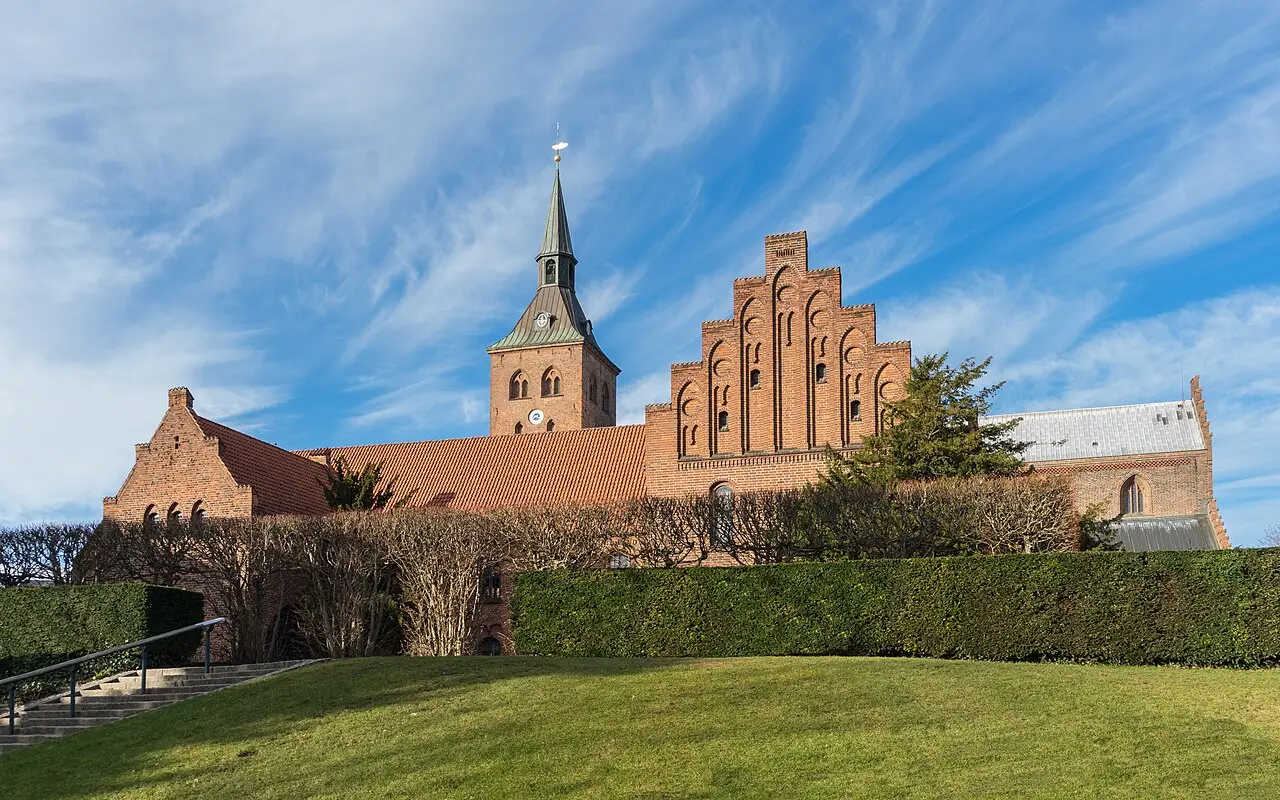
Higher up, the picture turns international. Denmark has eight universities, and many of their bachelor, master, PhD, exchange and summer school programs are taught in English. For a student, English moves from a school subject to the language of lectures, group projects and exams, and the academic register of reading articles and writing reports becomes part of everyday study.
Support for children and teenagers alongside the school week
If you are a parent or guardian arranging lessons for a child, the school calendar is the first thing to plan around. Teaching in Danish schools usually runs between 8:00 and 16:00, Monday to Friday, across a school year of about 40 weeks or 200 days from mid August to the end of June. Schools close for a week in October and a week in February, as well as for Christmas, New Year, Easter and several public and religious holidays.
Online sessions slot neatly into late afternoons once school ends, and the October and February breaks are a natural window for a short, focused burst, such as preparing a class presentation or catching up on writing. For younger children who met English in the early grades, the tutor keeps lessons playful and spoken, with stories, games and plenty of talking. For teenagers heading toward upper secondary, the focus can shift to essays, argument and the confident speaking that presentations and group work call for.
The child is the learner, so the tutor talks to them directly and at their level, and the coordinator's progress reports keep the family informed. If the fit between child and tutor is wrong, changing tutor costs nothing.
English-taught degrees at home and the entry levels behind them
Studying in English is now possible without leaving the country. Danish universities offer hundreds of English-taught degrees. A 2025 study guide citing Study in Denmark data counts over 600 of them, including over 90 bachelor programs, over 260 master programs, about 20 PhD programs and about 5 online programs. In 2025 Denmark also recorded 8,685 foreign exchange students and interns in ordinary higher education, so you may share a project group with classmates from abroad.
To get in, you need to show your English. Applicants to English-taught undergraduate and postgraduate programs must prove English at least equal to Danish upper secondary English B, and some programs ask for the higher English A. If your route did not include English at that level, a test score is one way to show it. Aalborg University also accepts an upper secondary diploma taught in English from Australia, Canada, New Zealand, the United Kingdom or the United States.
If you are planning a degree further afield, the same skills apply: listening to long lectures, reading academic texts quickly, writing structured arguments and speaking up in a seminar. Your tutor can build those skills in the months before you apply and keep going once term starts.
IELTS, TOEFL and Cambridge for Danish admissions
The national admissions guidance gives a rough map. It estimates English B at IELTS 6.5 and English A at IELTS 7.0. For TOEFL internet-based results it lists 79 to 93 for English B and 94 to 101 for English A, and it places Cambridge C1 Advanced at English B and Cambridge C2 Proficiency at English A. It also reminds applicants that each institution sets its own equivalents, so always check the program you want.
Two universities show how those rules play out. Aarhus University asks for IELTS Academic 6.5 overall with at least 6.0 in each section for English B, and 7.0 overall with at least 6.0 in each section for English A. It accepts only IELTS Academic, TOEFL iBT and Cambridge English results, and it turns down PTE Academic, the Duolingo English Test, TOEFL ITP and TOEFL Essentials. It also notes that TOEFL iBT results from after 21 January 2026 use a new scale, on which English B is 4.5 overall and English A is 5.0. Aalborg University requires IELTS Academic 6.5 overall with at least 6.0 in each section, wants IELTS and TOEFL results to be less than 2 years old when you apply, and accepts neither the Duolingo English Test nor PTE Academic.
Britemy prepares learners for IELTS, TOEFL, TOEIC, Cambridge, the Duolingo English Test and PTE Academic, and the Danish admission rules above name IELTS, TOEFL iBT and Cambridge English. Preparation runs in two phases with the same tutor. First comes a foundation in reading, listening, writing and speaking. Then comes score strategy: drills in the official formats, timed mock tests and pacing for each section. Because a minimum of 6.0 per section can catch out a candidate who is strong overall, your tutor watches your weakest section closely, and in Denmark's 2025 index speaking is the weakest of the four skills.
- IELTS Academic
- TOEFL iBT
- Cambridge English C1 Advanced and C2 Proficiency
English in an economy that sells to the world
Denmark earns much of its living abroad. In 2017 exports of goods and services were 55 percent of GDP, and in 2016 about 79.9 percent of workers were employed in services. Pharmaceuticals are described as the main driver of growth, with a 70 percent share of growth in the second quarter of 2025. Wind energy technology and services exports reached 8.9 billion euros in 2019, and pork, dairy and other food made up about a quarter of commodity exports in 2015.
If your work touches one of these sectors, English may come into it in different ways. In pharmaceuticals you might present clinical results, write regulatory summaries or join calls with partners across several time zones. In wind energy you might work through technical specifications, site meetings and negotiations with suppliers. In food exports it could mean sales calls, trade fairs and contracts. And across the large service sector, English may come up in client emails and with colleagues who joined from abroad.
Your tutor shapes lessons around the English your sector actually uses. Bring a real presentation, a draft email or an upcoming negotiation, and you rehearse it until the phrasing feels like your own.
Fitting lessons around a 37-hour week
Most Danish workplaces agree normal working hours of 37 hours per week, mainly Monday to Friday between 6:00 and 18:00. The usual lunch break is about 30 minutes, and some workplaces count it as paid working time. Employees over 18 are also entitled to at least 11 consecutive hours of rest between workdays and a 24 hour rest period each week. The result is a predictable rhythm, and predictable rhythms are good for learning.
Because lessons run online, you choose the slot that suits your routine. Some learners take an early session before the workday starts, some prefer the late afternoon once the office empties, and parents often wait until the children are in bed. A lunch break of about 30 minutes works well for going over the phrases you noted in your last session.
When something comes up, moving a lesson costs nothing with at least 24 hours' notice. One pause per package, of up to 30 days, covers a holiday or a busy quarter. Packages start at four sessions and stay active for 30 days from your first lesson, plus a 15-day grace period, which suits a steady weekly rhythm.
Lessons on Europe/Copenhagen time (UTC+01:00, summer UTC+02:00)
- Tue08:0060 min
- Thu20:3060 min
- Sun12:0060 min
Moving a lesson costs nothing with at least 24 hours' notice.
Copenhagen, Aarhus, Odense and Aalborg
English is strong across the country, with some regional texture. The 2025 index scores Midtjylland at 636, Hovedstaden at 623, Syddanmark at 605 and Sjaelland at 595, and gives the city of Copenhagen 644, the highest score of any Danish city in the index.
Copenhagen is the largest center. On 1 January 2026 the municipality had 671,714 residents, the urban area 1,408,575 and the metropolitan area 2,135,634. The University of Copenhagen, founded in 1479, has about 35,000 students, and the city is also home to the Technical University of Denmark, Copenhagen Business School and the IT University of Copenhagen. If you study or work here, academic and professional English may well be part of your week.
Aarhus municipality had 378,361 residents on 1 January 2026, and in 2023 immigrants made up 13.31 percent of the municipal population. Aarhus University sets clear English levels for admission, covered in the exam section above. Odense, the fourth largest municipality with 213,168 residents, is home to the main campus of the University of Southern Denmark. Aalborg was the third largest municipality in 2022 with 221,082 residents, and Aalborg University, founded in 1974, had more than 20,000 students in 2018. Wherever you live, online lessons connect you with a tutor matched to your goals.
- Copenhagen
- Aarhus
- Odense
- Aalborg
Online lessons in a country that lives online
Danes are at home online. In 2026, 89 percent of people aged 16 to 74 had used social media in the past three months, and 85 percent had shopped online in the past year. Across the EU in 2024, 33 percent of internet users did an online course or used online learning material, and 18 percent took an online course. If you already spend part of your day online, a lesson on a video call will likely feel familiar.
Your Britemy lessons run on a video call with one tutor and one learner. You skip the commute, sit wherever you are comfortable and have the tutor's full attention for the whole session. You can bring a document, a draft or a presentation and work on it together. Online lessons also widen the choice of tutor, because the match rests on your goals and your schedule, wherever the tutor happens to be.
The format also makes it easy to keep going through travel, school holidays and busy seasons, since all you need is a quiet spot and a laptop.
Lessons at home when a tutor lives near you
Some learners prefer to sit across the table from their tutor. Britemy offers lessons at home wherever a vetted tutor is available near you. When you ask about home lessons, the team checks which tutors are close to you and whether their timetable matches yours, and you hear honestly what is possible before you commit to anything.
Home lessons follow the same model as online ones: one tutor, one learner, speaking from the first session, and a coordinator following your progress. You choose the room and the table, and you use the books, notebooks or devices you already have. If no vetted tutor is close enough to you, online lessons give you the same structure and the same attention, and you can switch to home lessons later if a nearby tutor becomes available.
A tutor chosen around your goals
Every Britemy learner works with one tutor. Tutors are experienced and skilled in their field, and the match is made around what you need: a tutor comfortable with academic writing and test strategy for a university applicant, one at home in meeting and presentation English for a project manager, one patient and playful for a nine-year-old.
Before you buy anything, you can talk to the team in a consultation at no charge. That conversation covers your goals, your current level, your schedule and whether you prefer online or home lessons. If after a few sessions the chemistry feels off, you can change tutor at any time, and that change costs nothing. Good learning depends on trust, and the option to switch keeps the attention on your progress.
Your tutor keeps notes on every session: what you practiced, which sounds or structures came up and what to revisit next time. Those notes feed your coordinator's progress reports, so your learning keeps its thread even across a pause or a busy month.
Where you stand on the CEFR scale and where you can go
Britemy measures progress with the CEFR, the Common European Framework of Reference for Languages. It describes language ability in six levels: A1 and A2 for basic users, B1 and B2 for independent users, and C1 and C2 for proficient users. Each level is defined by what you can do, such as following a lecture, arguing a point in a meeting or writing a detailed report, which makes it far more useful than a vague sense of being good or not so good at English.
With national reading and listening scores as high as Denmark's in the 2025 index, you may already work at the upper levels in those skills. If so, the work moves into the finer steps between B2, C1 and C2: precision, range, natural phrasing and the ability to speak at length while keeping your structure. For younger learners and adult beginners, the early steps from A1 to B1 build steadily when lessons are full of talking.
Your coordinator's reports place you on this scale as you go, so you can see movement within a level as well as between levels. Progress depends on your starting point and how much you practice, so dates are never promised. What you get is a clear picture of where you are and a plan for the next step.
Progress report, CEFR scale
- SpeakingB2
- ListeningB1
- ReadingB2
- WritingB1
Sent by your coordinator after reading your tutor's notes.
A coordinator who follows every lesson
Behind each tutor and learner sits a coordinator. The coordinator follows every lesson, reads the tutor's notes and sends you progress reports on the CEFR scale. If your goal changes, for instance from everyday fluency to an admission test, the coordinator reshapes the plan with your tutor. If you want to move a lesson, pause a package or work with a different tutor, the coordinator is the person who arranges it.
For a parent or guardian arranging lessons for a child, the reports are a clear window into what happens in each session. For an adult learner, they are a record of progress that is easy to lose sight of when you improve a little every week. Either way, you always know who to ask, and the answer comes from someone who has followed your lessons from the start.
What your first month looks like
It starts with a consultation at no charge, where you describe your goals and your schedule and the team suggests a tutor. Your package begins at four sessions, and you pay for all of it before the first lesson. The package is active for 30 days from your first lesson, with a 15-day grace period after that, and you can pause it once for up to 30 days.
In the first sessions your tutor gets to know how you speak: where you are fluent, where you pause, and which sounds and structures need attention. You talk from the start, and the tutor builds a plan from what they hear. Along the way your coordinator sends progress reports on the CEFR scale, and by the time the package ends you have a clear sense of what the next one should focus on.
- First session: a conversation about your goals while your tutor maps your strengths and gaps
- Middle sessions: focused speaking tasks built on your real work, study or school life
- Final session: a look back at what changed, then a plan for the next package with your coordinator
Choosing the focus that fits your English
Because every lesson is one to one, the plan follows your goal. These are the aims that shape most lesson plans, and you can mix them as your needs change.
- Speaking fluency and confidence for everyday life, travel and socializing
- Professional English for presentations, meetings, negotiations and email
- Academic English for lectures, seminars, reports and theses in English-taught programs
- Test preparation for IELTS, TOEFL, TOEIC, Cambridge, the Duolingo English Test and PTE Academic, in two phases with one tutor
- Pronunciation and intonation work on the sounds that matter most for your clarity
- English for children and teenagers, planned around the school week
- A fresh start for adult beginners who want to speak from the first lesson
Lessons, payment and your rights in Denmark
- Price
- Prices are shown in USD before you pay. Packages start at four sessions. From USD 15 a session. See every price
- Payment
- Pay by card from almost anywhere, including Visa, Mastercard, Amex, Apple Pay and Google Pay.
- Where
- Learn online from anywhere, or at home wherever a vetted tutor is available near you.
- Cancelling
- You can cancel within 14 days of buying your package and get your money back. If you asked us to start lessons inside that period, we keep the value of the lessons you have already had. Read the policy.
- Free
- The consultation, and changing tutor at any time.
Questions from Denmark
My English is already quite good. Is a tutor worth it?
For many learners in Denmark the answer comes down to speaking. The 2025 index gives Danish speaking a score of 529, well below reading at 615 and listening at 607. If you understand more than you comfortably say, one to one lessons give you regular, focused speaking practice with a tutor who notices the small habits holding you back.
Which English tests do Aarhus University and Aalborg University accept?
Both accept IELTS Academic and TOEFL iBT, and Aarhus also accepts Cambridge English results. Neither accepts PTE Academic or the Duolingo English Test. Aarhus asks for IELTS Academic 6.5 overall with at least 6.0 in each section for English B, and Aalborg asks for the same, with results less than 2 years old. Confirm the exact rules for your program before you book a test date.
What do English B and English A mean for university admission?
They are Danish upper secondary English levels. English-taught degrees ask you to show English at least equal to English B, and some programs require English A. The national guidance estimates English B at IELTS 6.5 and English A at IELTS 7.0, and lists Cambridge C1 Advanced and C2 Proficiency for the two levels. Each institution sets its own equivalents.
Has the TOEFL iBT scoring changed for Danish applications?
Yes. Aarhus University notes that TOEFL iBT results from after 21 January 2026 use a new scale, on which English B is 4.5 overall and English A is 5.0 overall. If you are preparing now, your tutor works with the current format and helps you read your result against the level your program asks for.
Can I fit lessons around a full-time job?
Most Danish workplaces agree a 37-hour week, mainly between 6:00 and 18:00 on weekdays, so early mornings and evenings are often open. Lessons run online, so you choose a slot that suits you, and moving a lesson costs nothing with at least 24 hours' notice.
My child already learns English at school. Why add private lessons?
School English in Denmark runs on guiding hours, and the European education network's table sets 630 hours across the years, with 30 hours in each of the first two forms. That builds a good base, though classroom speaking time is shared among the whole class. A tutor gives your child the whole session to talk, read aloud and ask questions at their own pace.
Can a tutor help with my pronunciation and intonation?
Yes. Common patterns for Danish speakers include a final d sounding like t, w drifting toward v, z said as s, and statements rising at the end like questions. Your tutor works on the ones that affect your clarity, using your own sentences, so you sound clear and confident in an accent that stays yours.
What happens if my tutor is the wrong fit?
You can change tutor at any time, and changing costs nothing. Tell your coordinator what feels off, whether that is the pace, the focus or simply the chemistry, and they suggest another tutor and brief them on your progress so you continue where you left off.
Can lessons take place at my home?
Lessons can take place at home wherever a vetted tutor is available near you. During your consultation the team checks which tutors are nearby and whether their schedules match yours. Lessons on a video call are always available and follow the same one to one model.
How will I know I am making progress?
Your coordinator follows every lesson, reads your tutor's notes and sends progress reports on the CEFR scale from A1 to C2. You see where you stand within a level and between levels, and you know what the next step is before each new package begins.