




























































 Austria · Österreich
One-to-one English for Austria
You already read English well. Now let's get you talking with ease.
Austria learns English from primary school, and reading is strong. Speaking is the weakest of the four skills in a 2025 ranking, so your lessons start with conversation on day one, with one tutor who works with you alone.
Your week, Europe/Vienna time
Wed08:00
Fri20:30
Sun10:00
A country where almost every pupil learns English
English arrives early in Austria. Teaching in a modern foreign language, which is usually English, begins in primary school, and the figures show how complete that is. In 2023, 99.5% of primary pupils were learning English, against 82.6% across the EU. In lower secondary the share reached 99.7%, and in upper secondary it stood at 97.7%, well above the EU figure of 88.6%.
So when you think about lessons with Britemy, you probably start from solid ground. In 2022, over 95% of Austrians aged 18 to 24 knew at least one foreign language, and a 2025 ranking of adult English skills around the world placed Austria third, with a score of 616 against a global average of 488. That is a strong position, and it shapes how your tutor plans with you from the very first conversation.
A strong school record produces a particular kind of learner. You may follow a film without subtitles and read reports in English at work, and still pause before you speak up in a meeting or pick up the phone. Lessons here begin from that reality. Your tutor finds out what you can already do, keeps it moving, and spends the time where your English still feels stiff, which, if the 2025 ranking is a guide, is often the moment you have to say something out loud.

Reading at 627, speaking at 513: closing the gap
That same 2025 ranking broke Austria's score down into the four skills. Reading came in at 627 and listening at 615, while writing sat at 550 and speaking at 513. Speaking was the weakest of the four. If that pattern sounds familiar, you are in good company, and it happens to be the gap that one tutor working with one learner can reach most directly.
Speaking improves when you speak, often, to someone who listens closely. With Britemy you talk from the first lesson. Your tutor lets you finish your thought, notes what tripped you up, and polishes accuracy along the way, so the conversation keeps its flow while your grammar and word choice grow sharper week by week.
In practice, your lessons are built around talking:
- Short warm-up conversations about your week, your work or your studies, so speaking turns into a habit.
- Role-plays of real moments, such as a call with a supplier, a question from a hotel guest or a seminar discussion.
- Fluency rounds where you explain one idea twice, faster and clearer the second time.
- Calm correction after you finish speaking, with the key phrases noted for you to reuse next time.

The English sounds German speakers in Austria find new
German is the official language of Austria, yet most people spend their day in an Austro-Bavarian dialect, spoken by about 8.3 million people, while about 300,000 people, mostly in Vorarlberg, speak Alemannic. Standard Austrian German is the variety of the media and of formal situations, and the dialects live in informal settings and are rarely written. That layered language life is a rich starting point, and it helps your tutor predict which English sounds will need attention.
The th sounds are the classic example. The Standard German consonant system has no th at all, so the sounds at the start of think, three and the are new territory. Your tutor shows you where the tongue goes, then builds short phrases until the sound feels natural at normal speed.
The w and v pair comes next. Standard German has no w sound, and its v is a voiced sound made with the lower lip against the teeth, which is the sound English writes as v. So English pairs like wine and vine, or west and vest, deserve some attention. A few minutes of contrast practice in each lesson trains your ear and your mouth to keep them apart.
Aspiration matters too. In Standard German, p, t and k are strongly aspirated at the start of a word or a stressed syllable, while many southern dialects do not aspirate them at all. English listeners rely on that small puff of air to tell pin from bin and tame from dame, so if dialect is your everyday speech, your tutor may give it some time. German also contrasts vowels by tenseness and length, which your tutor can use as a reference point when you work on English vowels.
Who takes one-to-one English lessons in Austria
Because English runs through nearly everyone's schooling in Austria, you probably come to a tutor with something specific in mind. In 2022, Austria was one of 11 EU countries where over 90% of employed adults aged 25 to 64 said they knew a foreign language. If you are one of them, lessons can help you use that English with more confidence in a job that already asks for it.
The country is also more international than many people expect. On 1 January 2026, Austria had 9,219,113 residents on a provisional count, and 1,890,740 of them, or 20.5%, held foreign citizenship. If you are new to Austria, English may be the language you share with colleagues while your German takes shape. And with 44.1% of Austrians aged 25 to 34 holding a tertiary degree in 2024, slightly above the EU figure of 43.9%, and if you are one of those graduates, English may already be part of your research, reading or team work.
One-to-one lessons suit a handful of groups especially well:
- Professionals who read English every day and want to speak it with the same ease in meetings and calls.
- University students and applicants getting ready for English-taught programs or a certificate.
- Pupils and teens who want more speaking time than a full class can give them.
- Residents from abroad who use English at work and want it polished.
- Apprentices and people in trades who meet English through clients, manuals or guests.
From Mittelschule to Matura: English for young learners
School education in Austria is compulsory for nine years from age 6, general compulsory schooling lasts until age 15, and kindergarten has been obligatory for 5-year-olds since 2010. Young people under 18 must stay in education or training. Through all of those years, English is a constant companion.
In the Mittelschule, the first modern foreign language gets 14 weekly lessons across the four years, split 4, 4, 3 and 3. In the lower cycle of academic secondary school it gets 15 weekly lessons in the Gymnasium branch and 14 in the Realgymnasium branch. From the third year, Gymnasium pupils add Latin or a second modern language, with 7 weekly lessons across years 3 and 4. That is a lot of English to keep up with while a new subject is arriving.
At the end of upper secondary comes the Matura, taken as 3 written and 3 oral exams or as 4 written and 2 oral exams, with standardized written exams applied nationwide since 2015. A modern foreign language, usually English, French, Spanish or Italian, is a compulsory written subject. A one-to-one tutor gives a teen something a class rarely can: a whole lesson of their own to talk, ask questions and practice the reading and writing that school asks of them.
When a parent or guardian arranges these lessons, the young learner stays at the center of them. The tutor talks with the learner directly, at a pace that suits their age, and the coordinator's progress reports keep the family informed.
IELTS, TOEFL and Cambridge for Austrian applicants
If you need an English certificate for university admission in Austria, the requirements are precise. One major university accepts IELTS Academic with an overall band of 6.5, or TOEFL iBT with at least 94 points, as proof of B2 English for its English-taught programs. B2 is a level on the CEFR, the Common European Framework of Reference, which grades language skill in six steps from A1 for beginners to C2 for mastery. For C1 proof the same university asks for IELTS Academic overall 8 with at least 7.5 in each component, TOEFL iBT of at least 110, or Cambridge C1 Advanced at grade A.
Two details matter when you plan. That university accepts a school-leaving certificate with a passed English exam from a qualifying school as lasting proof of B2, so if that applies to you, a separate test may not be needed there. At that university, language certificates must also be no more than three years old on the day you apply, so the date of your test belongs close to your application.
Britemy prepares you for IELTS, TOEFL, TOEIC, Cambridge, the Duolingo English Test and PTE Academic in two phases with the same tutor. First comes a foundation in the four skills: reading, listening, writing and speaking. Then comes score strategy, with drills in the exam format, timed mock tests and practice in managing the clock section by section. You move to the second phase when your foundation is ready, and your coordinator keeps an eye on both.
- IELTS Academic
- TOEFL iBT
- Cambridge English B2 First and C1 Advanced
- Matura English exam
Studying in English without leaving Austria
For many learners here, the international classroom is at home. Austria offers internationally oriented bachelor's, master's and doctoral programs, and the number taught in English keeps growing. With 22 public universities, 17 private universities and 21 universities of applied sciences as of 2025, the choice is wide, and English-taught programs can be searched by subject, degree type and language in the national study database.
The level asked for depends on the program. At one major university, most English-taught bachelor's and master's programs ask for B2. English studies, linguistics and English teacher training ask for C1, and the translation master asks for C2 when English is a working language. Knowing your target early lets your tutor plan backward from it.
Lessons for study English focus on what a seminar actually demands:
- Summarizing an academic text out loud and defending your reading of it.
- Joining a discussion, asking a follow-up question and disagreeing politely.
- Presenting research with clear signposting and handling the questions that follow.
- Writing an essay or an abstract in the style your lecturers expect.
English at work in a service and trading economy
Austria's economy leans heavily on services. In 2017 estimates, services made up 70.3% of GDP and 74.1% of the labor force, while industry made up 28.4% of GDP and 25.2% of the labor force. Trade with other EU countries accounts for almost 66% of imports and exports, so your job may connect you with suppliers, partners and customers across borders, where English can be the common ground.
That is where lessons for work begin: with your real week. Bring the email you found hard to write, the call you want to rehearse or the presentation you are giving next month, and your tutor turns it into practice. The aim is calm, clear English for the situations you actually face, from a quick status update to a tough negotiation.
Apprentices belong in this picture too. They attend vocational school for three years, in block release of about four months or day release of one day a week, and finish with a final apprenticeship exam. For someone training in a trade or in hospitality, a steady run of speaking lessons alongside that training can make guests, clients and English manuals feel far less daunting.
- Meetings and video calls with colleagues abroad
- Emails and reports that read clearly
- Presentations and the questions afterward
- Job interviews held in English
- Conversations with customers and guests

Tourism, the industry that speaks English every day
Tourism accounts for about 10% of Austria's GDP, and a large share of its guests come from abroad. In 2025 the country recorded 48.2 million tourist arrivals, 33.5 million of them international, and 157.3 million overnight stays, of which 116.8 million were by international guests.
The year before told a similar story. In 2024, tourist accommodation counted 94,009,113 nights by non-residents against 37,192,120 by residents, so foreign guests spent more than 71% of the nights counted. In Salzburg, visitors outnumber locals by a large margin in peak seasons, and Innsbruck records more than a million overnight stays.
If you work at a reception desk, in a restaurant, on the slopes or in a museum, your English is part of the service you give. Lessons for hospitality practice the moments that come up again and again: welcoming guests, explaining options, handling a complaint with grace, giving directions and making small talk that feels warm. Seasonal work has its own rhythm, and your one pause per package can cover the busiest weeks so you return to lessons when the rush is over.
Vienna, Graz, Linz, Salzburg and Innsbruck
Lessons run online, so the town you live in never decides whether you can learn. Each city still brings its own reasons to study English, and your tutor will hear them in what you choose to practice.
- Vienna had 2,042,036 residents on 1 January 2026, and 37.0% of them held foreign citizenship. That makes the capital the largest and most international pool of adult learners, professionals and university students.
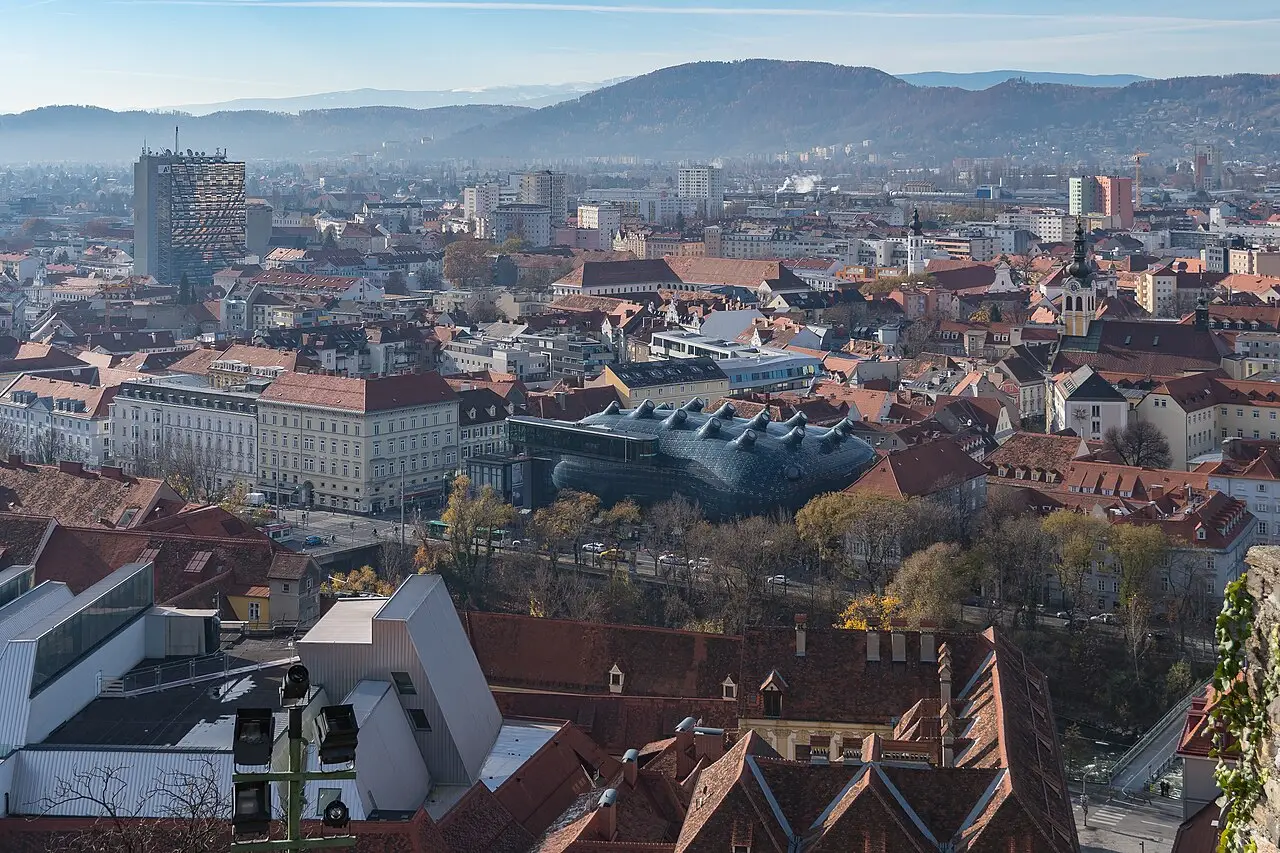
- Graz had 306,068 residents on 1 January 2025, and its four universities and four other higher education institutions counted more than 63,000 students in 2023. English for study and research is a daily need there.
- Linz had 213,557 residents on 1 January 2025 and about 157,000 jobs, nearly twice what its residents can fill, so many people commute in. Industry, research and export-oriented employers keep business English in demand.
- Salzburg had about 157,834 residents in 2026, and in peak seasons its visitors outnumber locals by a large margin, so hospitality and culture lean on English.
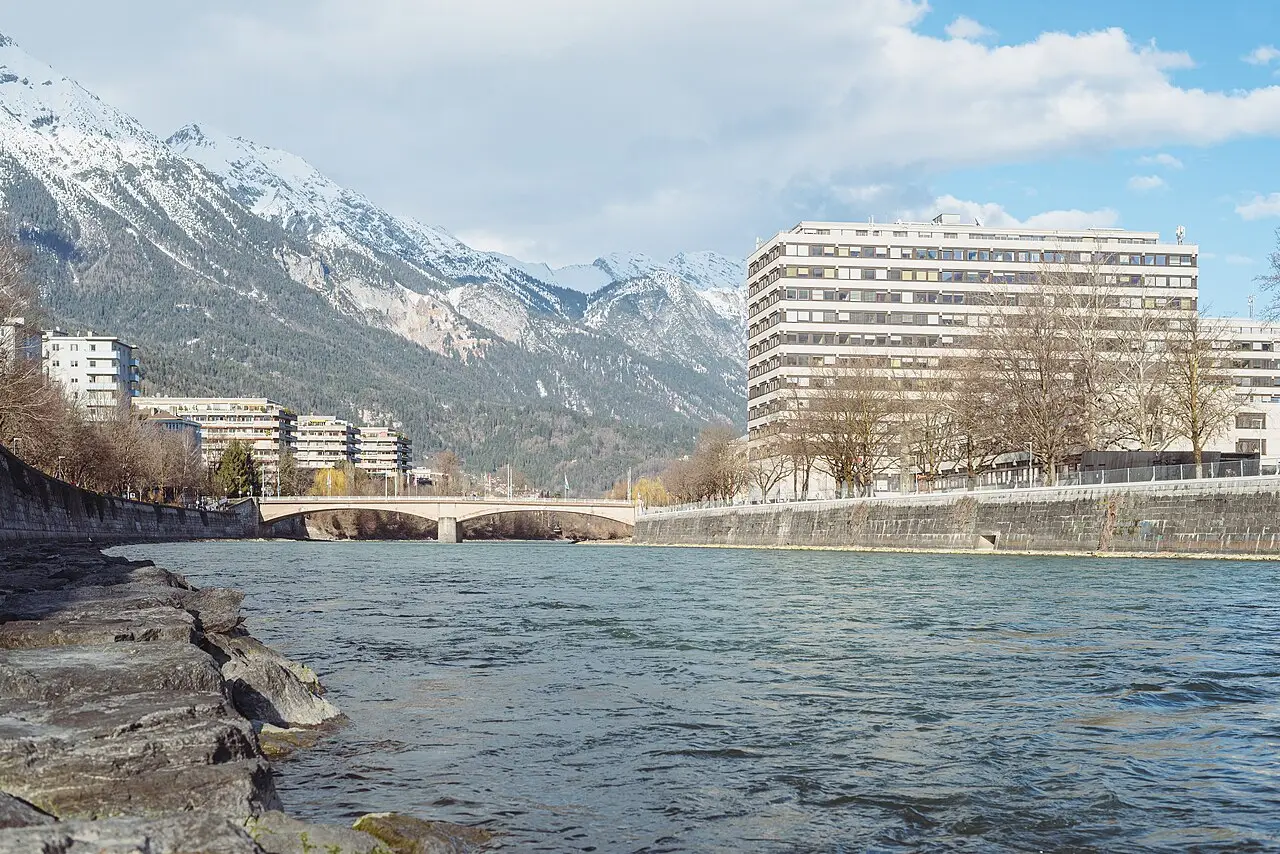
- Innsbruck had 132,188 residents in 2024 and records more than a million overnight stays, with tourism and an international student community raising the need for spoken English.
- Vienna
- Graz
- Innsbruck
- Salzburg
- Linz
Fitting lessons into an Austrian working week
The statutory working week in Austria is 40 hours, at 8 hours a day, and many sectors set a shorter week by collective agreement, such as 38.5 hours. Employees also get 25 or 30 days of annual leave a year, depending on whether they work a five-day or six-day week. That rhythm leaves room for regular lessons, and a little planning keeps them steady.
Austria runs on Europe/Vienna time, which is UTC+01:00 in winter and UTC+02:00 in summer, with summer time from the last Sunday in March to the last Sunday in October. When you plan your lessons, think in Vienna time and keep the two clock changes in mind, especially if you travel for work.
A few simple habits help your lessons stick through a busy year:
- Pick the same slot each week, so the lesson becomes part of your routine.
- Moving a lesson costs nothing when you give at least 24 hours' notice.
- Plan around your annual leave, and use your one pause per package for a long holiday.
- Keep a short list of situations from your week to bring into the next lesson.
Lessons on Europe/Vienna time (UTC+01:00, summer UTC+02:00)
- Wed08:0060 min
- Fri20:3060 min
- Sun10:0060 min
Moving a lesson costs nothing with at least 24 hours' notice.
Online lessons in a country that is already online
In 2025, only 3.55% of people in Austria had never used the internet, against 4.37% across the EU, and 17.66% had done an online course of some kind, up from 16.56% in 2023 and above the EU figure of 16.21%. In 2023, almost two thirds of the population had basic digital skills. Being online is familiar ground for almost everyone here.
Britemy lessons run on a video call, one tutor with one learner. You need a stable connection, a quiet corner and, ideally, headphones. You spend most of the lesson talking, from the very first one. With no commute, a lesson is easier to fit around your working day and your family life.
If you would like to meet in person, lessons can also take place at home wherever a vetted tutor is available near you. Mention it at your consultation and your coordinator will check what is possible.
A tutor chosen for you, and changed whenever you like
Every Britemy learner has one tutor. Tutors are experienced and skilled in their field, and your free consultation is where you share your level, your goal, your schedule and the way you like to learn. A university applicant, a hotel manager and a twelve-year-old have different needs, and your lessons reflect that.
Chemistry matters in speaking lessons, because you talk more freely with someone you trust. If the fit feels wrong, changing tutor is free at any time, and you can simply ask. Your coordinator arranges the change so the next tutor knows where you left off.
During lessons your tutor listens far more than they lecture. They keep track of the phrases you reach for, the sounds that still need work and the topics that get you talking, and they shape the next lesson around them.
A coordinator who follows every lesson
Behind every tutor sits a coordinator. Your coordinator follows each lesson, reads your tutor's notes and sends you progress reports on the CEFR scale. That gives you a second pair of eyes on your learning, someone who knows your progress from lesson to lesson.
The reports place your English on the CEFR scale, so you can see what you can now do and what is still developing. For a parent or guardian who arranges lessons for a teen, they are a simple way to stay informed without sitting in on the lesson. For an adult learner, they turn a feeling of progress into something you can read and share.
Progress report, CEFR scale
- SpeakingB2
- ListeningB1
- ReadingB2
- WritingB1
Sent by your coordinator after reading your tutor's notes.
Your level on the CEFR scale, from A1 to C2
The six CEFR levels give your progress a shared language. A1 and A2 cover basic and everyday English. B1 lets you handle familiar situations on your own, B2 lets you discuss a wide range of topics with fluency, C1 lets you use English flexibly for study and work, and C2 is close to complete mastery.
Going by the 2025 ranking, many adults in Austria read and listen more comfortably than they speak. Your tutor and coordinator keep an eye on each skill, so you can see where you stand in all four and watch your speaking catch up with the rest of your English.
Moving up a level takes steady practice, and the pace differs from person to person, so nobody can honestly promise a date. What you get is a clear picture of where you are, a plan for the next step and regular reports that show the distance you have covered.
Choosing the lessons that match your goal
Every Britemy package is one-to-one, and the content follows your goal. Most learners in Austria fit one of these directions, and you can mix them as your needs change:
If you are unsure where to begin, the free consultation is the place to talk it through. You describe what you want English for, and together we pick the direction that suits you best.
- Everyday conversation, for confident small talk, travel and social life in English.
- English for work, covering meetings, calls, emails, presentations and job interviews.
- Study English, for seminars, academic writing and presenting research.
- Test preparation for IELTS, TOEFL, TOEIC, Cambridge, the Duolingo English Test and PTE Academic.
- Lessons for children and teens, with plenty of speaking alongside school topics.
- Pronunciation work on th, w and v, aspiration and word stress.
What your first weeks with Britemy look like
It starts with a free consultation, where you talk about your goals, your schedule and your current English. From there we match you with a tutor and set up your first package, which starts at four sessions. That package is paid in full ahead of your first lesson.
In the first lesson you speak. Your tutor learns how you sound, what you want and where you hesitate, and builds the following lessons around it. Along the way your coordinator follows each lesson and sends progress reports, so you always know what you are working on and why.
Your package stays active for 30 days from the first lesson, with a 15-day grace period after that. If life gets busy, you can pause once per package for up to 30 days, and moving a single lesson costs nothing with at least 24 hours' notice.
Lessons, payment and your rights in Austria
- Price
- Prices are shown in EUR before you pay. Packages start at four sessions. From EUR 13 a session. See every price
- Payment
- Pay by card from almost anywhere, including Visa, Mastercard, Amex, Apple Pay and Google Pay.
- Where
- Learn online from anywhere, or at home wherever a vetted tutor is available near you.
- Cancelling
- You can cancel within 14 days of buying your package and get your money back. If you asked us to start lessons inside that period, we keep the value of the lessons you have already had. Read the policy.
- Free
- The consultation, and changing tutor at any time.
Questions from Austria
I learned English at school for years. Is a tutor still worth it?
For many people in Austria, yes, because the gap sits in speaking. In a 2025 ranking of adult English skills, Austria scored 627 in reading and 615 in listening, and 513 in speaking. One-to-one lessons give you a whole lesson of talking with someone who listens closely, which is the practice a school class rarely has time for.
Can lessons help my teenager with Matura English?
A modern foreign language, usually English, is a compulsory written Matura subject. A tutor can work with your teen on reading, writing, listening and speaking, and you can explain at the consultation what the Matura year asks for so the lessons lean that way. Grades grow out of steady practice, and these lessons give your teen exactly that.
Which English certificate do I need for an English-taught degree in Austria?
It depends on the university and program. One major university accepts IELTS Academic overall 6.5 or TOEFL iBT of at least 94 as B2 proof, and IELTS Academic overall 8, TOEFL iBT of at least 110 or Cambridge C1 Advanced at grade A as C1 proof. Certificates must be no more than three years old when you apply, so check your program's page and plan the test date with your tutor.
My dialect shows in my English. Can you help with pronunciation?
Yes. Three areas are worth attention for German speakers: the th sounds, which Standard German does not have, the difference between w and v, and the aspiration of p, t and k, which many southern dialects leave out. Your tutor works on these in short, regular drills inside your conversation practice, so the new sounds carry over into real speech.
How do lesson times work with the clock change?
Austria uses Europe/Vienna time, UTC+01:00 in winter and UTC+02:00 in summer, switching on the last Sunday in March and the last Sunday in October. Plan your lessons in Vienna time, and if a week gets crowded, you can move a lesson at no cost with at least 24 hours' notice.
What happens if my tutor is not the right fit?
Changing tutor is free at any time. Tell your coordinator, who arranges a new match and makes sure the next tutor knows your goals and where you left off. The first step before any package is a free consultation, where we learn enough about you to make a good first match.
Can I take a break during the ski season or a long summer holiday?
Yes. You can pause each package once, for up to 30 days, which suits a busy season at work or a long trip. A package stays active for 30 days from your first lesson, plus a 15-day grace period, so a pause gives you room to step away and come back to your package when the season is over.
Are lessons only online, or can a tutor come to my home?
Lessons usually run online on a video call, which works anywhere you have a stable connection. Lessons can also take place at home wherever a vetted tutor is available near you, so mention it at your free consultation and your coordinator will tell you what is possible where you live.