




























































 Argentina
English lessons for learners in Argentina
You already read English well. Now let's get you talking.
One tutor and one learner on a video call, set on Argentina Time. You speak from the first lesson, a coordinator follows every step, and the gap between what you understand and what you can say begins to close.

Your week, America/Argentina/Buenos_Aires time
Wed18:30
Sat08:30
Sun12:00
A country that reads English well and speaks it less
Argentina sits comfortably above the world average for English. In the 2025 edition of a global index built from adult English test results, the country scored 575 and ranked 26th, while the global average was 488. That score describes the country as a whole, and inside it each skill tells its own story.
Look at the four skills and a clear pattern appears. Reading came in at 592, listening at 565, writing at 526 and speaking at 489, so speaking is the weakest of the four skills while reading runs more than a hundred points ahead. In everyday terms, that profile fits someone who can follow an article, a contract or a series in English and then goes quiet the moment someone asks a question out loud.
Many people also learn alone. An estimate reported in 2015 put 2.5 million Argentines as learning English on their own, mostly with textbooks, television, radio and online products. Those are good ways to build understanding, and they share one limit: nobody talks back. A private tutor supplies the missing half, a real person who listens, answers, waits while you search for a word, and helps you say the next sentence a little better than the last one.
This page is about that missing half. It explains how one to one lessons with Britemy work for someone living in Argentina, what schools and universities here expect, which exams people take, and how lessons fit a country that runs on a single clock.

Who studies English here, and what they want from it
The 2022 census counted 46,044,703 people (provisional results) in Argentina, and the people who come to English among them are a varied crowd. Some are students, some are parents of young children, many are working adults, and others taught themselves to read English and now want a voice to go with it.
Work is a reason that shows up clearly in the research. In a survey reported in 2015, 65% of the respondents who had not yet learned English said they would do so to improve their employment prospects, and cost was the barrier they mentioned most often. Britemy packages start at four sessions, so you can begin with a short, focused stretch and decide from there.
University is another reason people turn to English. In 2022, 47.8% of new enrollees at national and provincial public universities were the first in their family with a university degree. If that describes you, there may be nobody at home who has already been through an English requirement and can tell you how to prepare. A tutor can play that role, explaining what your faculty is likely to ask for and building the skills step by step.
- Professionals in services and technology who already read English at work and now need to speak in meetings.
- First-generation university students facing an English requirement for exchange, an English-taught course or graduation.
- Teenagers whose school English moves slowly and who want to get ahead of the class.
- Younger learners whose school offers little or no English yet.
- Self-taught learners who understand films and articles and want to finally hold a conversation.

What school English gives you, and where it stops
On paper, every child in Argentina should meet a foreign language at school. Article 87 of the National Education Law 26.206, passed in 2006, makes the teaching of at least one foreign language compulsory in all primary and secondary schools. Teaching follows national curriculum guidelines with an intercultural and plurilingual approach, and a 2016 analysis found that the country's 24 jurisdictions run their English programs with different degrees of development.
Buenos Aires City shows what a well-developed program looks like. In its state primary schools, foreign language lessons run from 1st to 7th grade, with 3 class hours a week in single-shift schools and 5 class hours a week in full-day schools, and English is the language most of those schools teach.
Across the whole country the picture is thinner. In data from 2023, 54% of primary students and 84% of secondary students, public and private together, had at least one hour of English a week, and the study reported an average of three hours of English classes a week.
Three hours a week is a real foundation, and it is shared among a full classroom. Divide the speaking time by the number of students and each person may say only a handful of sentences in a whole lesson. That is the gap one to one lessons fill. With a tutor, every minute of speaking time is yours, so the grammar and vocabulary you met at school finally get used in conversation.
When your school English depends on your province
Where you go to school changes how much English you get. In data from 2023, 46% of public primary school students had English classes, against 74% of private primary school students. Province matters just as much. In Formosa, 83% of secondary students were taught English in 2023, while only 6% of primary students were, because foreign language teaching is not mandatory there. Elsewhere, secondary coverage reached 94% in Córdoba, 95% in Río Negro and 96% in La Pampa.
So two children of the same age can arrive at secondary school with very different starting points. One has had English since first grade, and the other is meeting it for the first time in secondary school. Neither situation is a problem with a tutor, because one to one lessons begin from wherever the learner actually is.
For younger learners, lessons can be short, lively and full of talk: songs, picture stories, simple games and phonics, the system of linking letters to sounds that helps children read new words on their own. If you are booking for a child, the coordinator's progress reports show you what was covered and how your child is moving along the CEFR scale.
For teenagers, lessons can run alongside school, reinforcing what the class is doing, getting ahead of it, or preparing for an international exam. When a teen has decent written grades and very little speaking practice, a large part of each session can simply be talking about things they care about in English.

The sounds a Rioplatense ear brings to English
Rioplatense Spanish, the variety of Buenos Aires and the Río de la Plata area, has about 19 million speakers, and it carries a few features that shape the English of people who grow up with it. Your tutor listens for these from the first lesson, because each one gets easier to work on once you know it is there.
The best known is yeísmo rehilado. In Rioplatense Spanish the letters y and ll are pronounced like the English sh in show, a feature no other Spanish dialect uses. That habit can travel into English, so the y in yes, you and yellow drifts toward sh, and 'you' starts to sound like 'shoe'. A few minutes of contrast practice, with pairs such as yet and jet or you and shoe, helps your mouth keep the two sounds apart.
The second is the s before a consonant, which is often aspirated in Rioplatense speech and sounds like the English h in hi. English leans heavily on that s. It marks plurals, the he and she form of verbs, and clusters like the st in first step. When it fades, 'the best student' can sound like 'the beh student', and listeners lose the grammar the s was carrying. Your tutor gives it extra attention in short, repeated drills until it holds under pressure.
The third is a pleasant surprise. Rioplatense speakers use vos where other dialects use tú, with changed verb forms, and English simplifies all of that into one word. You is you, whether you are talking to a friend, a client or a professor. The effort you save there can go into the endings that matter more, such as she speaks, he works and it depends.
- A clear English y in yes, yellow and you, kept apart from sh.
- Final s and s clusters: plurals, she speaks, first step, best student.
Speaking from the very first lesson
Britemy lessons put speaking at the center from day one. You will talk in your first lesson, about yourself, your work, your studies or whatever brought you to English, and your tutor will build the session around what you say. Accuracy is polished along the way. Your tutor notices the patterns in your mistakes, picks the ones that matter most, and works on them without stopping you every few words.
This approach suits learners who already understand a lot. If your reading is strong and your speaking feels stuck, what usually holds you back is the habit of producing English quickly, out loud, with someone waiting for your answer. That habit only grows through practice, and one to one lessons give you far more of it than a group class usually can.
Look for the change in small ways over the first weeks. You hesitate less before answering. You start correcting yourself mid-sentence. You stop translating in your head for simple things like ordering, greeting or asking for help, and you start reaching for phrases you have practiced.
- Real conversation in every lesson, starting with the first.
- Corrections chosen for impact, given at moments that keep you talking.
- Roleplays of situations you actually face, from a job interview to a call with a client.
- Recycling of new phrases across lessons so they stick.
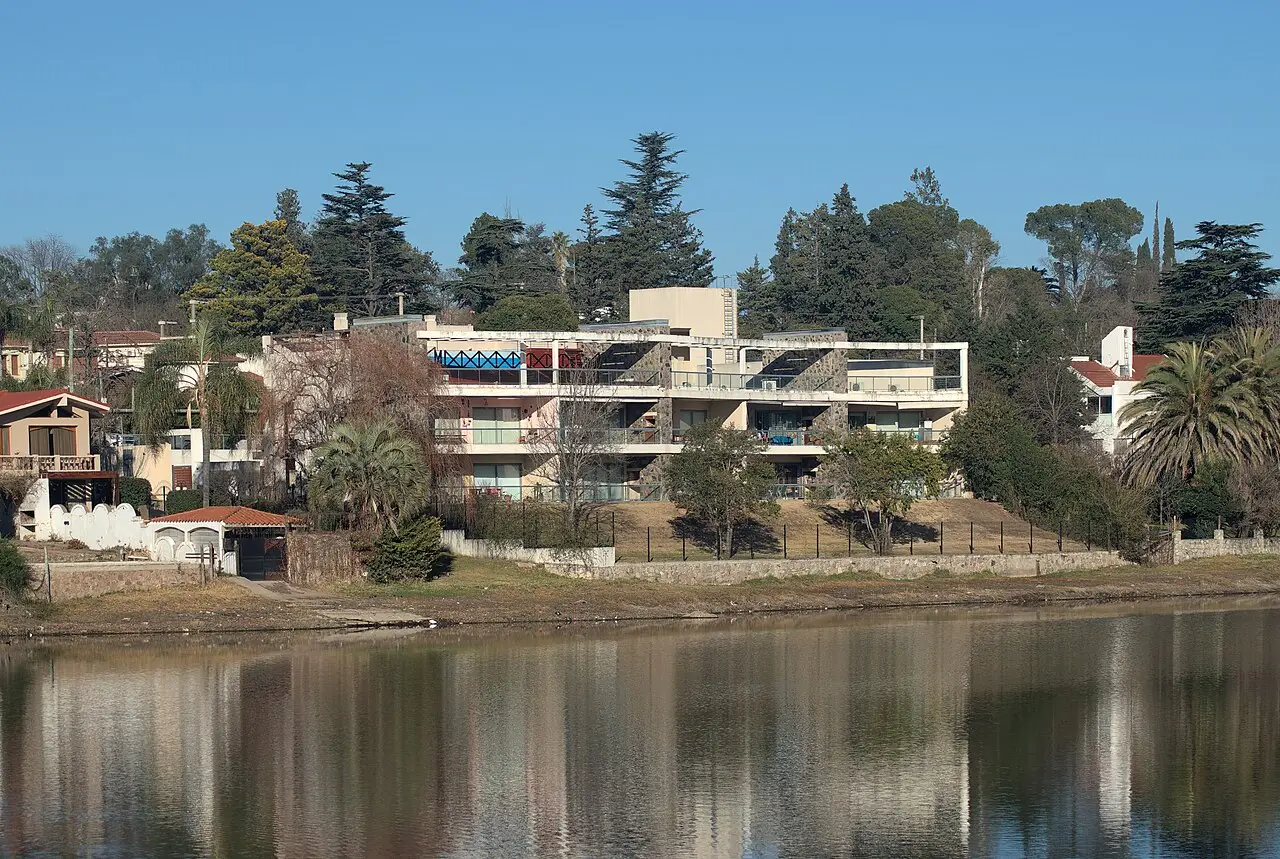
English for Argentina's knowledge economy
Argentina's leading export is now work delivered across borders. In 2024, knowledge-based services were the country's main export, growing 15.2% on the year and led by business services. As of the 2025 outlook, fourteen of Latin America's billion-dollar technology firms are based in Argentina. If you work in these fields, English may well be the language of your clients, your documentation and your teammates abroad.
The 2025 English index also broke results down by job type. Adult test takers in strategy and project management scored 643, customer service 617, IT 589, and technicians and maintenance 509. That is a gap of 134 points between the highest and lowest of those job groups, and it shows how much your field can shape the English you bring to work.
Lessons for work start from your actual job. Your tutor asks what you need to do in English, then rehearses it with you: a stand-up update, a client demo, a performance review, a salary conversation, an email that needs to sound firm and polite at the same time.
- Explaining a technical decision clearly to a client who is not technical.
- Running or joining a meeting with colleagues in other countries.
- Presenting results with confidence and handling questions afterward.
- Preparing for an English-language job interview, answer by answer.
Travel, wine and the visitors who arrive every season
Travel is another place where English turns into income. In 2024, travel services brought Argentina 5.0 billion US dollars of export revenue, money that visitors from abroad spend while they are in the country. Mendoza, a wine and tourism center in the Cuyo region, scored 577 on the 2025 English index, and Mar del Plata posted the highest of the city scores in that index at 597.
If you work with visitors, the English you need is practical and spoken. You greet people, explain a menu or a tasting, give directions, handle a complaint, and make small talk that leaves a good impression. Your tutor can turn those moments into a set of scenarios you practice until they feel natural, with vocabulary from your own trade, whether that is wine, food, outdoor guiding or hotel reception.
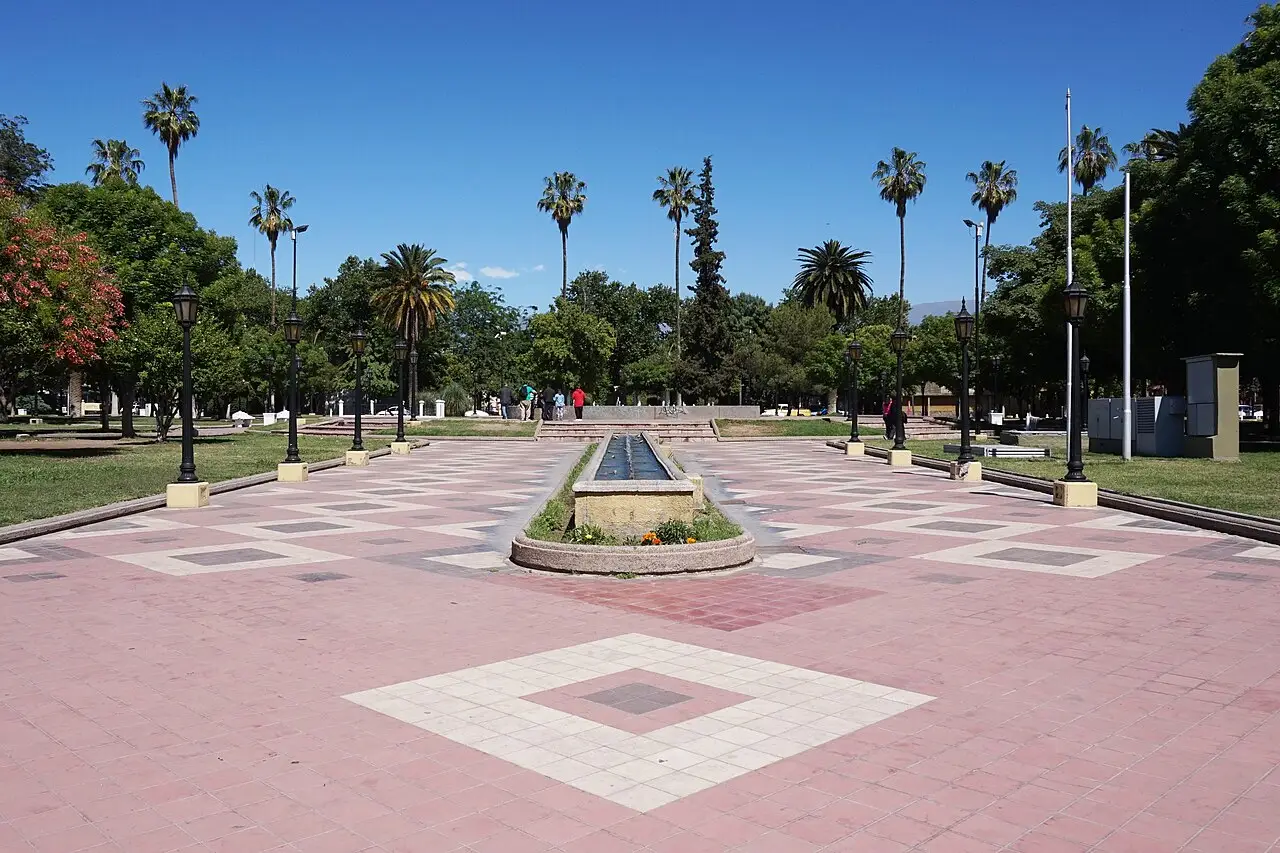
IELTS, TOEFL iBT and Cambridge at Argentine universities
Argentine universities that ask for proof of English accept IELTS, TOEFL iBT and Cambridge English C1 Advanced and C2 Proficiency, and each university sets its own requirements. Proof is usually requested for English-taught courses, exchange programs and programs with English components, while degrees taught in Spanish generally ask for Spanish proficiency instead.
Requirements are often written on the CEFR, the Common European Framework of Reference, a six-step scale that runs from A1 for beginners to C2 for near-complete mastery. One Argentine university lists CEFR B2 as 6.0 on IELTS and 72 on TOEFL iBT, and the source is careful to warn that no single score applies across the country. Always check the exact page for your faculty and program.
English can also matter at the end of a degree. As reported in 2015, many public universities used English proficiency as an exit requirement, something you show before you graduate. Past results give a sense of the level: Argentine candidates averaged 93 on TOEFL in 2013, and scored 6.6 on IELTS General Training and 7.0 on IELTS Academic in 2014.
Britemy prepares you for IELTS, TOEFL, TOEIC, Cambridge, the Duolingo English Test and PTE Academic in two phases with the same tutor. The first phase builds a foundation in the four skills, with extra weight on speaking if that is where your profile is weakest. The second phase is score strategy: format drills, timed mock tests and section timing, so you know the format well before exam day.
- IELTS for exchange, English-taught courses and study abroad.
- TOEFL iBT for programs and universities that list it, including study in the United States.
- Cambridge C1 Advanced and C2 Proficiency for people who want a lasting certificate for study and work.
- IELTS
- TOEFL iBT
- Cambridge English C1 Advanced and C2 Proficiency
Studying abroad, and studying beside visitors at home
The number of Argentine students in the United States has been rising. In the 2024/25 academic year, 3,335 Argentine students studied there, up from 3,101 in 2023/24 and 2,979 in 2022/23. Studying there calls for English strong enough to follow lectures, write assignments and take part in seminars.
Argentina is also a destination in its own right. Foreign student numbers in Argentine universities more than doubled between 2006 and 2015, which makes the country a host as well as a sender of students. On campus you may find yourself in a group project with an exchange student, or applying for an exchange place yourself, and English can be the language you share.
Preparing to study abroad also covers the skills a score report never shows, and your tutor can help you practice them: asking a question in a lecture, disagreeing politely in a seminar, writing an email to a professor, and handling everyday life in a new city. You can ask your tutor to work on these skills alongside exam preparation.
American or British English? You choose
Argentina has a busy private market for English teaching. A 2015 description of the market called it varied and competitive, with numerous private tutors, many university-run courses open to the public, and a shortage of qualified teachers. In practice, that means you have choices, and it pays to ask how a tutor works before you commit. The free consultation with Britemy exists for exactly that conversation.
Learners here also have opinions about which English they want. In a survey reported in 2015, among people not yet learning English twice as many preferred American English as British English, while among those already in classes the British variety came out ahead. Both are correct, and both are widely understood.
If you are heading to a specific country or preparing for a particular exam, that usually settles the choice. Whichever variety you lean toward, mention it at your consultation and in your first lessons, then stay with it, because consistency matters more than the choice itself.
From Mar del Plata to Salta: English across the cities
The 2022 census counted 3,120,612 people in Buenos Aires City, inside a much larger metropolitan area, and 17,569,053 in Buenos Aires Province. Córdoba Province had 3,978,984 people and Santa Fe Province 3,556,522. Those figures are provisional results, but they show how much of the population lives in and around Buenos Aires.
English levels vary across the map. In the 2025 index, city scores were Mar del Plata 597, Buenos Aires 594, Bahía Blanca 593, Rosario 589, Mendoza 577, Córdoba 547 and Salta 547. Among provinces, Neuquén at 586 and Santa Fe at 582 were at the top, followed by Buenos Aires at 577 and Córdoba at 559, with Formosa at 499.
A city score is an average, and your own level can climb from wherever you start, in Salta or Formosa as much as in Mar del Plata. Online lessons work the same way in every province. Wherever you live, you are matched with a tutor who fits your goal, and your lessons look the same as anyone else's.
- Buenos Aires
- Córdoba
- Rosario
- Mendoza
One clock from Buenos Aires to Ushuaia
Scheduling in Argentina is refreshingly simple. The country uses Argentina Time, UTC-03:00, all year round, and clocks have not changed since 15 March 2009. All twelve Argentine time zone identifiers, from Buenos Aires to Ushuaia, sit at UTC-03:00, so the whole country shares one clock.
For you, that means a lesson time agreed once stays put. There is no spring or autumn week where your session suddenly shifts by an hour, and a learner in Neuquén and a learner in Corrientes read the same time on the booking. Every Britemy lesson time is agreed with you in Argentina Time.
Choose a time with your tutor that fits your real routine. Some learners like an early session before work while the house is quiet, others take a lesson at lunch, and many prefer the evening or the weekend. If something comes up, you can move a session at no cost with at least 24 hours' notice, so a busy week you see coming does not cost you a lesson.
- Morning sessions for people who want English done before the day starts.
- Lunchtime sessions for office workers with a quiet room nearby.
- Evening and weekend sessions for students and people with long workdays.
Lessons on America/Argentina/Buenos_Aires time (UTC-03:00)
- Wed18:3060 min
- Sat08:3060 min
- Sun12:0060 min
Moving a lesson costs nothing with at least 24 hours' notice.
Online lessons on the connection you already have
Britemy lessons run online on a video call, and Argentina is well set up for that. At the start of 2025, 41.2 million people in the country used the internet, 90.1% of the population. Median fixed download speed was 92.62 Mbps and median mobile download speed was 35.16 Mbps, both enough for a clear video lesson. The country also had 64.7 million cellular mobile connections in January 2025, 141% of the population, and 32.2 million social media user identities.
Online lessons are fully interactive. Your tutor corrects you as you speak, plays short audio clips for you to imitate, and writes a note after each lesson that your coordinator reads. Because you see your tutor's face and mouth up close, pronunciation work can be easier online than across a classroom.
A quiet corner, a pair of earphones with a microphone, and a laptop or tablet make the best setup. A phone works too, especially for a short conversation lesson, though a larger screen helps when you are reading or writing together.
Lessons at home, when a tutor is nearby
Some learners, especially younger children and people who simply concentrate better face to face, prefer a lesson at home. Britemy can arrange lessons at home wherever a vetted tutor is available near you. Availability depends on where you live and on the tutors close by, so the best way to find out is to ask during your consultation. If there is no tutor near you yet, online lessons give you the same tutor matching, the same coordinator and the same progress reports.
A tutor chosen for your goal
Every Britemy learner has one tutor. Your tutor is experienced and skilled in the area you need, whether that is conversation for adults, school support for a teenager, playful English for a young child, business English or exam preparation. Matching happens after the consultation, based on your level, your goal and the way you like to learn.
Because the lessons are one to one, your tutor gets to know you well: the topics that get you talking, the mistakes you tend to repeat, the moments when you need a push and the moments when you need a pause. Over time each lesson becomes more personal and more efficient.
Sometimes the fit is not right, and that is fine. Changing tutor is free at any time. Just tell your coordinator what is not working, and they will find someone better suited to you.
A coordinator who keeps track of your progress
Behind every lesson there is a coordinator. They follow each session, read your tutor's notes, and send you progress reports on the CEFR scale, so you can see your English moving from one level to the next. If you are learning for an exam, a job or a move abroad, those reports show whether you are on course.
Your coordinator is also the person to contact when something needs to change: a new schedule, a pause, a different focus, or a different tutor. You never have to sort these things out alone, and your tutor can stay focused on teaching.
Progress report, CEFR scale
- SpeakingA2
- ListeningA1
- ReadingA2
- WritingA1
Sent by your coordinator after reading your tutor's notes.
Measuring progress, skill by skill
Progress at Britemy is described on the CEFR scale, from A1 for a beginner through A2, B1, B2 and C1 to C2. Each level describes what you can actually do in English, such as handling everyday situations at A2, following and joining work discussions at B2, or arguing a complex point fluently at C1.
The country's own profile is a good reason to look at each skill separately. In the 2025 index, Argentina's reading score of 592 was well ahead of speaking at 489. If your English has the same shape, comfortable reading and slower speech, your tutor can give speaking the most attention, and your coordinator's progress reports show how your level moves on the CEFR scale.
- A1 and A2: everyday phrases, simple conversations, basic needs.
- B1 and B2: work, study and travel with growing independence.
- C1 and C2: precise, flexible English for demanding academic and professional settings.
What your first month looks like
It starts with a free consultation, where you talk about your goals, your schedule and how you like to learn. Then you choose a package. Packages start at four sessions, and you pay for the entire package before lessons begin.
Your package is active for 30 days from your first lesson, plus a 15-day grace period, which gives a busy week some room. You can pause a package once, for up to 30 days, if travel, exams or work get in the way.
During the first few lessons your tutor focuses on getting you talking and finding out what holds you back. Your coordinator follows every lesson, reads your tutor's notes and sends you progress reports on the CEFR scale, so you can see where you started and what you are working toward.
- A free consultation before you buy, then your tutor match and a first lesson where you speak from the start.
- Steady sessions focused on your main goal and the sound or grammar habits that hold you back.
- Progress reports from your coordinator on the CEFR scale, from A1 to C2.
Lessons, payment and your rights in Argentina
- Price
- Prices are shown in USD before you pay. Packages start at four sessions. From USD 15 a session. See every price
- Payment
- Pay by card from almost anywhere, including Visa, Mastercard, Amex, Apple Pay and Google Pay.
- Where
- Learn online from anywhere, or at home wherever a vetted tutor is available near you.
- Cancelling
- You can cancel within 10 days of buying your package and get your money back. Read the policy.
- Free
- The consultation, and changing tutor at any time.
Questions from Argentina
I can read English easily but I freeze when I have to speak. Will one to one lessons help?
Yes, and you are in good company. In the 2025 English index Argentina scored 592 for reading and 489 for speaking, so many people here share exactly that profile. One to one lessons give you far more speaking time than a class, and you start talking from the first session.
Will my lesson time change when the clocks change?
No. Argentina has used UTC-03:00 all year round since 15 March 2009, and the whole country shares one clock. A lesson time you agree on in Argentina Time stays the same through the year unless you choose to move it.
My university needs proof of English before I graduate. Can you prepare me?
Yes. As reported in 2015, many public universities used English as an exit requirement, and Argentine universities accept IELTS, TOEFL iBT and Cambridge C1 Advanced and C2 Proficiency, each with its own rules. Tell us what your faculty asks for and your tutor will plan a foundation phase followed by score strategy.
What IELTS or TOEFL score do I need for an English-taught program at an Argentine university?
It depends on the university. One university lists CEFR B2 as 6.0 on IELTS and 72 on TOEFL iBT, but there is no single national score, so check the page for your exact program. Your tutor will set your preparation target from that requirement.
Can I have lessons at home?
Lessons at home are possible wherever a vetted tutor is available near you. Ask about it during your consultation. If no tutor is close by, online lessons give you the same tutor matching, coordinator and progress reports.
Is my phone connection good enough for a video lesson?
Usually, yes. At the start of 2025 the median mobile download speed in Argentina was 35.16 Mbps and the median fixed speed was 92.62 Mbps, both enough for a smooth video call. A laptop or tablet with earphones gives the most comfortable experience.
Should I learn American English or British English?
Either is fine, and learners here are split: a 2015 survey found that people not yet learning preferred American English, while people already in classes leaned British. Mention your preference at your consultation, and whichever you pick, staying with one variety matters more than the choice itself.
My child's school offers little English. Can a tutor fill the gap?
Yes. In 2023 only 46% of public primary students had English classes, so many children start late. A tutor begins from your child's real level, and lessons can use songs, stories, phonics and plenty of talk. The coordinator's progress reports show you what was covered.
What if my tutor is not the right fit for me?
Changing tutor is free at any time. Tell your coordinator what is not working, whether it is the pace, the style or the schedule, and they will match you with someone who suits you better.
Can I pause my package during the summer holidays or exam season?
Yes. You can pause each package once, for up to 30 days. A package is active for 30 days from your first lesson plus a 15-day grace period, and the pause gives you extra room when travel or exams get in the way.